
Laminate vs. Hardwood Flooring: What Changes After Installation Day

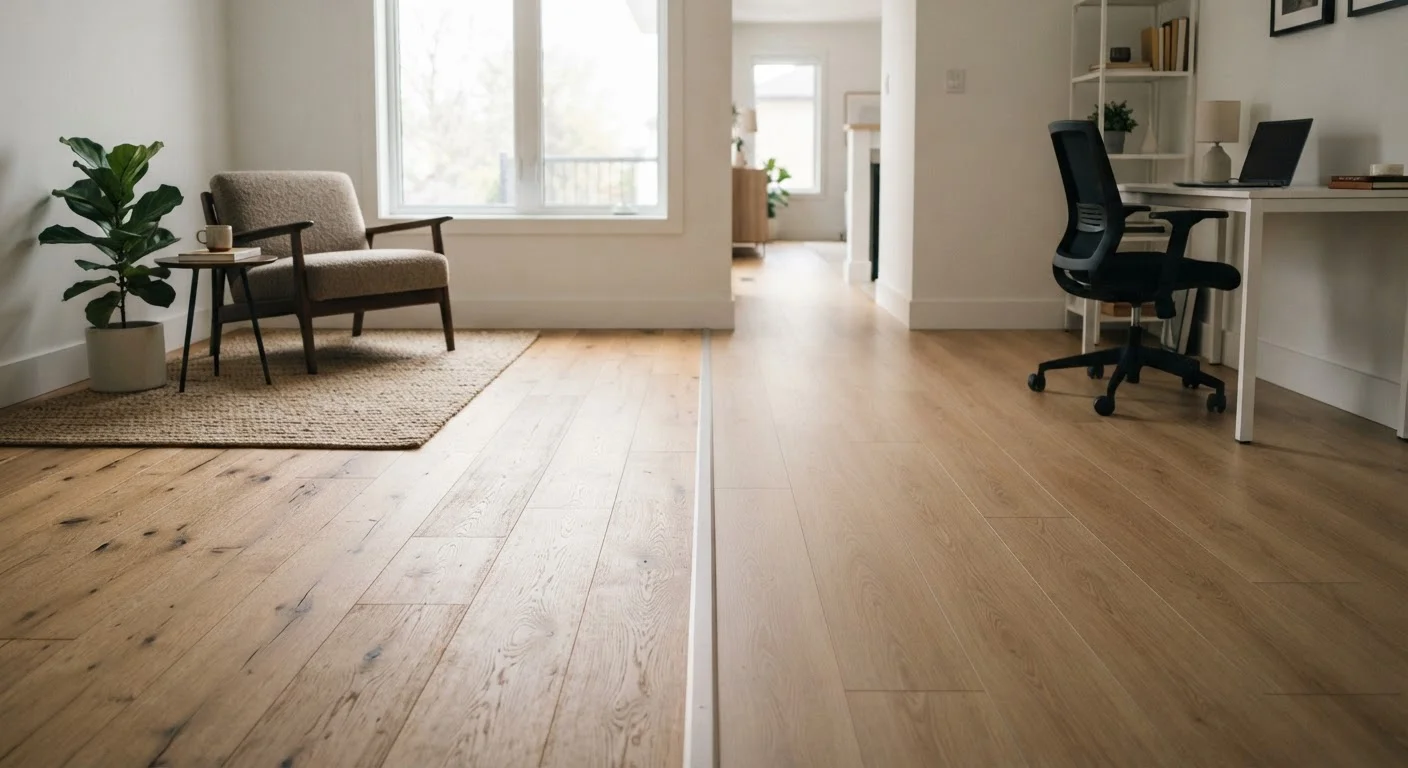
Photo: Online-Searches.net | Explore Insightful Blogs editorial
Key Takeaways
- Hardwood can be sanded and refinished multiple times; laminate cannot be refinished at all.
- Laminate resists surface scratches better day-to-day but is more vulnerable to water damage beneath seams.
- Hardwood flooring typically adds more recognized value to a home's resale price than laminate.
- Laminate is generally easier and less expensive to install as a DIY project.
- Both floor types require different long-term care routines to reach their potential lifespan.
- Choosing between them depends heavily on your household's moisture exposure, traffic patterns, and long-term plans.
How Each Floor Holds Up Over Time
Installation day is the easy part. The real test for any floor is what happens in month six, year three, or a decade in. Laminate and hardwood age very differently, and understanding that aging process helps you pick the surface that fits your actual life — not just your initial budget.
Laminate is built from compressed fiberboard with a photographic wood-grain layer sealed under a hard resin wear coat. That wear layer is genuinely tough against surface scratches, which is why laminate often outperforms hardwood in early years of heavy use. However, once the wear layer is breached — or water gets beneath the seams — the fiberboard core swells, and the damage is largely irreversible without replacing the affected planks.
Hardwood, by contrast, is a solid or engineered natural wood plank. It dents and scratches more readily than laminate in daily use, but here's the key difference: those imperfections can be sanded away. A professional refinish strips the surface back to bare wood, and a fresh coat of finish leaves the floor looking new again. Most solid hardwood floors can be refinished four to six times over their lifespan.
| Criterion | Laminate Flooring | Hardwood Flooring |
|---|---|---|
| Surface scratch resistance | High (hard resin wear layer) | Moderate (depends on finish) |
| Water / moisture tolerance | Moderate; seams vulnerable | Low to moderate; needs prompt cleanup |
| Refinishable | No | Yes — multiple times |
| Typical lifespan | 15–25 years | 25–100+ years with refinishing |
| DIY installation ease | High (click-lock floating) | Moderate to low (nailing or gluing) |
| Repairability | Board replacement only | Sand, fill, or refinish |
| Resale value contribution | Modest | Generally higher |
| Underfoot feel | Can feel hollow on thin profiles | Solid, warm, natural feel |
Repairs, Refinishing, and What 'Damage' Really Means
When a laminate plank is badly scratched, water-damaged, or chipped, replacement is the primary fix. Because laminate flooring is sold in batches, finding a matching replacement board years later can be difficult — dye lots change, products get discontinued. For isolated damage, this can mean a visible patch or a full-room replacement if matching stock is unavailable.
Hardwood repairs are more forgiving in the long run. Minor scratches can be masked with touch-up products between refinishes. Deeper gouges or warped boards can be individually replaced by a skilled installer, and the new wood can be sanded flush and refinished to match. The floor behaves more like a renewable resource than a consumable product.
25–100+
Years hardwood can last with refinishing
The National Wood Flooring Association notes that solid hardwood floors, when properly maintained and periodically refinished, can outlast the structure of many homes.
15–25
Typical years of laminate lifespan
Industry guidance generally places laminate flooring's functional lifespan at 15 to 25 years depending on thickness, traffic, and moisture management.
4–6×
Times solid hardwood can typically be refinished
Most solid hardwood planks of ¾-inch thickness can be sanded and refinished four to six times before the wood becomes too thin for further sanding.
One practical nuance: engineered hardwood — real wood bonded to a plywood base — sits between the two. It can typically be lightly sanded and refinished once or twice, making it more resilient than laminate but less so than solid hardwood. It also handles humidity better than solid hardwood, which matters in climates with wide seasonal swings.
Daily Care, Feel Underfoot, and the Long View
Day-to-day maintenance for both floors is similar: sweep regularly, wipe spills promptly, and avoid harsh cleaners. Where they differ is in what happens when routine care slips. Laminate tolerates minor neglect on the surface but punishes water intrusion. Hardwood tolerates an occasional missed spill but will show wear patterns in finish over time — which is actually useful feedback that it's time for a recoat.
Underfoot feel is a genuine practical difference. Hardwood has a solid, slightly warm contact feel that most people associate with quality. Laminate, particularly thinner profiles, can feel hollow or echo when walked on. Choosing a thicker laminate and using a quality underlayment significantly reduces that problem, but it rarely disappears entirely.
For long-term planning, consider your timeline. If you're renovating to sell within five years, laminate's lower upfront cost and attractive appearance may serve you well. If you're settling in for the long haul, hardwood's repairability and lasting appeal make it the more durable investment over a 20- to 30-year horizon.
A Note on Engineered Hardwood
The content provided on our blog site traverses numerous categories, offering readers valuable and practical information. Readers can use the editorial team’s research and data to gain more insights into their topics of interest. However, they are requested not to treat the articles as conclusive. The website team cannot be held responsible for differences in data or inaccuracies found across other platforms. Please also note that the site might also miss out on various schemes and offers available that the readers may find more beneficial than the ones we cover.