
Envelope Budgeting in the Digital Age: Cash System vs. App-Based Tracking

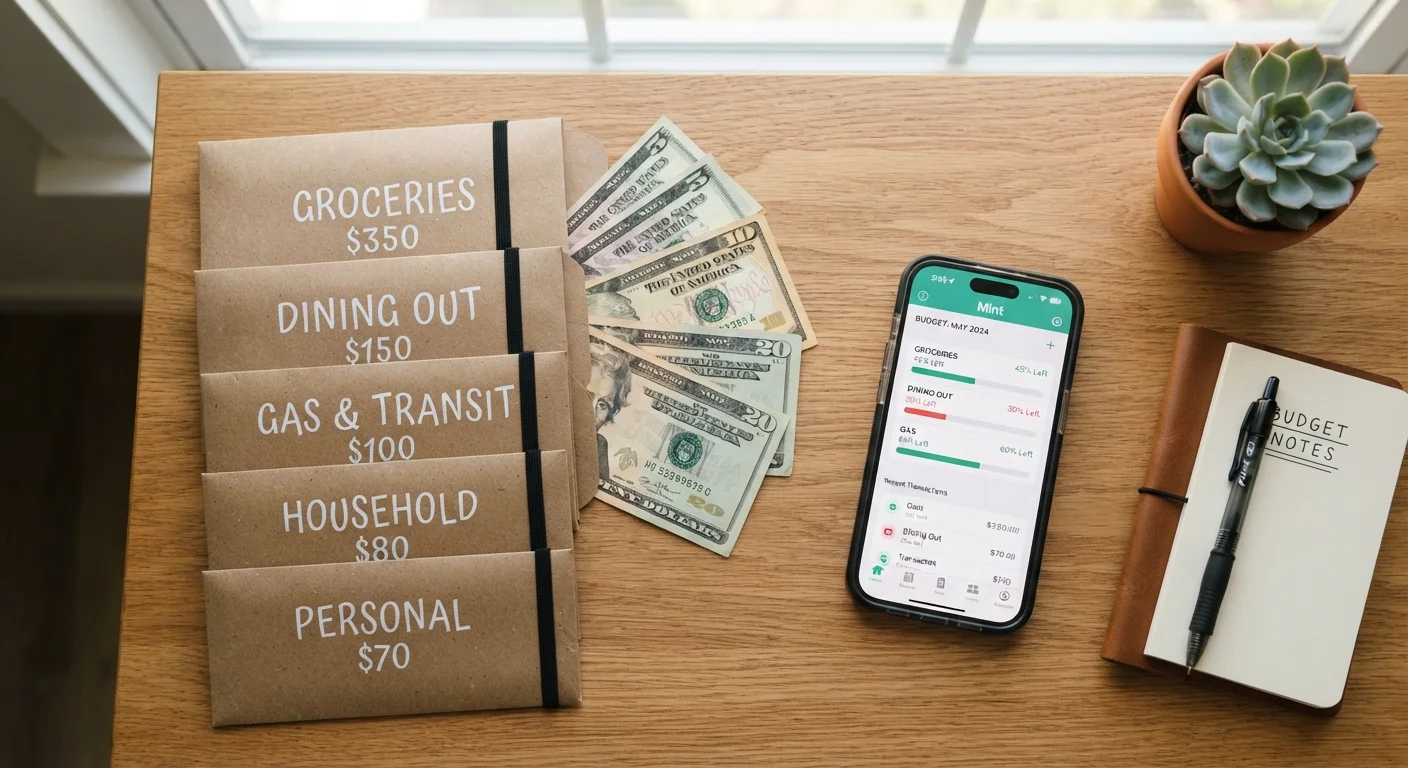
Photo: Online-Searches.net | Explore Insightful Blogs editorial
Key Takeaways
- The cash envelope method creates a physical spending limit that is hard to ignore or rationalize away.
- App-based envelope tracking offers the same framework with added automation, reports, and multi-device access.
- Neither method is universally superior — the right choice depends on your habits, household structure, and comfort with technology.
- Both systems work best when paired with clearly defined spending categories set before the month begins.
- Switching systems is low-risk; the discipline behind envelope budgeting transfers regardless of format.
How Envelope Budgeting Works
Envelope budgeting is a zero-sum approach to spending: at the start of each pay period, you divide your income into named categories — groceries, gas, dining out, entertainment — and allocate a fixed dollar amount to each. When an envelope is empty, spending in that category stops until the next cycle. It's a straightforward system with a long track record.
The method pairs naturally with zero-based budgeting principles, where every dollar is assigned a job before it can be spent. The envelope format simply makes those assignments concrete and visible.
The two main versions of this system — physical cash and digital apps — share the same logic but differ significantly in execution, convenience, and the psychological feedback they provide.
The Physical Cash Envelope System
The traditional approach involves labeling actual envelopes, filling them with cash on payday, and spending only what's inside. When the grocery envelope runs low, you see it immediately. There's no mental accounting required — the remaining bills tell the story.
This tactile friction is the system's biggest advantage. Research in consumer behavior consistently shows that people spend less when paying with cash compared to cards, partly because handing over physical money feels more real. For people who consistently overspend in specific categories, that resistance is valuable.
Cash Has Real Security Limitations
The limitations are practical. Carrying cash is inconvenient for online purchases, automatic bill payments, or subscriptions — categories that make up an increasingly large share of most household budgets. Lost or stolen cash is also unrecoverable, unlike a card transaction. Managing multiple envelopes for a two-income household adds logistical complexity.
Still, for in-person, discretionary spending categories like groceries, dining, and personal care, the cash system works reliably and requires no technology.
App-Based Digital Envelope Tracking
Digital envelope apps replicate the category-limit structure of the cash method inside software. You create virtual envelopes, set monthly limits, and log transactions — either manually or through automatic bank syncing. When a category hits its limit, the app flags it.
The advantages are meaningful: digital systems handle online spending and automatic payments cleanly, support shared access for partners or co-budgeters (see budgeting as a household for guidance on the conversation side), and generate spending reports over time. That historical data is something physical envelopes can't produce.
| Physical Cash Envelopes | App-Based Digital Tracking | |
|---|---|---|
| Spending friction | High — empty envelope stops spending | Moderate — notification required to override |
| Online & auto-payment support | Poor — cash doesn't work online | Strong — syncs with bank accounts |
| Shared household access | Difficult — one physical set of envelopes | Easy — multi-user app access |
| Spending history & reports | None — requires manual tallying | Automatic — charts and trends over time |
| Setup complexity | Very low — envelopes, cash, pen | Low to moderate — account linking required |
| Risk of loss | High — cash is unrecoverable | Low — data is backed up digitally |
| Technology required | None | Smartphone or computer |
The trade-off is reduced friction. Logging a digital transaction is easier than watching cash leave your hand, which means overspending a category still requires a conscious decision to override a notification — a lower barrier than an empty envelope. Automatic syncing also introduces the risk of passive budgeting, where the app tracks spending without the user engaging deeply.
For a deeper look at making any tracking system honest, building a reliable spending log covers category setup and pattern recognition in detail.
Choosing the Right Format for Your Household
The choice between cash and digital tracking is less about which system is objectively better and more about which one fits the way you actually live and spend. A few diagnostic questions help narrow it down:
- Do you pay most bills online or by auto-draft? A digital system handles these categories without workarounds.
- Do you consistently overspend with a card but stay on track with cash? The physical version's friction may be worth the inconvenience.
- Are you budgeting jointly with a partner? Digital apps with shared access reduce the coordination burden.
- Do you want spending history over time? Only a digital system provides that automatically.
It's also worth acknowledging that envelope budgeting — in any format — involves real trade-offs. Strict budgeting carries costs alongside its benefits, including the time and mental energy required to maintain it.
Some households use a hybrid approach: cash envelopes for high-temptation in-person categories (dining, entertainment) and a digital system for fixed expenses and online spending. This isn't a compromise — it's a deliberate design choice that captures the benefits of both formats.
This article is for general informational and educational purposes only. It does not constitute personalized financial advice. Consult a qualified financial professional for guidance specific to your situation.
The content provided on our blog site traverses numerous categories, offering readers valuable and practical information. Readers can use the editorial team’s research and data to gain more insights into their topics of interest. However, they are requested not to treat the articles as conclusive. The website team cannot be held responsible for differences in data or inaccuracies found across other platforms. Please also note that the site might also miss out on various schemes and offers available that the readers may find more beneficial than the ones we cover.