
Portugal for First-Time Visitors: An Honest Country Overview

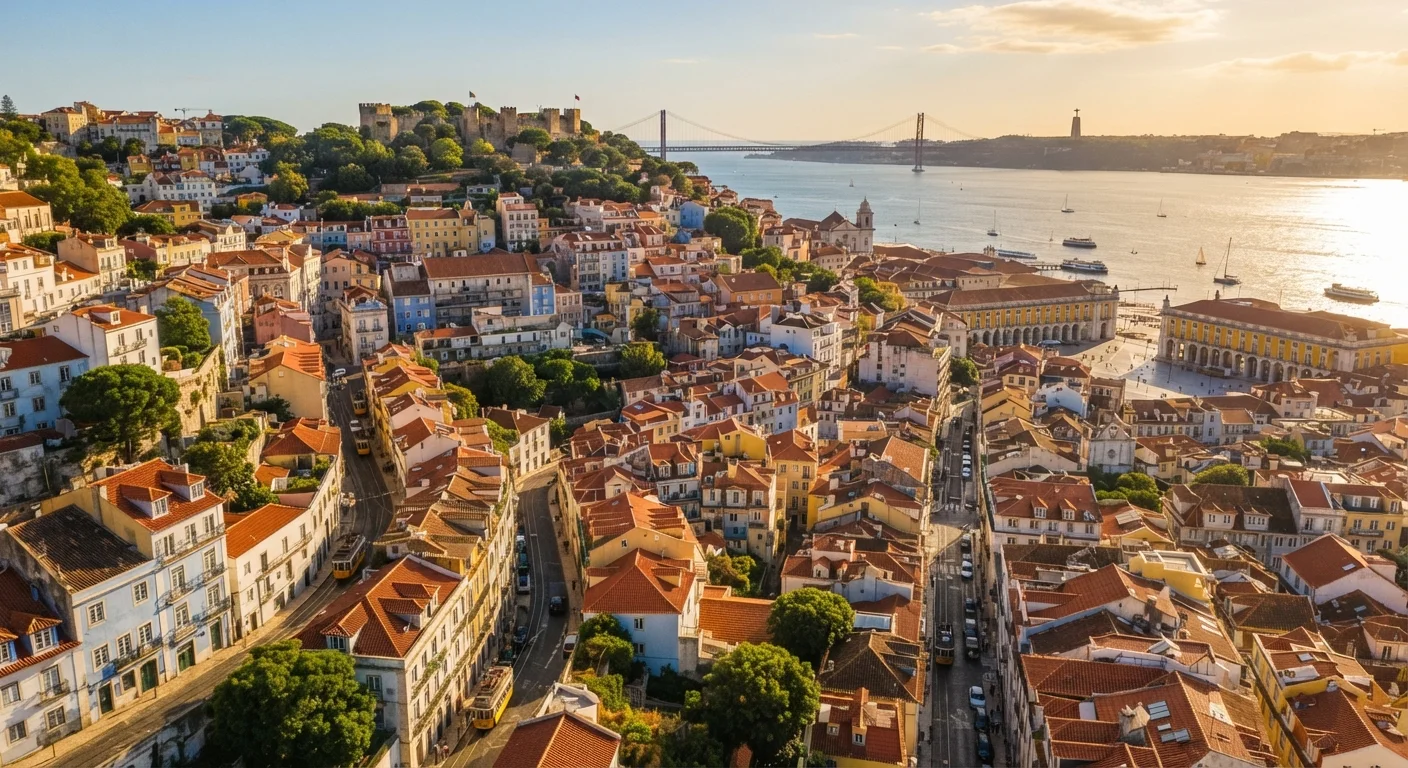
Photo: Online-Searches.net | Explore Insightful Blogs editorial
Key Takeaways
- Portugal is compact enough to explore multiple distinct regions in a single trip of 10–14 days.
- Lisbon and Porto are culturally different cities — each worth experiencing on its own terms.
- The Algarve draws the most tourists; other regions offer quieter, more local experiences.
- Portugal is a Schengen Area country, so U.S. visitors should check current entry rules before traveling.
- The country is generally considered accessible and traveler-friendly for first-time international visitors.
- Spring and early autumn typically offer pleasant weather with fewer crowds than peak summer.
Portugal at a Glance: Size, Shape, and Regions
Portugal sits at Europe's southwestern edge, sharing the Iberian Peninsula with Spain. The country is roughly the size of Indiana — surprisingly small for the outsized variety it delivers. From the rainy, green hills of the north to the sun-scorched plains of the Alentejo and the dramatic limestone cliffs of the Algarve, distinct landscapes unfold within a few hours' drive of each other.
The country divides broadly into four travel-relevant regions: the North (centered on Porto and the Douro Valley), the Center (including Lisbon, Sintra, and the Alentejo), the Algarve in the far south, and the Atlantic islands of Madeira and the Azores. Most first-time visitors focus on the mainland and choose two or three regions rather than trying to do everything at once.
Schengen Area
A group of 27 European countries — including Portugal — that share open internal borders. U.S. citizens can visit for short stays without a visa, subject to specific time limits.
Bairro
The Portuguese word for neighborhood. Lisbon's historic bairros each have distinct characters, architecture, and local communities.
Fado
Portugal's traditional music genre characterized by mournful melodies and poetic lyrics expressing longing, fate, and emotion. It is recognized by UNESCO as part of the world's intangible cultural heritage.
Prato do dia
A daily set-meal special offered by many Portuguese restaurants, typically including a main dish, bread, drink, and sometimes dessert at an affordable fixed price.
Alentejo
A large inland region southeast of Lisbon known for rolling plains, cork oak forests, medieval villages, and wine production — often described as Portugal's quiet heartland.
Port wine
A sweet, fortified wine produced in the Douro Valley and traditionally aged in lodges across the river from Porto. It is one of Portugal's most internationally recognized exports.
Lisbon and the Center: Where Most Trips Begin
Lisbon is Portugal's capital and the logical starting point for most international arrivals. Built across seven hills above the Tagus River, it rewards wandering — expect steep cobblestone streets, iconic yellow trams, and neighborhoods (called bairros) with distinct personalities. The historic Alfama district is the oldest, a maze of alleys that once served as a Moorish quarter. Belém, on the waterfront, is where Portugal's Age of Exploration launched from and where you'll find some of the country's most celebrated monuments.
Within striking distance of Lisbon, Sintra offers fairy-tale palaces tucked into forested hills — it's a popular day trip, but arriving early or staying overnight helps you beat the crowds. The Alentejo region, stretching inland south of Lisbon, is Portugal's quieter heartland: cork forests, medieval hilltop villages, and some of the country's most respected table wines.
Book Sintra Early — Especially in Summer
Porto and the North: A Different Rhythm
Porto, Portugal's second city, surprises many visitors who expect a scaled-down Lisbon. It's grittier, more atmospheric, and fiercely proud of its identity. The historic Ribeira waterfront — a UNESCO World Heritage Site — lines the Douro River with colorful terraced buildings. Across the river in Vila Nova de Gaia, the famous port wine lodges offer tastings and cellar tours that trace the story of the fortified wine Portugal is known for worldwide.
The broader north rewards slow travel. The Douro Valley is one of Europe's most visually stunning wine regions, with terraced vineyards stepping down to the river. The Minho region on the Spanish border is lush, green, and relatively tourist-light — a genuine contrast to coastal summer crowds.
The Algarve and the South: Sun, Coast, and Crowds
The Algarve is what many people picture when they imagine Portugal: golden-orange sea cliffs, sheltered cove beaches, and near-constant sunshine for much of the year. It's the country's most visited region and for good reason — the coastline is genuinely spectacular. The western Algarve around Sagres and Lagos retains more dramatic, rugged character; the central and eastern Algarve tends toward resort infrastructure and family-friendly beaches.
Honest caveat: in July and August, popular Algarve beaches get very crowded and accommodation prices climb sharply. Visiting in May, June, or September offers warm weather with noticeably more breathing room. Inland Algarve — often overlooked — has its own appeal: whitewashed villages, orange groves, and a pace that feels entirely removed from the coastal scene.
Verify Entry Rules Before You Book
Culture, Customs, and Everyday Life
Portuguese culture is often described as warm but reserved — less expressive than neighboring Spain in public settings, but deeply hospitable once a connection is made. Fado, the country's soulful, melancholic musical tradition, is a genuine cultural institution rather than a tourist performance, especially in Lisbon's Mouraria and Alfama neighborhoods and in Coimbra's distinct university style.
Meals are central to daily life. Lunch is typically the main meal, and restaurants often serve generous prato do dia (daily specials) at prices well below dinner menus. Tipping is not as structured as in the U.S. — rounding up or leaving small change is common rather than a fixed percentage. Dress codes are generally relaxed, though beach attire belongs at the beach rather than in town centers or churches.
Planning Logistics: What First-Timers Should Know
Portugal uses the euro (€) and operates on Western European Time (UTC+0 in winter, UTC+1 in summer). Most of the country is compact enough that a well-planned 10–14 day itinerary can comfortably cover two major cities and a third regional stop. Intercity trains connect Lisbon and Porto reliably; a car unlocks rural areas like the Alentejo or Douro Valley where public transport is sparse.
For health and entry considerations — including any vaccination requirements or current entry rules — always check official sources such as the U.S. Department of State and the Portuguese government's tourism authority before booking. Travel insurance is worth considering for any international trip. If this is your first time traveling abroad, our step-by-step international travel roadmap covers everything from passport logistics to packing. Portugal sits comfortably on the more straightforward end of international destinations — but thorough preparation always makes for a better trip than arriving and figuring it out on the fly.
U.S. Department of State — Portugal Travel Page
The official U.S. government source for entry requirements, safety advisories, and emergency consular contacts for Americans visiting Portugal. Always check this before finalizing travel plans.
Visit Portugal (official tourism authority)
Portugal's national tourism body publishes regional guides, event calendars, and itinerary ideas organized by interest and travel style — a reliable starting point for destination research.
CP — Comboios de Portugal (national rail)
Portugal's national rail operator website allows you to check intercity schedules and fares between Lisbon, Porto, and the Algarve — useful for planning point-to-point travel before you arrive.
Frequently Asked Questions
The content provided on our blog site traverses numerous categories, offering readers valuable and practical information. Readers can use the editorial team’s research and data to gain more insights into their topics of interest. However, they are requested not to treat the articles as conclusive. The website team cannot be held responsible for differences in data or inaccuracies found across other platforms. Please also note that the site might also miss out on various schemes and offers available that the readers may find more beneficial than the ones we cover.