
Traveling with Medications: What U.S. Travelers Need to Know

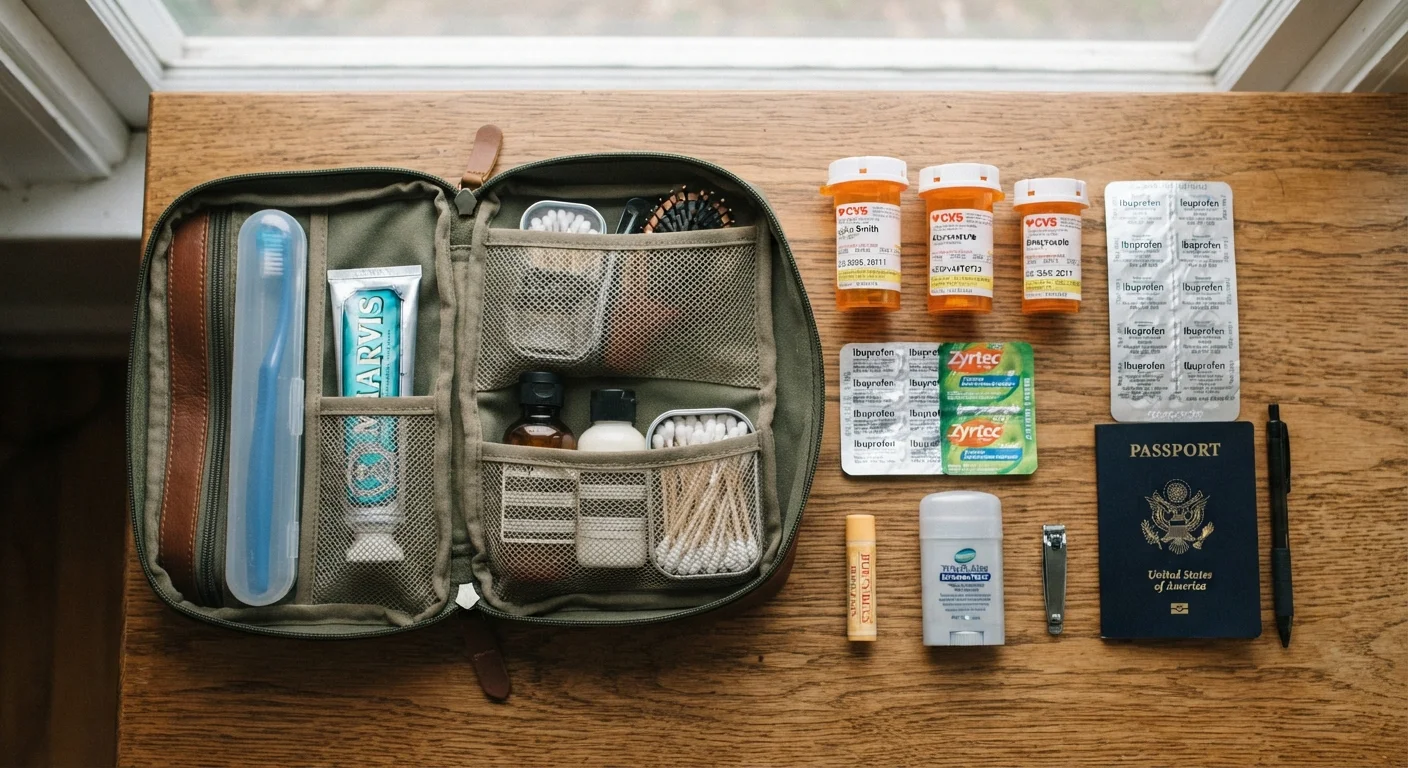
Photo: Online-Searches.net | Explore Insightful Blogs editorial
Why Medication Rules Catch Travelers Off Guard
Most travelers spend weeks researching flights, accommodations, and itineraries — and about five minutes thinking about their medications. That's a gap that can lead to real trouble. What's legally available over the counter in the U.S. may be a controlled substance abroad. A prescription that's perfectly routine at home might require prior authorization in another country. And airport security on both ends of your trip may have different expectations about how medications are stored and documented.
This isn't a reason to panic — it's a reason to prepare. As part of your broader international trip planning process, medications deserve their own dedicated checklist step.
| TSA carry-on policy | Medications allowed in any amount; liquids exempt from 3.4 oz rule (TSA.gov) |
| Recommended documentation | Original labeled container + prescription copy + physician's letter |
| Best verification source | Destination country's embassy or official health/customs authority |
| Common risk area | OTC drugs in the U.S. may be prescription-only or banned abroad |
| Storage advice | Keep medications in carry-on to avoid temperature damage or loss |
Key Rules to Verify Before You Travel
There's no single global standard for medication rules — each country sets its own. Here's where to focus your research:
- Controlled substances: Opioids, benzodiazepines, ADHD medications, and some sleep aids are regulated differently country to country. Some nations require advance permits or documentation from a licensed physician before you arrive. Others ban certain substances outright.
- Quantity limits: Many countries allow a personal supply of 30 to 90 days, but this varies. Bringing more than allowed — even innocently — can raise red flags at customs.
- Over-the-counter medications: Common U.S. OTC drugs (certain pain relievers, antihistamines, pseudoephedrine-based cold medicines) are prescription-only or prohibited in some destinations.
- Documentation: Carry the original pharmacy-labeled container, a copy of the prescription, and ideally a letter from your prescribing physician on official letterhead explaining your condition and the necessity of the medication.
Always verify entry requirements directly with the destination country's embassy or official health authority — rules change, and no third-party source substitutes for official guidance. The U.S. Embassy abroad and the destination country's customs agency are your most reliable starting points.
Controlled substance
A drug regulated by government due to its potential for misuse or dependency. Classification varies by country, so a medication that's routine in the U.S. may be tightly restricted — or banned — elsewhere.
Personal use supply
The amount of a medication a traveler is permitted to bring into a country for their own health needs. Most countries set a limit, often expressed in days' worth of doses.
Customs declaration
A formal statement travelers make upon entering a country, disclosing items that may be subject to regulation. Some medications must be declared even when they are permitted.
Physician's travel letter
An official letter from a licensed doctor explaining the patient's diagnosis and the medical necessity of their medication — often required when traveling with controlled substances internationally.
TSA, Customs, and Airport Logistics
Within the United States, the Transportation Security Administration (TSA) allows medications in carry-on and checked baggage. Liquid medications are exempt from the standard 3.4-ounce liquid rule, though they may be subject to additional screening. Keeping medications in your carry-on is strongly recommended — checked baggage can be lost, delayed, or exposed to temperature extremes that degrade some drugs.
When crossing international borders, customs officers — not TSA — are the ones who enforce import rules. Their authority is broader, and the consequences of non-compliance are more serious. A declaration form, a properly labeled container, and supporting documentation are your best protection.
If you use injectable medications (such as insulin), be prepared for questions and carry a physician's letter explaining the need for syringes or auto-injectors. Some airports have designated medical screening lanes; check ahead of time.
For a comprehensive pre-departure checklist that covers medications alongside documents and safety prep, see our pre-trip checklist. And if you want a deeper look at the overlooked details that derail even well-planned trips, this guide covers medication rules among other common blind spots.
This article provides general travel information only and is not a substitute for medical or legal advice. Always consult your healthcare provider and verify current regulations with official government sources before traveling with any medication.
The content provided on our blog site traverses numerous categories, offering readers valuable and practical information. Readers can use the editorial team’s research and data to gain more insights into their topics of interest. However, they are requested not to treat the articles as conclusive. The website team cannot be held responsible for differences in data or inaccuracies found across other platforms. Please also note that the site might also miss out on various schemes and offers available that the readers may find more beneficial than the ones we cover.