
Everything That Happens Between Buying a Car and Legally Driving It

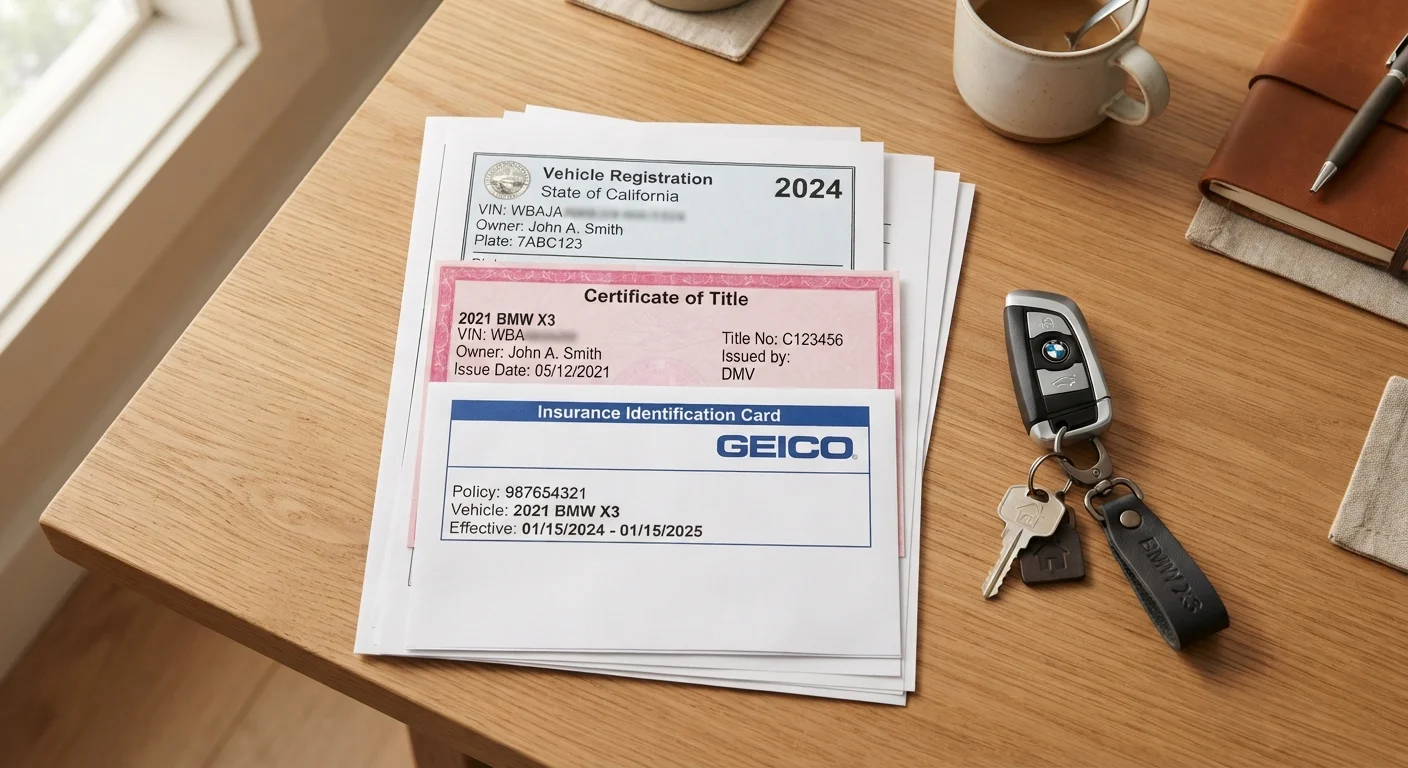
Photo: Online-Searches.net | Explore Insightful Blogs editorial
Key Takeaways
- You must have active insurance before you can legally drive a newly purchased vehicle off the lot.
- A temporary tag or transit permit lets you drive legally while permanent plates are processed — typically valid for 30 to 60 days depending on your state.
- The title transfer is the legal record that you own the vehicle; it must be submitted to your state DMV within a set deadline.
- If you financed the car, the lender holds the title until the loan is fully paid off.
- Registration and title are separate documents — both are required to drive legally on public roads.
- Deadlines and fees vary by state, so verifying with your local DMV is essential.
What Actually Happens at the Dealership (or at a Private Sale)
Signing the purchase agreement is just the starting line. Before you turn the key, a chain of legal and administrative steps must happen — some immediately, some within days or weeks.
At a dealership, the finance and insurance (F&I) office handles much of the early paperwork. You'll sign a bill of sale, a sales tax disclosure, and — if you're financing — a retail installment contract. The dealer will also prepare an odometer disclosure statement, which is federally required on most vehicles under ten years old to certify the mileage is accurate.
In a private sale, both buyer and seller are responsible for their portions of the title transfer. The seller signs the back of the existing title over to the buyer and completes the odometer statement. For a deeper look at how that process works for both parties, see our title transfer walkthrough.
What you will need
The Role of Insurance Before You Move an Inch
In every U.S. state, driving without minimum liability insurance is illegal. That means you need active coverage before you drive the car home — not after.
If you're adding to an existing policy, call your insurer before the sale is finalized. Most insurers can add a new vehicle same-day and issue a digital insurance card immediately. If you're obtaining a brand-new policy, ask for an insurance binder — a temporary proof-of-coverage document valid while the full policy is being issued.
Dealers typically require proof of insurance before releasing the vehicle. If you financed the purchase, your lender will also require comprehensive and collision coverage — not just liability — since the lender has a financial interest in the vehicle until the loan is repaid. For more on how financing shapes your coverage obligations, see how your payment method affects ownership.
Call Your Insurer Before the Sale Closes
Temporary Tags, Title Transfers, and Registration — Step by Step
Once insurance is confirmed and the sale documents are signed, here's how the legal ownership process unfolds:
Receive or verify a temporary operating permit
Dealers typically issue a temporary tag (also called a transit tag or dealer plate) valid for 30 to 60 days, depending on state law. In a private sale, you may need to visit your DMV to obtain a temporary operating permit before driving the car. Never drive an unregistered vehicle without one — it exposes you to fines and potential impoundment.
Complete and submit the title transfer
The signed title — or a Manufacturer's Certificate of Origin (MCO) for a brand-new vehicle — must be submitted to your state DMV, usually within 10 to 30 days of purchase. Most states charge a title transfer fee, and you'll pay sales tax on the purchase price at this stage if the dealer hasn't already collected it. In a private sale, the buyer typically visits the DMV in person with the signed title, a valid photo ID, proof of insurance, and payment for fees.
Register the vehicle and pay applicable fees
Vehicle registration is separate from the title. Registration is an annual authorization from the state to operate the vehicle on public roads; the title is the legal proof of ownership. Registration fees vary by state and are often calculated based on vehicle weight, age, or value. You'll receive a registration certificate and a license plate or registration sticker. Some states allow dealers to handle registration on your behalf; others require you to do it yourself at the DMV.
Confirm title status if you financed the purchase
When you finance a vehicle, the lender places a lien on the title. This means the title is held either by the lender or issued in your name with the lender listed as lienholder — depending on your state's system. You won't receive a clean, lien-free title until the loan is paid in full. At that point, the lender must issue a lien release, which you then submit to the DMV to get a clear title issued in your name alone.
After permanent plates arrive and the title is in your name, you're fully street-legal. Keep your registration certificate in the vehicle at all times — it's a document law enforcement can request during a traffic stop. For an ongoing calendar of what to renew and check each year, our annual car ownership checklist is a useful reference.
Understanding the full cost picture — registration fees, insurance premiums, and more — is equally important. Our breakdown of the real cost of owning a car in America covers what to budget beyond the purchase price.
The content provided on our blog site traverses numerous categories, offering readers valuable and practical information. Readers can use the editorial team’s research and data to gain more insights into their topics of interest. However, they are requested not to treat the articles as conclusive. The website team cannot be held responsible for differences in data or inaccuracies found across other platforms. Please also note that the site might also miss out on various schemes and offers available that the readers may find more beneficial than the ones we cover.