
Financing a Car vs. Paying Cash: What Changes After You Drive Off the Lot

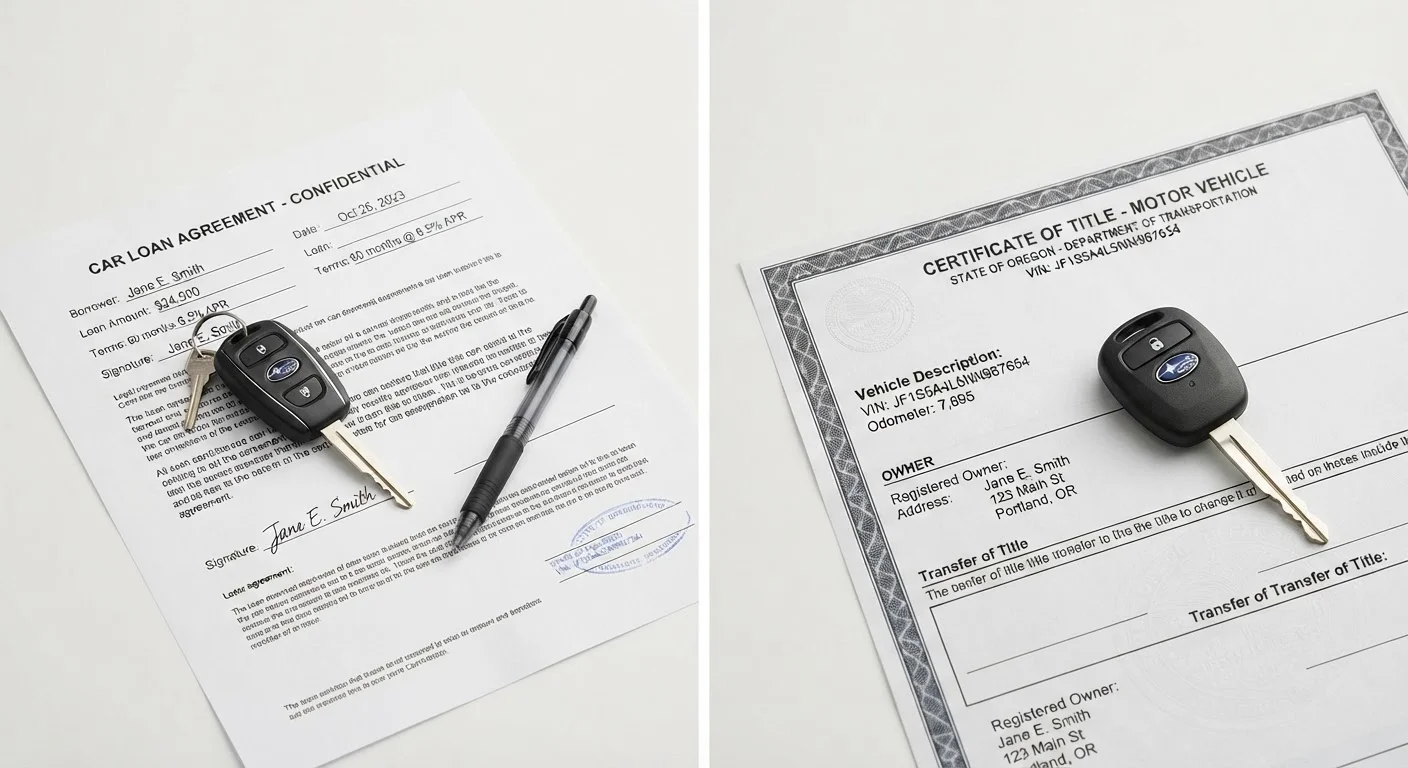
Photo: Online-Searches.net | Explore Insightful Blogs editorial
Key Takeaways
- Financing means a lender holds a lien on your title until the loan is fully repaid.
- Lenders typically require full-coverage insurance on financed vehicles — cash buyers have more choice.
- Cash buyers receive a clean title immediately; financed buyers get it only after the final payment.
- Monthly loan payments affect your debt-to-income ratio and ongoing budget flexibility.
- Gap insurance is a lender-driven consideration unique to financed vehicles with little equity.
- Neither method is universally superior — the right choice depends on your financial situation.
Who Actually Owns the Car?
The most fundamental difference between financing and paying cash isn't the monthly statement — it's the title. When you pay cash, the vehicle title is issued in your name, free and clear. You are the sole legal owner from day one.
When you finance, the lender places a lien on the title. A lien is a legal claim that gives the lender a security interest in the vehicle until the debt is repaid. In most states, the lienholder's name appears on the title document itself, and in some states the lender physically holds the title until the loan is paid off. You drive the car and are responsible for it, but you cannot freely sell or transfer it without satisfying the lien first. See our guide to title transfers for how lien releases factor into the sale process.
Once your final loan payment clears, the lender releases the lien — either by sending you a lien release document or by notifying your state's DMV to update the title record. Only then do you hold what a cash buyer received on day one.
Insurance Obligations: Where the Rules Diverge
Every state requires some minimum level of auto insurance, but lenders impose their own requirements on top of state law. If you finance, your lender will almost universally require you to carry both collision and comprehensive coverage — together commonly called full coverage — for the life of the loan. This protects their financial interest in the vehicle if it's damaged or totaled.
Cash buyers face no such lender mandate. Once state minimums are met, coverage decisions are yours. On an older, lower-value vehicle, some cash owners choose liability-only policies after weighing the math. Our article on liability-only vs. full coverage explains the logic behind that decision in detail.
Financed buyers should also understand gap insurance. If your car is totaled and the insurance payout is less than your remaining loan balance — a real possibility in the first years of ownership when depreciation outpaces payoff — gap insurance covers the difference. Cash buyers carry no loan balance, so gap coverage simply doesn't apply to them.
| Criterion | Financing | Paying Cash |
|---|---|---|
| Title ownership | Lien held by lender until payoff | Clean title from day one |
| Insurance requirements | Full coverage mandatory | State minimums only required |
| Gap insurance relevance | Often recommended or required | Not applicable |
| Monthly cash-flow impact | Fixed loan payment required | No payment obligation |
| Debt-to-income ratio | Increased by loan obligation | Unaffected |
| Selling or trading in | Requires lender payoff coordination | Direct title transfer |
| Interest cost | Yes — over the loan term | None |
| Preserves liquid savings | Yes | No — funds are spent upfront |
Budget and Cash-Flow Realities
Financing preserves liquidity. If you have $25,000 in savings, using it all to buy a car outright leaves you with little cushion for emergencies, home repairs, or other financial needs. A loan lets you keep that capital available — though you pay interest for the privilege, and carrying any loan balance has compounding costs worth understanding before signing.
Monthly loan payments also affect your debt-to-income (DTI) ratio — a figure lenders examine if you apply for a mortgage or other credit. A car payment of several hundred dollars a month can meaningfully shift that ratio and affect future borrowing capacity.
Paying cash eliminates the interest cost entirely and keeps your DTI clean, but it requires having the funds available without compromising your financial security. Neither path is inherently better; the right answer depends on your savings cushion, your other financial goals, and what interest rate you'd qualify for. For a fuller picture of ongoing vehicle costs beyond the purchase method, see the real cost of owning a car in America.
Your Credit Score Affects Financing Terms
Selling or Trading In: How Each Path Plays Out
When a cash owner decides to sell, the process is relatively direct: sign the title over, collect payment, done. There's no third party to coordinate with and no payoff amount to calculate.
For financed owners, selling or trading in requires an extra step. The dealer or private buyer will need to know your payoff amount — the exact balance required to satisfy the loan — and the transaction must account for it. If you're trading in at a dealership, they typically handle the payoff directly with your lender, but it's essential to confirm the numbers. If your trade-in value is less than your payoff, you have negative equity (sometimes called being underwater), and that shortfall has to be resolved before or during the transaction. Understanding how depreciation works can help you anticipate when negative equity is most likely to occur.
For first-time owners navigating these steps, our guide to first-car ownership paperwork covers the obligations that come with both financed and outright purchases.
This article provides general financial and automotive information for educational purposes only and is not personalized financial or legal advice. Consult a qualified financial professional before making decisions based on your individual circumstances.
The content provided on our blog site traverses numerous categories, offering readers valuable and practical information. Readers can use the editorial team’s research and data to gain more insights into their topics of interest. However, they are requested not to treat the articles as conclusive. The website team cannot be held responsible for differences in data or inaccuracies found across other platforms. Please also note that the site might also miss out on various schemes and offers available that the readers may find more beneficial than the ones we cover.