
The Hidden Costs of Carrying a Balance Month to Month

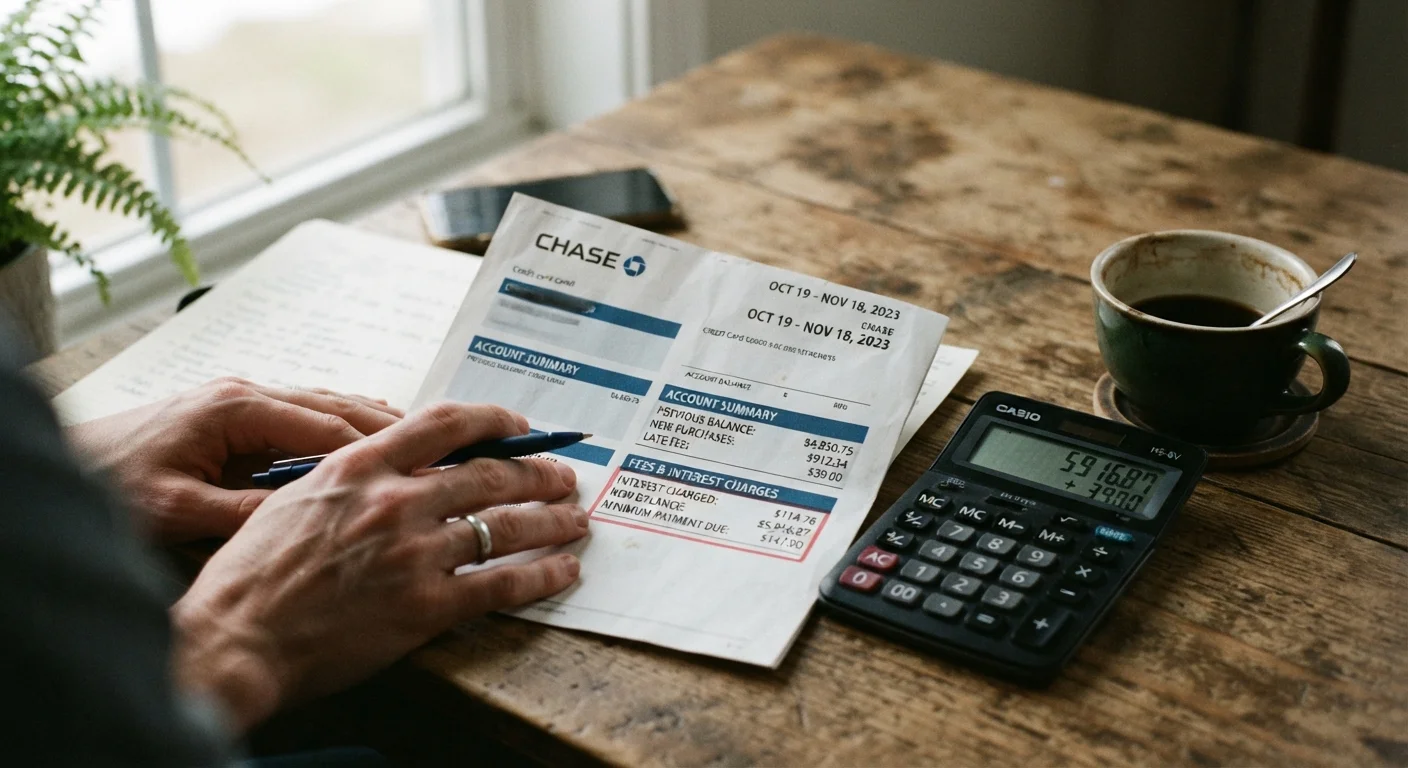
Photo: Online-Searches.net | Explore Insightful Blogs editorial
Key Takeaways
- Unpaid balances accrue interest daily, not just at month's end, accelerating the total cost.
- Minimum payments are structured to extend repayment, keeping you in debt longer and costing more.
- Compound interest on credit card debt can double or triple the real cost of a purchase over time.
- Carrying a balance also erodes the financial progress you could be making by saving or investing.
- Understanding how interest compounds is the first step toward deciding how aggressively to pay down debt.
How Interest Quietly Multiplies Your Balance
When you swipe a credit card and don't pay the full balance by the due date, interest begins accruing — often the very next day. What makes this costly is not just the rate itself but the compounding effect: interest is applied to a balance that already includes previously accumulated interest charges.
Consider a $1,500 balance at a 22% APR. If you make only minimum payments of roughly $35 per month, you could spend more than six years repaying that debt — and pay over $1,000 in interest alone. The original purchase effectively costs you more than twice its price by the time the balance is cleared.
This is why understanding how interest compounds matters as much as knowing your rate. For a deeper look at how APR shapes the true burden of what you owe, the piece on high-interest vs. low-interest debt is a useful companion.
~$1,000+
Interest paid on a $1,500 balance at minimum payments
At a 22% APR with minimum-only payments, a $1,500 balance can generate over $1,000 in interest charges before the balance is cleared — often taking six or more years.
20%+
Average credit card APR in recent years
The Federal Reserve tracks average credit card interest rates, which have remained above 20% for general-purpose cards in recent reporting periods.
47%
U.S. cardholders who carry a balance
According to the American Bankers Association and Federal Reserve consumer surveys, nearly half of credit card holders carry a balance from month to month rather than paying in full.
The Minimum Payment Trap
Credit card issuers are required to show on your statement how long it will take to pay off your balance making only minimum payments — and the numbers are often alarming. Minimum payments are deliberately structured at a low percentage of your balance, which keeps you paying longer and generating more interest revenue for the lender.
The trap is psychological as much as mathematical. A minimum payment feels manageable, so it becomes the default. But that small payment barely dents the principal while interest keeps accumulating on the remaining balance. Over time, a significant portion of each payment goes toward interest rather than reducing what you actually owe.
Use Your Statement's Payoff Calculator
Paying even $20–$50 above the minimum each month can meaningfully compress your repayment timeline and save hundreds in interest. The key shift is treating your credit card payment like a fixed debt obligation rather than a flexible line item you adjust to the minimum when cash feels tight.
The Opportunity Cost You Don't See
Beyond what you pay directly in interest, carrying a balance has an invisible cost: the money tied up in debt service isn't available for savings or investing. Every dollar directed toward interest charges is a dollar that doesn't compound in your favor elsewhere.
This tradeoff is one of the most underappreciated dimensions of credit card debt. If your card charges 22% APR, you would need to earn a consistent 22% return elsewhere just to break even — a rate that realistic savings or investment vehicles rarely match reliably, and without the same risk. For most households, high-interest debt is one of the highest guaranteed costs they carry.
Paying off debt while saving doesn't have to be an either/or decision, but understanding this opportunity cost helps clarify why aggressively addressing high-interest balances often makes financial sense. Common missteps that can stall that progress are worth knowing too — see mistakes that stall debt payoff for a practical look at what to avoid.
What You Can Do Starting Now
Awareness is the starting point, but translating it into action requires a clear framework. A few practical steps can help reduce the cost of carrying a balance:
- Know your exact APR and balance. Your statement lists both. Calculate the monthly interest charge (balance × APR ÷ 12) so you can see the dollar cost in concrete terms.
- Commit to a fixed payment above the minimum. Decide on an amount you can sustain and treat it as a non-negotiable monthly expense.
- Avoid adding new charges you can't pay off immediately. Every new purchase added to an existing balance begins accruing interest immediately, unlike purchases made when you carry no balance.
- Build your budget to include debt payoff as a real line item. A realistic monthly budget that accounts for both debt repayment and savings goals is more sustainable than choosing one over the other indefinitely.
This article is for general informational and educational purposes only and does not constitute personalized financial, tax, or legal advice. Consult a qualified financial professional for guidance tailored to your individual situation.
Frequently Asked Questions
The content provided on our blog site traverses numerous categories, offering readers valuable and practical information. Readers can use the editorial team’s research and data to gain more insights into their topics of interest. However, they are requested not to treat the articles as conclusive. The website team cannot be held responsible for differences in data or inaccuracies found across other platforms. Please also note that the site might also miss out on various schemes and offers available that the readers may find more beneficial than the ones we cover.