
High-Interest Debt vs. Low-Interest Debt: Why the Type Matters as Much as the Amount

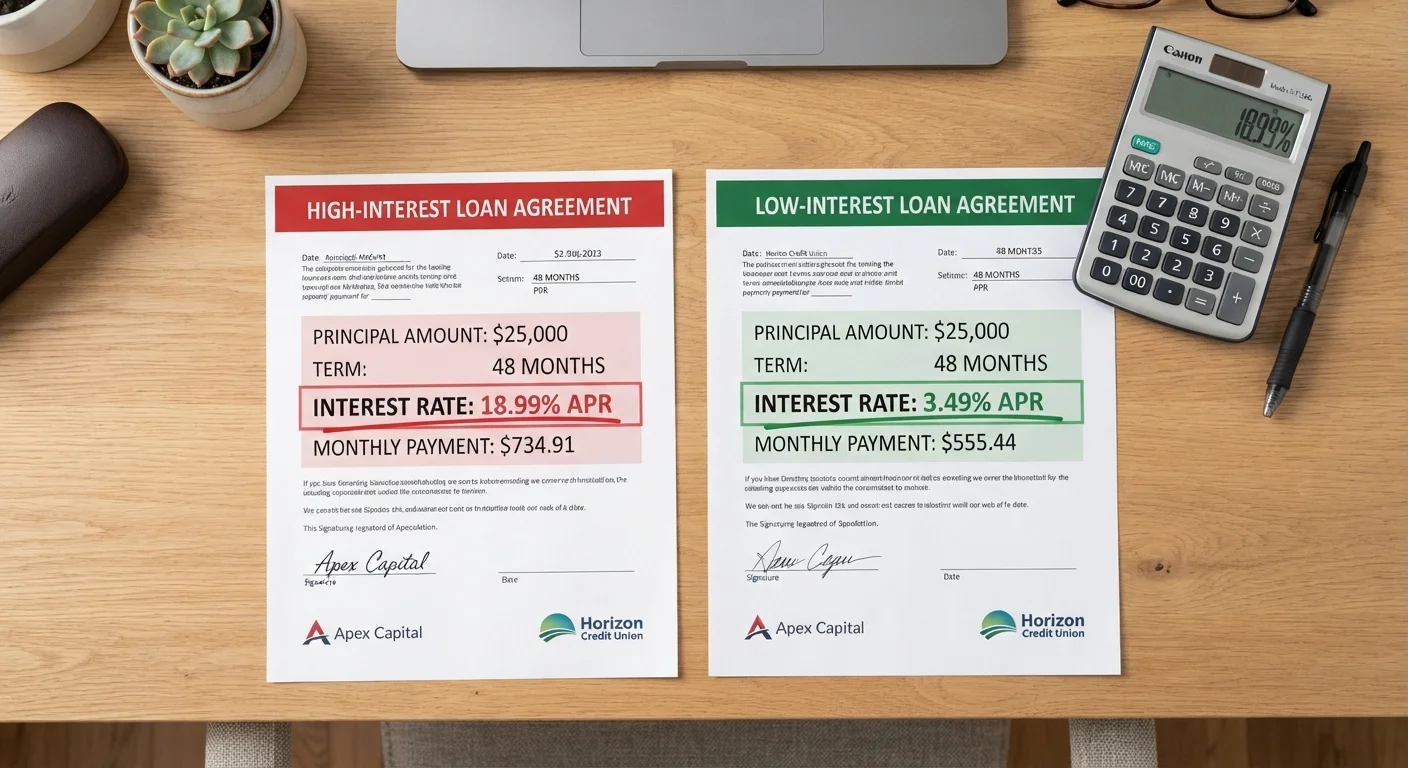
Photo: Online-Searches.net | Explore Insightful Blogs editorial
Key Takeaways
- Interest rate determines how fast a debt grows — higher rates compound the true cost significantly over time.
- High-interest debt, typically above 7–8%, generally warrants aggressive repayment before most other financial goals.
- Low-interest debt can often be carried strategically while simultaneously building an emergency fund or contributing to retirement.
- The dollar amount of a debt matters less than the rate at which it accumulates additional charges each month.
- Balancing payoff and saving is possible, but the interest rate on your debt should anchor every decision you make.
Why Interest Rate Is the Real Dividing Line
When people talk about debt, they often focus on the total balance — how many thousands of dollars they owe. But from a financial planning standpoint, the interest rate is the more consequential number. It determines how quickly that balance grows if left unpaid, and it sets the floor for what you need to earn just to break even.
Think of it this way: a $10,000 credit card balance at 22% APR generates roughly $2,200 in interest charges in a single year if untouched. A $10,000 student loan at 5% generates $500. Same dollar amount, very different financial trajectories.
A common rule of thumb used by many financial educators is a threshold somewhere around 6–8%. Debt above that rate is generally considered high-interest — meaning the cost of carrying it outpaces the realistic return you could earn by investing that same money elsewhere. Debt below that threshold may be worth carrying longer if it frees cash for other priorities. That said, individual circumstances vary, and this is general education rather than personalized advice. Consulting a licensed financial professional about your specific situation is always worth considering.
| Criterion | High-Interest Debt | Low-Interest Debt |
|---|---|---|
| Typical APR range | 10%–30%+ (credit cards, payday loans) | 2%–7% (mortgages, federal student loans) |
| Monthly cost of carrying | High — significant portion goes to interest | Low — most of payment reduces principal |
| Repayment urgency | High priority — address before most goals | Moderate — can coexist with saving |
| Impact on net worth | Rapidly erodes financial position | Gradual, manageable drag on net worth |
| Interaction with investing | Paying off beats most investment returns | Investing may outperform payoff over time |
| Emergency fund timing | Build a small buffer first, then attack debt | Build full fund before aggressive payoff |
How High-Interest Debt Compounds Against You
High-interest debt — credit cards, personal loans with elevated rates, payday loans — shares a damaging characteristic: compound interest working in reverse. Instead of compounding in your favor as it does in an investment account, it compounds against you each billing cycle.
If you make only minimum payments on a high-rate balance, a large portion of each payment goes toward interest rather than principal. See how minimum payments silently extend your repayment timeline in our related article on the hidden cost of carrying a balance. The principal barely shrinks, and the interest clock resets every month on a balance that isn't falling fast enough.
This is why financial educators consistently recommend treating high-interest debt as the highest-priority financial obligation — above discretionary saving and even above accelerated payoff of low-rate debts. The guaranteed "return" from eliminating a 22% debt is 22%, which no savings account can match.
~21%
Average credit card interest rate (APR)
According to Federal Reserve data, average credit card rates have risen sharply in recent years, making high-interest balances increasingly costly to carry.
2–3x
Amount some borrowers repay vs. original balance
Financial educators note that making only minimum payments on a high-rate card can result in repaying two to three times the original borrowed amount over the full term.
28%
Recommended max housing debt-to-income ratio
The Consumer Financial Protection Bureau (CFPB) references conventional lending guidelines suggesting housing costs stay below 28% of gross monthly income.
When Low-Interest Debt Can Coexist With Other Goals
Low-interest debt — a fixed-rate mortgage, a subsidized federal student loan, an auto loan negotiated at a reasonable rate — operates differently. The cost of carrying it is relatively predictable and modest. In many cases, the financially sound move is not to aggressively eliminate it, but to manage it steadily while directing extra cash toward higher-priority goals.
For example, if your mortgage rate is 4% and your employer offers a 401(k) match, redirecting funds to capture that match may generate a better financial outcome than prepaying the mortgage. The match is an immediate 50–100% return on contributed dollars — a calculation that typically beats a 4% interest savings.
Similarly, building a fully funded emergency reserve before attacking a 4% student loan makes sense. Without a cash buffer, an unexpected car repair or medical bill could push you back into high-interest debt territory, undoing your progress. Explore a practical framework for balancing debt payoff with savings growth if you're navigating both at once.
Building a Prioritization Framework
Once you recognize that not all debt deserves the same urgency, you can build a rational repayment order. A general framework many financial educators suggest follows this sequence:
- Secure a minimum emergency fund — even $500–$1,000 reduces the risk of resorting to high-interest borrowing for emergencies.
- Capture any employer retirement match — this is effectively part of your compensation; not using it is leaving earned money behind.
- Eliminate high-interest debt aggressively — apply every available dollar above minimums here first. Compare the debt avalanche and debt snowball methods to find the payoff structure that fits your situation.
- Build a fuller emergency fund — typically three to six months of essential expenses, once high-rate debt is cleared.
- Continue low-interest debt payments on schedule — make regular payments, and consider modest prepayment only after other goals are funded.
Your debt-to-income ratio is another useful lens here. Understanding what your debt-to-income ratio reveals can clarify how lenders and financial planners assess your overall position. If you notice warning signs that debt is growing faster than you can manage it, recognizing those patterns early gives you more options to course-correct before they escalate.
This article is for general informational and educational purposes only and does not constitute personalized financial, tax, or legal advice. Consult a qualified financial professional before making decisions about your specific debt or savings situation.
The content provided on our blog site traverses numerous categories, offering readers valuable and practical information. Readers can use the editorial team’s research and data to gain more insights into their topics of interest. However, they are requested not to treat the articles as conclusive. The website team cannot be held responsible for differences in data or inaccuracies found across other platforms. Please also note that the site might also miss out on various schemes and offers available that the readers may find more beneficial than the ones we cover.