
Debt Avalanche vs. Debt Snowball: Which Payoff Strategy Fits Your Situation

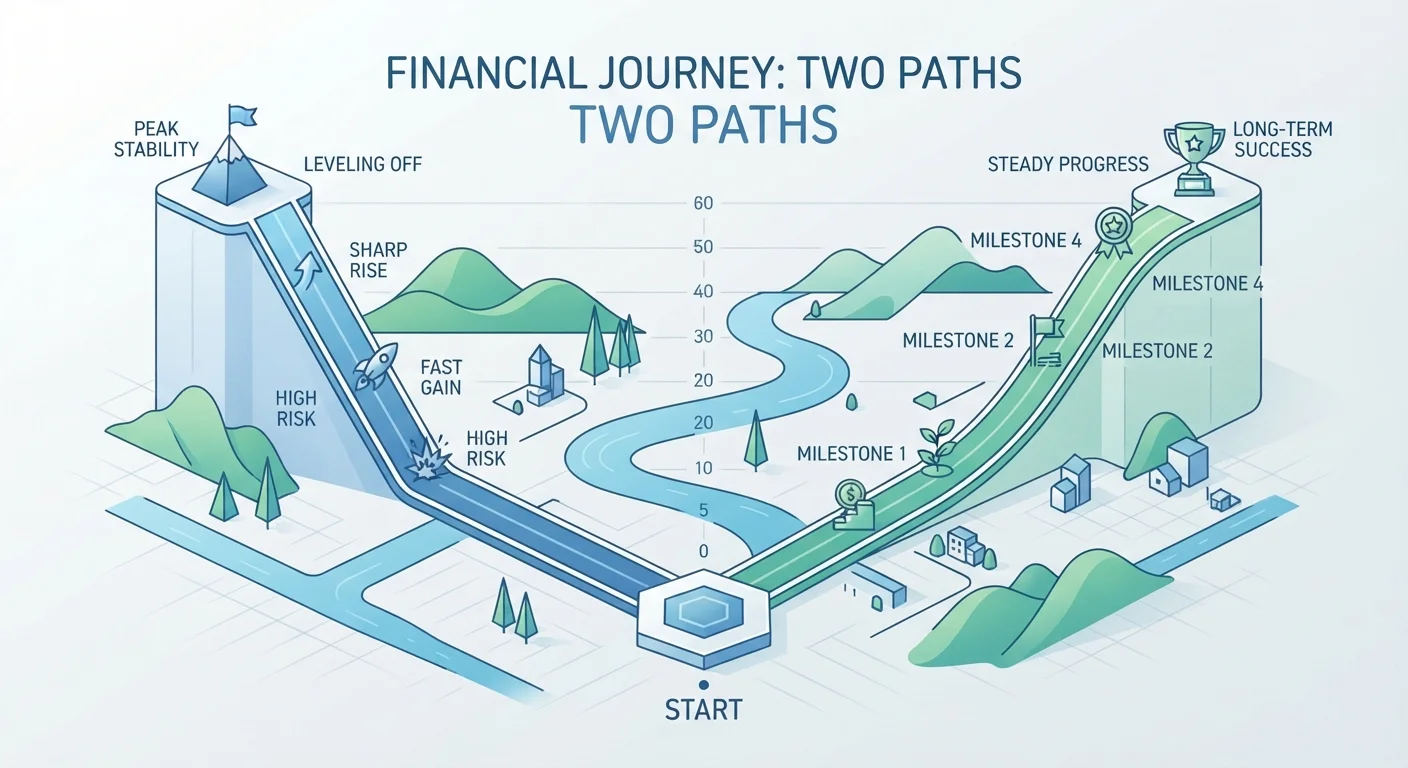
Photo: Online-Searches.net | Explore Insightful Blogs editorial
Key Takeaways
- The debt avalanche targets the highest-interest debt first, minimizing total interest paid over time.
- The debt snowball pays off the smallest balances first to build momentum and motivation.
- Mathematically, the avalanche typically costs less — but the snowball often produces better follow-through for some borrowers.
- Your personality, debt mix, and current financial cushion all affect which method is the better fit.
- Both strategies require directing any extra funds consistently toward a single targeted debt.
- Consulting a nonprofit credit counselor can help you tailor a plan to your specific debt situation.
How Each Strategy Actually Works
Both the debt avalanche and debt snowball share a fundamental mechanic: you make minimum payments on all debts, then direct any remaining money toward one targeted account. The difference is entirely in how you choose which account to target.
Debt Avalanche: You rank your debts by interest rate, highest to lowest, and attack the top of that list first. Once the highest-rate debt is eliminated, you roll its payment into the next-highest. Because you're eliminating the most expensive debt first, you reduce total interest charges faster. For anyone carrying credit card debt at 20%+ APR alongside a lower-rate personal loan, the avalanche approach directly attacks the balance costing the most each month.
Debt Snowball: You rank debts by outstanding balance, smallest to largest, and focus extra payments on the smallest debt regardless of its interest rate. When it's gone, you roll that freed-up payment into the next-smallest. The logic here is behavioral: completing a payoff — even a small one — triggers a sense of progress that reinforces the habit.
Understanding how interest rates shape the true cost of debt is foundational to appreciating why sequencing matters in the first place.
| Criterion | Debt Avalanche | Debt Snowball |
|---|---|---|
| Payoff order | Highest interest rate first | Smallest balance first |
| Total interest paid | Generally lower | Typically higher |
| Time to first payoff | Longer (if high-rate debt is large) | Shorter (small balances clear fast) |
| Motivational structure | Rewards patience and discipline | Provides quick, tangible wins |
| Best debt mix | High-rate debts with large balances | Many small accounts at varied rates |
| Risk of abandonment | Higher if results feel slow | Lower due to early milestones |
| Mathematical efficiency | Higher | Lower, but often more sustainable |
The Real Cost Difference — and Why Motivation Is Part of the Math
In a purely numerical comparison, the debt avalanche almost always produces lower total interest paid and a shorter payoff timeline — sometimes by hundreds or even thousands of dollars depending on your balances and rates. That advantage is real and shouldn't be dismissed.
But personal finance research consistently shows that the best strategy is the one a person actually follows through on. A mathematically superior plan abandoned after three months costs more than a slightly less efficient plan sustained for three years. The snowball's rapid early wins are designed to solve exactly that problem.
~$1,000+
Potential interest savings with avalanche method
Financial planning analyses commonly illustrate that prioritizing high-rate debt over low-rate debt can save well over $1,000 in interest on a typical multi-debt scenario, depending on balances and rates.
~33%
Americans carrying credit card balances month to month
According to the Federal Reserve's Survey of Consumer Finances, roughly one-third of U.S. families carry revolving credit card debt, making interest-rate sequencing a meaningful real-world decision.
The practical implication: if you have strong financial discipline and can commit long-term without visible milestones, the avalanche's interest savings are genuinely worth pursuing. If past debt payoff attempts have stalled, the snowball's structure may produce better real-world results for you — even if not the theoretical best-case outcome.
Common missteps that quietly slow debt repayment often involve losing motivation mid-plan — something the snowball is specifically designed to counteract.
Fitting Your Strategy Into a Broader Financial Plan
Neither approach operates in isolation. Where you put extra money — toward the highest-rate debt or the smallest balance — is a decision that also competes with building savings, maintaining an emergency fund, and staying current on other financial goals.
If your emergency fund is thin, directing every spare dollar to debt may leave you exposed to setbacks that force you back into borrowing. A hybrid approach — splitting extra funds between targeted debt payoff and a small savings buffer — can reduce that risk, though it does slow the payoff pace. The framework for paying off debt while saving simultaneously outlines practical ways to structure this balance.
It's also worth considering whether debt consolidation changes your calculation. Combining multiple accounts into a single lower-rate loan can change which payoff method makes the most sense. See what debt consolidation changes — and what it doesn't for a grounded look at that option before assuming it simplifies the picture.
Finally, building a budget that explicitly allocates room for both debt repayment and savings goals is often what separates sustained progress from repeated restarts. The guide to building a realistic budget around both debt and savings offers a practical structure for doing exactly that.
This article is for general informational and educational purposes only and does not constitute personalized financial, tax, or legal advice. Consult a qualified financial professional before making decisions about your specific debt situation.
The content provided on our blog site traverses numerous categories, offering readers valuable and practical information. Readers can use the editorial team’s research and data to gain more insights into their topics of interest. However, they are requested not to treat the articles as conclusive. The website team cannot be held responsible for differences in data or inaccuracies found across other platforms. Please also note that the site might also miss out on various schemes and offers available that the readers may find more beneficial than the ones we cover.