
Hydroplaning: What Causes It and How to Regain Control

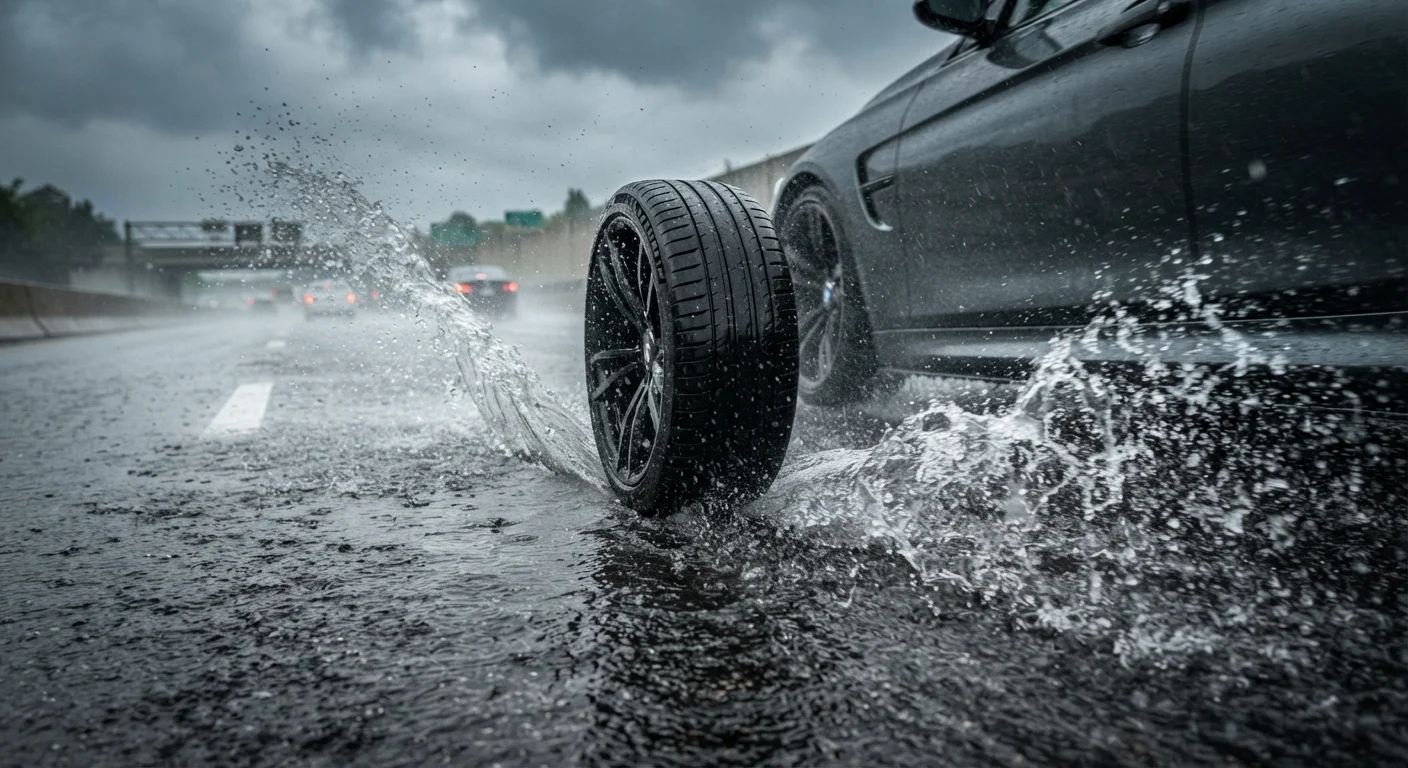
Photo: Online-Searches.net | Explore Insightful Blogs editorial
Key Takeaways
- Hydroplaning occurs when a film of water separates your tires from the road surface, eliminating grip.
- Speed, worn tread, and low tire pressure all significantly increase your hydroplaning risk.
- Never brake hard or jerk the wheel — ease off the gas and steer smoothly to recover.
- Maintaining proper tire condition is the single most effective prevention strategy.
- Rain-slicked roads are most dangerous in the first 10–15 minutes as oil and water mix on the surface.
What Hydroplaning Actually Is
Hydroplaning — sometimes called aquaplaning — happens when a tire encounters more water than its tread can channel away fast enough. Instead of pressing through the water to reach the pavement, the tire rides up onto a thin film of water. At that moment, the friction between rubber and road drops sharply, and your ability to steer or brake becomes severely limited.
The physics are straightforward: as speed increases, tires need to displace more water per second. Tread grooves are engineered specifically to route water outward from the contact patch. When that system is overwhelmed — by speed, standing water depth, or worn tread — the tire loses its grip on the road surface entirely.
Hydroplaning can happen at speeds as low as 35 mph in certain conditions, though the risk increases substantially above 55 mph. The first few minutes after rain begins are particularly hazardous, as water mixes with road oils and creates a slicker surface than pure water alone.
Follow Tire Tracks in Heavy Rain
The Three Risk Factors You Can Control
Understanding what makes hydroplaning more likely puts practical prevention within reach. Three factors stand out as the most actionable for everyday drivers:
- Speed: The faster you travel, the less time your tires have to displace water. Slowing down before and during rain is the most immediate risk reducer available to you.
- Tire tread depth: Worn tires have shallower grooves and reduced capacity to channel water. The legal minimum tread depth in most U.S. states is 2/32 of an inch, but many safety experts suggest considering replacement at 4/32 of an inch for wet-weather performance. Our guide to tire pressure and tread depth explains how to measure and interpret these numbers.
- Tire inflation: Under-inflated tires have a deformed contact patch that channels water less efficiently. Check your pressure regularly using the specification in your owner's manual or the sticker inside the driver's door jamb — not the number printed on the tire sidewall, which is a maximum, not a target.
For a thorough walkthrough on keeping your tires in safe condition year-round, see our tire care guide.
Tire Tread Depth Gauge
Measures remaining tread depth to confirm tires can effectively channel water away from the contact patch.
Tire Pressure Gauge
Verifies inflation matches the vehicle manufacturer's specification, which directly affects hydroplaning resistance.
Penny or Quarter (tread check)
A quick field test — insert into a tread groove to estimate whether tread depth is critically low.
Prevention: Habits That Reduce Your Risk
Recovering from hydroplaning is a skill worth having — but avoiding it in the first place is always the better outcome. Several consistent driving habits make a real difference:
- Reduce speed proactively when rain starts, especially on highways and curves.
- Avoid driving through visibly pooled or standing water at speed.
- Stay out of the outermost lanes where water tends to collect near road edges and drainage areas.
- Inspect your tires regularly for tread wear and inflation — at minimum, monthly and before long trips.
- Avoid hard acceleration or abrupt lane changes on wet surfaces, which can disturb traction before hydroplaning even begins.
Do Not Panic-Brake During Hydroplaning
This article is for general driver education purposes. Road conditions vary widely, and individual vehicle behavior depends on many factors including tire type, vehicle weight, and road surface. Always adapt to the specific conditions you encounter and consult a qualified driving instructor if you want hands-on guidance for emergency driving situations.
The content provided on our blog site traverses numerous categories, offering readers valuable and practical information. Readers can use the editorial team’s research and data to gain more insights into their topics of interest. However, they are requested not to treat the articles as conclusive. The website team cannot be held responsible for differences in data or inaccuracies found across other platforms. Please also note that the site might also miss out on various schemes and offers available that the readers may find more beneficial than the ones we cover.