
Tire Care From the Ground Up

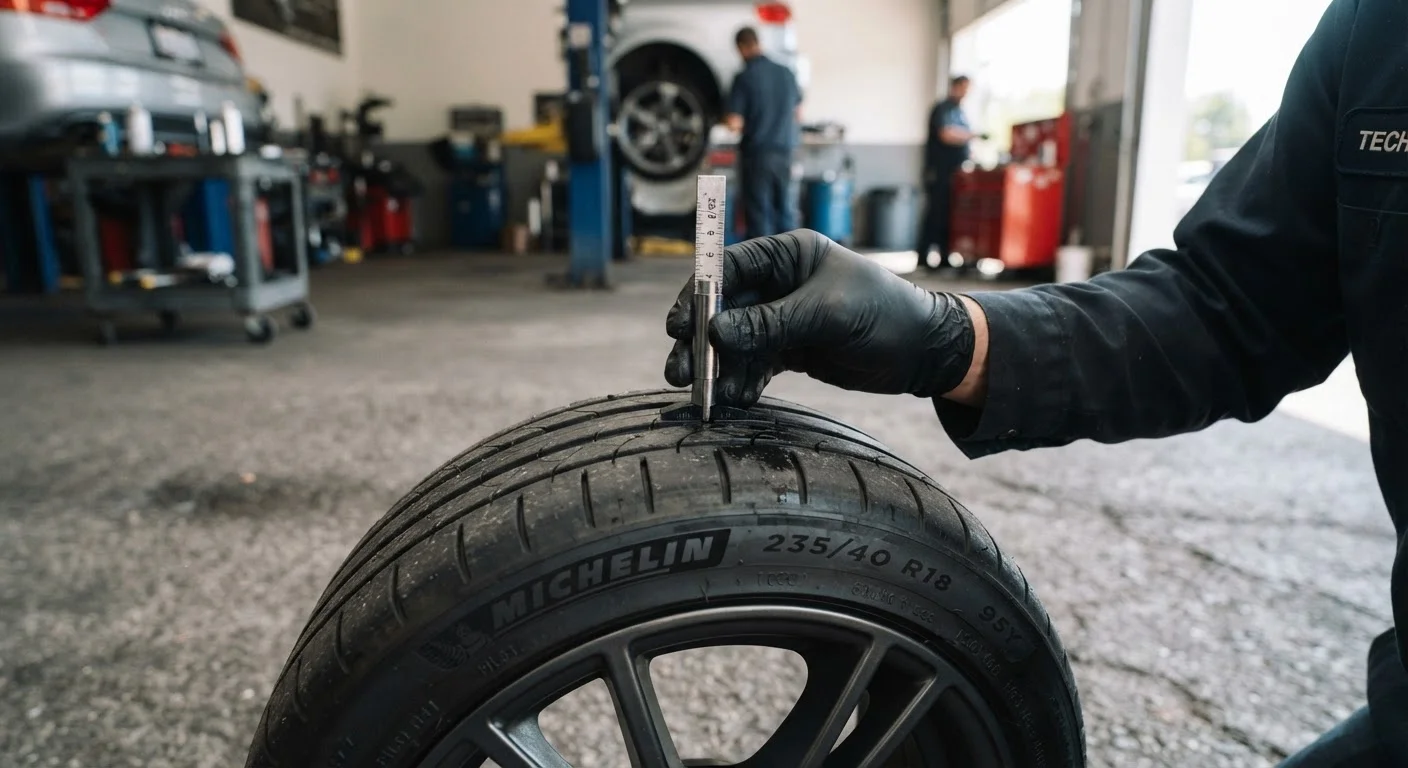
Photo: Online-Searches.net | Explore Insightful Blogs editorial
Key Takeaways
- Check tire pressure monthly and before long trips — use the doorjamb sticker, not the sidewall number.
- Tread depth below 2/32 inch is legally unsafe; replace tires before reaching that threshold.
- Rotating tires every 5,000–7,500 miles evens out wear and extends tire life.
- Misaligned wheels cause uneven wear and reduce fuel efficiency — alignment should be checked annually.
- A simple visual inspection each week can catch bulges, cracks, and embedded objects before they cause a blowout.
Why Tire Maintenance Matters More Than Most Drivers Realize
Tires are the only part of your vehicle in constant contact with the road. Everything your car does — accelerating, braking, cornering — happens through four palm-sized contact patches. When tires are neglected, those patches shrink in effectiveness, increasing stopping distances and reducing stability in wet conditions.
Beyond safety, poorly maintained tires quietly drain your wallet. Under-inflated tires increase rolling resistance, which reduces fuel economy. Skipping rotation leads to uneven wear that shortens tire life significantly. The good news: the basics of tire care are straightforward, inexpensive, and take very little time. For a deeper look at how tire condition directly influences road safety, see our guide on how tires affect safety.
738
Annual U.S. tire-related crash fatalities
The National Highway Traffic Safety Administration (NHTSA) has attributed hundreds of annual traffic fatalities to tire-related failures in its crash data research.
~0.3%
Fuel economy loss per 1 PSI under-inflation
The U.S. Department of Energy estimates fuel economy drops roughly 0.2–0.3% for every 1 PSI that all four tires are under-inflated.
4/32"
Recommended minimum tread depth for wet roads
Many safety researchers and tire industry organizations recommend replacement at 4/32 inch, not the legal minimum of 2/32 inch, for adequate wet-weather braking performance.
Tire Pressure: The Number You Should Check Monthly
Tire pressure is measured in PSI. The correct figure for your vehicle is printed on a sticker inside the driver's door jamb — not on the tire's sidewall, which shows a maximum pressure rating, not a recommended one. These are two different numbers, and confusing them is a common mistake.
Pressure should be checked when tires are cold — meaning the car has been parked for at least three hours or driven fewer than a mile. Driving heats the air inside the tire and temporarily raises the reading by 4–8 PSI, which can mask under-inflation.
Temperature swings matter too. A general rule of thumb: tire pressure drops roughly 1 PSI for every 10°F drop in ambient temperature. A tire that reads correctly in summer may be significantly under-inflated in winter. Make monthly checks a habit, and always check before a long highway trip.
Always use a quality dial or digital gauge rather than the gauge built into the air pump at a service station — those are notoriously inaccurate. Keep a personal gauge in your glove box.
When you check pressure, also check your spare. A flat spare discovered roadside is just as stranded as a flat tire — and far more frustrating.
Tread Depth: When to Replace
Tread channels water away from the contact patch so the tire maintains grip on wet pavement. As tread wears down, that water-evacuation capacity decreases — the key risk factor in hydroplaning.
The legal minimum tread depth in most U.S. states is 2/32 of an inch. Many safety organizations recommend replacing tires at 4/32 inch, particularly in regions with frequent rain or snow. You can measure tread depth with an inexpensive gauge, or use the classic quarter test: insert a quarter into a tread groove with Washington's head facing down. If you can see the top of his head, you're at or below 4/32 inch — time to plan a replacement.
New tires also include tread wear indicators: small rubber bars molded into the grooves at the 2/32-inch level. When the tread surface is flush with these bars, the tire is legally worn out and should be replaced immediately.
Tire Rotation and Wheel Alignment Explained
Rotation means moving tires to different positions on the vehicle — front-to-rear or cross-pattern — so they wear evenly. Front tires on front-wheel-drive vehicles carry the steering and driving loads simultaneously, causing them to wear faster than rears. Rotating every 5,000–7,500 miles (or as your owner's manual specifies) balances that wear and can meaningfully extend the life of a full set.
Alignment refers to the angles at which your tires contact the road, set according to the vehicle manufacturer's specifications. When alignment drifts — from hitting a pothole, a curb strike, or simply normal wear over time — tires scrub against the pavement at a slight angle, causing accelerated and uneven wear. You may also notice the vehicle pulling to one side or the steering wheel sitting off-center on a straight road.
Alignment should generally be checked once a year or whenever you notice handling changes. It's also wise to check it after any significant impact. A qualified mechanic or tire shop can measure and adjust alignment using computerized equipment. This is not a DIY task — it requires precision instruments.
Visual Inspection: What to Look For
Once a week — or before any long drive — spend 60 seconds walking around your vehicle and looking at each tire. You're checking for:
- Bulges or bubbles on the sidewall, which indicate internal structural damage and risk of sudden blowout
- Cracking or dry rot in the rubber, common on tires that are old even if tread remains
- Embedded objects — screws, nails, glass — that may be slowly leaking air
- Uneven wear patterns — feathering, center wear, or edge wear — that signal pressure or alignment problems
If you spot a sidewall bulge, treat it as urgent: that tire should not be driven on until inspected by a professional. Similarly, a nail in the tread may be holding air temporarily, but it needs professional attention promptly — plug or patch repairs must be done from the inside, not with an external plug alone.
Tire Care as Part of Your Broader Maintenance Routine
Tire maintenance doesn't exist in isolation. It connects directly to your vehicle's overall service schedule. For context on how tire-related tasks fit alongside oil changes, brake inspections, and other milestones, see our overview of your car's maintenance schedule. New drivers especially will benefit from the foundational coverage in car maintenance for new drivers.
Your owner's manual is also the definitive reference for your specific vehicle's tire specifications, rotation patterns, and load ratings — consult it before making any changes. Our guide to reading your owner's manual can help you navigate it efficiently.
Tires are a small maintenance investment relative to the cost of a blowout, an accident, or premature replacement of an entire set. Building these checks into your monthly routine is one of the most straightforward ways to protect both your safety and your vehicle's long-term value.
The content provided on our blog site traverses numerous categories, offering readers valuable and practical information. Readers can use the editorial team’s research and data to gain more insights into their topics of interest. However, they are requested not to treat the articles as conclusive. The website team cannot be held responsible for differences in data or inaccuracies found across other platforms. Please also note that the site might also miss out on various schemes and offers available that the readers may find more beneficial than the ones we cover.