
Your Car's Maintenance Schedule, Explained

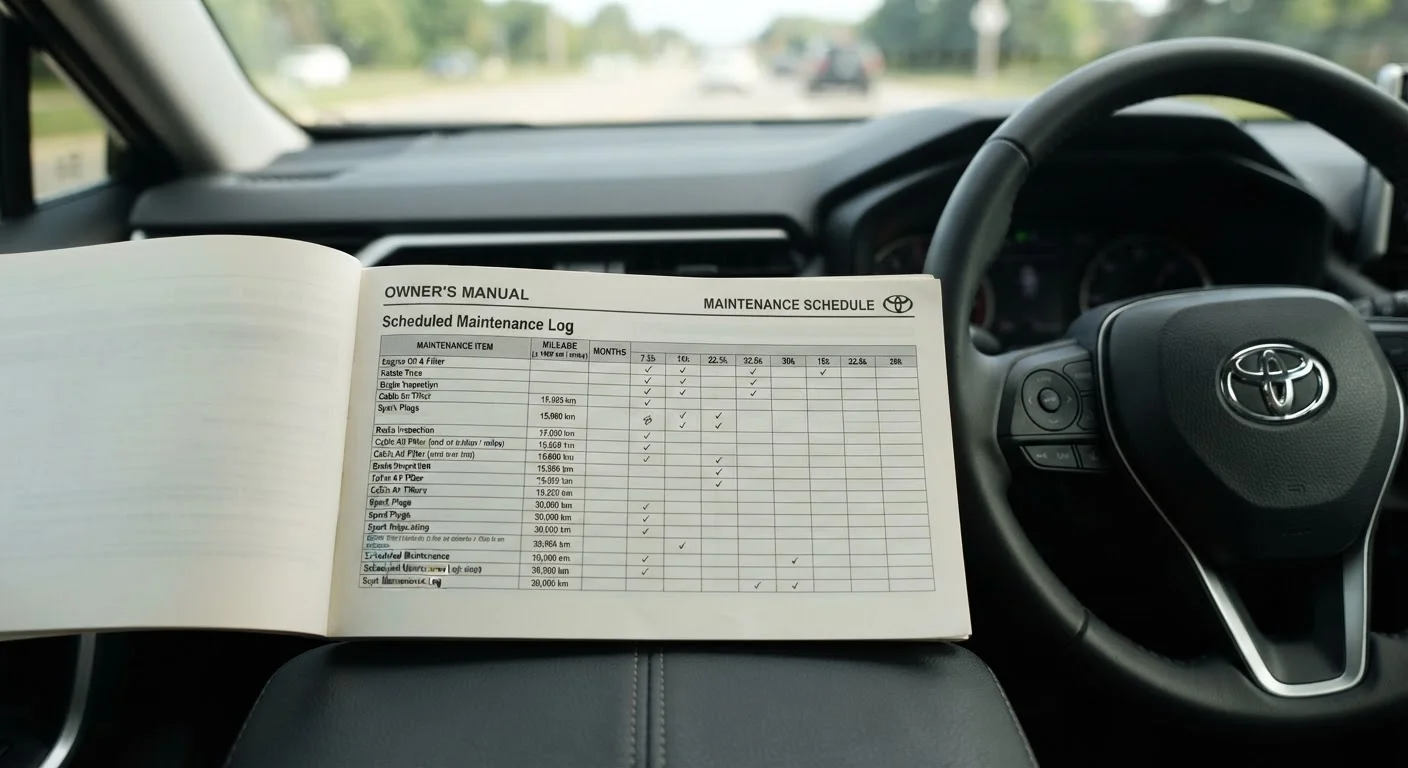
Photo: Online-Searches.net | Explore Insightful Blogs editorial
Key Takeaways
- Your owner's manual contains the authoritative maintenance schedule for your exact vehicle — not a generic chart.
- Mileage and time intervals both apply; whichever comes first should trigger the service.
- Skipping routine services doesn't save money long-term — it accelerates wear and raises repair costs.
- Severe driving conditions require more frequent servicing than standard schedules suggest.
- Keeping service records protects resale value and helps diagnose future problems.
What a Maintenance Schedule Actually Is
Think of your car's maintenance schedule as a preventive care calendar — a series of checkpoints that keep mechanical problems from ambushing you. Every vehicle manufacturer publishes one based on engineering data about how components wear under real-world use. It isn't a suggestion; it's the closest thing to a car health roadmap you'll ever get.
The schedule lives in your owner's manual — a resource that most drivers never fully open. If you want to understand what your vehicle actually needs, reading your owner's manual is the essential first step. It's specific to your make, model, year, and engine — not a one-size-fits-all chart.
Intervals are expressed in miles, months, or both. The standard rule: whichever threshold you hit first triggers the service. A driver who covers only 5,000 miles per year still needs annual coolant and brake fluid checks, because fluids degrade with time even when the car sits idle.
35%
Drivers who skip or delay routine maintenance
According to the Car Care Council, approximately one in three vehicles on American roads is overdue for at least one routine maintenance service.
$1,200+
Average preventable repair cost from neglect
The Car Care Council estimates that neglected vehicle maintenance costs American drivers billions annually in avoidable repairs, with individual incidents often exceeding $1,200.
200,000 mi
Miles well-maintained modern vehicles can reach
Automotive engineers and consumer reliability data consistently show that vehicles following manufacturer maintenance schedules are far more likely to reach high-mileage milestones reliably.
The Key Milestones and What They Cover
While exact intervals vary by manufacturer, most schedules follow a recognizable pattern of escalating service complexity as mileage accumulates.
- Every 5,000–10,000 miles: Oil and filter change, tire rotation, visual inspection of brakes, lights, and fluid levels. These are the most frequent and most impactful items on the list.
- Every 15,000–30,000 miles: Air filter replacement, cabin air filter swap, brake inspection, battery check, and topping off or replacing transmission fluid depending on vehicle type.
- Every 30,000–60,000 miles: Spark plug replacement (for many engines), coolant flush, power steering fluid check, drive belt inspection, and in some cases fuel filter replacement.
- Every 60,000–100,000 miles: Timing belt replacement if your engine has one (a critical and often expensive job), brake fluid flush, differential fluid service on AWD/4WD vehicles, and comprehensive suspension inspection.
These aren't arbitrary — each interval reflects how long a given component typically lasts under normal operating stress. Ignoring the 60,000-mile timing belt, for example, can result in engine damage costing thousands of dollars.
Normal vs. Severe Driving Conditions
Your owner's manual likely contains two schedules: one for normal driving and one for severe or special operating conditions. Many drivers assume they fall into the normal category, but the severe schedule applies more often than people expect.
Severe conditions include: frequent trips under five miles, stop-and-go urban traffic, towing or hauling heavy loads, driving in extreme heat or cold, and sustained operation on dusty or unpaved roads. Under these conditions, oil breaks down faster, brakes wear more quickly, and cooling systems work harder.
Check Your Driving Profile Honestly
Weather extremes also play a role that's easy to underestimate. Our guide on seasonal car maintenance covers what to inspect before each season to reduce weather-related stress on your vehicle's systems.
Why Keeping Up With It Pays Off
Deferred maintenance rarely saves money. A skipped $80 coolant flush can become a $1,500 radiator replacement. A missed timing belt service can destroy an engine. The math is rarely favorable for neglect.
Beyond avoiding repairs, a complete service history significantly improves resale value. Prospective buyers and dealers treat documented maintenance as evidence that a car was cared for — it's one of the clearest signals a vehicle gives about its future reliability. Drivers who want to understand what separates long-lasting vehicles from early write-offs can explore maintenance habits that define high-mileage cars.
If you notice a dashboard warning light between scheduled intervals, don't wait for your next milestone. Symptoms like unusual noises, fluid leaks, or an illuminated check engine light warrant immediate attention. Understanding what triggers the check engine light can help you judge when to act quickly versus when it's safe to monitor.
For a broader view of annual vehicle responsibilities — registration, insurance, and maintenance together — the annual car ownership checklist is a practical companion resource.
“Preventive maintenance is not an expense — it's insurance against far larger costs. Every hour a mechanic spends on scheduled service is worth several hours of unplanned repair work that could have been avoided.”
— Cars & Driving Editorial Team, Vehicle Maintenance Analysis, Cars & Driving
Frequently Asked Questions
The content provided on our blog site traverses numerous categories, offering readers valuable and practical information. Readers can use the editorial team’s research and data to gain more insights into their topics of interest. However, they are requested not to treat the articles as conclusive. The website team cannot be held responsible for differences in data or inaccuracies found across other platforms. Please also note that the site might also miss out on various schemes and offers available that the readers may find more beneficial than the ones we cover.