
What Road Signs in the U.S. Actually Mean — A Plain-Language Reference

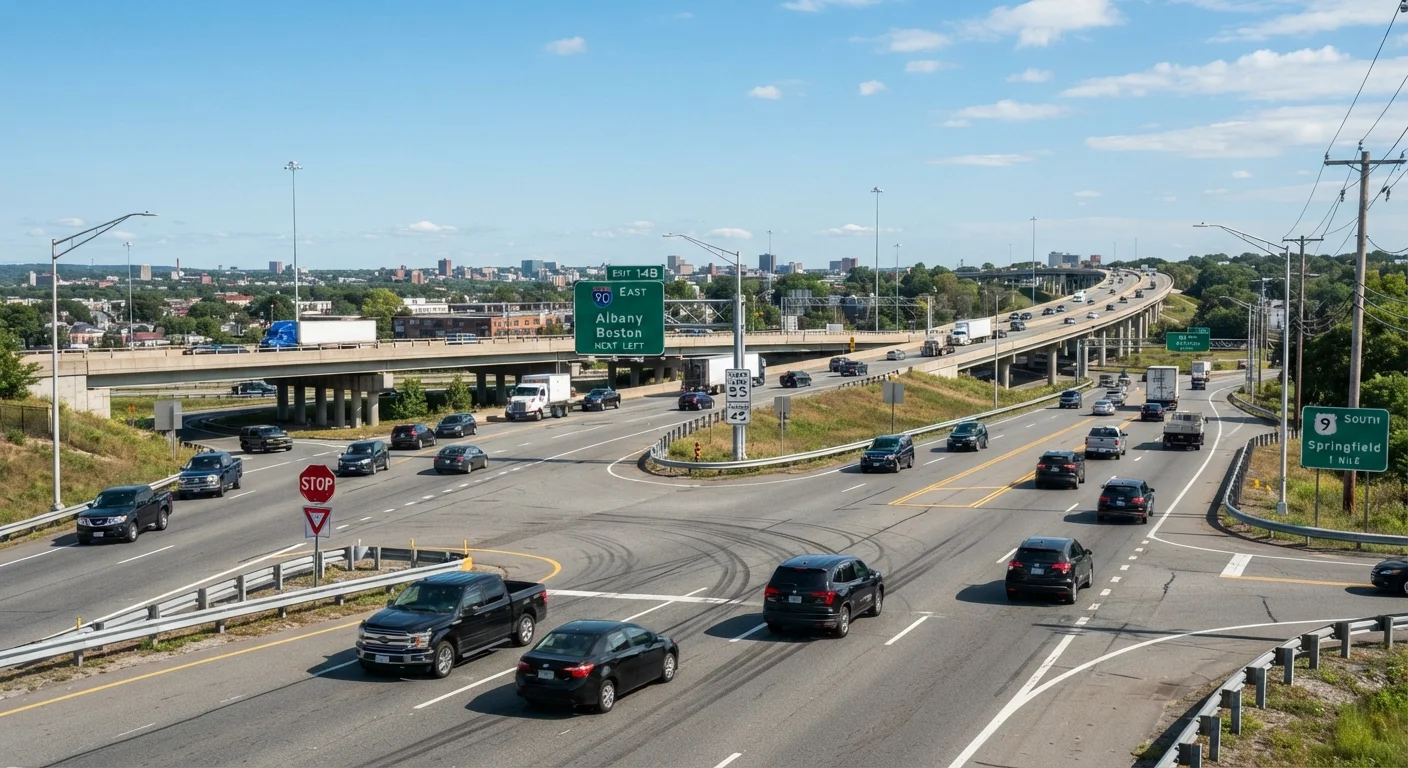
Photo: Online-Searches.net | Explore Insightful Blogs editorial
The System Behind Every Sign
American road signs aren't random. Every shape, color, and symbol is governed by the Manual on Uniform Traffic Control Devices (MUTCD), a federal standard that applies to all public roads in the United States. The goal is consistency: a driver in Maine should be able to read a sign in Arizona without hesitation.
Signs are grouped into three primary categories — regulatory, warning, and guide — each with distinct visual rules that communicate meaning before a driver even reads the text. Understanding this framework makes you a calmer, more confident driver, whether you're commuting locally or navigating an unfamiliar state. See our complete U.S. road trip planning guide for how this knowledge applies on long-distance drives.
| Governing standard | Manual on Uniform Traffic Control Devices (MUTCD) (Federal Highway Administration) |
| Primary sign categories | Regulatory, Warning, Guide |
| Octagon shape reserved for | Stop signs only (MUTCD, international convention) |
| Warning sign color | Yellow (standard) or Orange (work zones) |
| Blue guide signs indicate | Motorist services (fuel, food, lodging, hospitals) |
| Odd-numbered Interstates | Run north–south (Federal Highway Administration numbering system) |
Regulatory Signs: What You Must Do
Regulatory signs communicate legal requirements. Ignoring them isn't just risky — it can result in traffic citations or accidents. These signs are typically white with black or red text and come in recognizable shapes.
- Stop sign (red octagon): Come to a complete stop at the marked line. Proceed only when the intersection is clear and it is safe and legal to do so.
- Yield sign (red and white downward triangle): Slow down and give the right-of-way to traffic already in the intersection or roadway.
- Speed limit signs (white rectangle): Display the maximum legal speed in miles per hour for normal conditions. Speed limits can change frequently, so watch for updates.
- Do Not Enter / Wrong Way (red and white): Entry is prohibited — most often seen at highway ramps and one-way streets.
- No Turn on Red: Some intersections prohibit turns on a red light, which is otherwise legal in most U.S. states unless posted otherwise.
The octagon shape is reserved exclusively for stop signs worldwide, making them identifiable even when covered by snow or vandalism.
Warning Signs: What to Watch For
Warning signs alert drivers to potential hazards or changes in road conditions ahead. They are almost always yellow (or orange in work zones) with black symbols or text, and typically diamond-shaped.
- Curve and turn signs: Indicate the sharpness and direction of an upcoming bend. An advisory speed placard below the sign suggests a safe speed to navigate it.
- Merge and lane-end signs: Warn that lanes are combining ahead — drivers in the ending lane should yield.
- Pedestrian and school crossing: Pentagon-shaped school signs (yellow-green) mark zones with elevated pedestrian activity, particularly near schools.
- Railroad crossing (round yellow sign): A train crossing is ahead. Slow down, look both ways, and never stop on the tracks.
- Slippery when wet: Surface traction is significantly reduced in wet conditions at this location.
MUTCD
The Manual on Uniform Traffic Control Devices is the federal standard published by the Federal Highway Administration that governs the design, placement, and meaning of all traffic control devices on U.S. public roads.
Regulatory sign
A sign that communicates a legal requirement or restriction, such as speed limits or stop requirements. Failure to obey a regulatory sign can result in a traffic violation.
Warning sign
A sign that alerts drivers to potential hazards or changes in road conditions ahead. These signs prompt a reduction in speed or an increase in caution, but do not impose a legal mandate.
Advisory speed
A recommended — not legally mandated — speed posted below a warning sign, indicating a safe pace for navigating a specific curve or hazard under normal conditions.
Work zone
A designated area on a roadway where construction, maintenance, or utility work is in progress. Work zones are marked by orange signs and often carry increased fines for traffic violations.
Right-of-way
The legal priority given to a vehicle, pedestrian, or cyclist to proceed through an intersection or roadway before others. Yield and stop signs are primary tools for assigning right-of-way.
Orange warning signs signal active work zones where workers and equipment may be present. Fines in work zones are often doubled by state law. Just as dashboard warning lights tell you something needs attention, roadway warning signs demand an immediate change in driver behavior.
Guide and Information Signs: Finding Your Way
Guide signs help drivers navigate to their destinations and understand the road environment around them. Color coding here carries specific meaning:
- Green: Highway and distance information — exit numbers, route confirmations, mileage to cities.
- Blue: Motorist services — gas, food, lodging, hospitals, and rest areas accessible from the next exit.
- Brown: Recreational areas, national parks, historic sites, and scenic routes.
- White (with state outline or shield): Route markers identifying U.S. highways, state routes, and Interstate highways by their distinct shield shapes.
Interstate shields are distinctive: odd-numbered Interstates run north–south; even-numbered run east–west. Three-digit Interstates (like I-495) are typically bypass or loop routes around metropolitan areas.
Understanding guide signage reduces the need to glance at a phone for navigation, keeping your eyes on the road. If you're sorting through other driving-related documents, our plain-English breakdown of car insurance fine print takes the same approach to translating complex systems into clear terms.
The content provided on our blog site traverses numerous categories, offering readers valuable and practical information. Readers can use the editorial team’s research and data to gain more insights into their topics of interest. However, they are requested not to treat the articles as conclusive. The website team cannot be held responsible for differences in data or inaccuracies found across other platforms. Please also note that the site might also miss out on various schemes and offers available that the readers may find more beneficial than the ones we cover.