
What Your Following Distance Actually Says About Your Risk on the Road

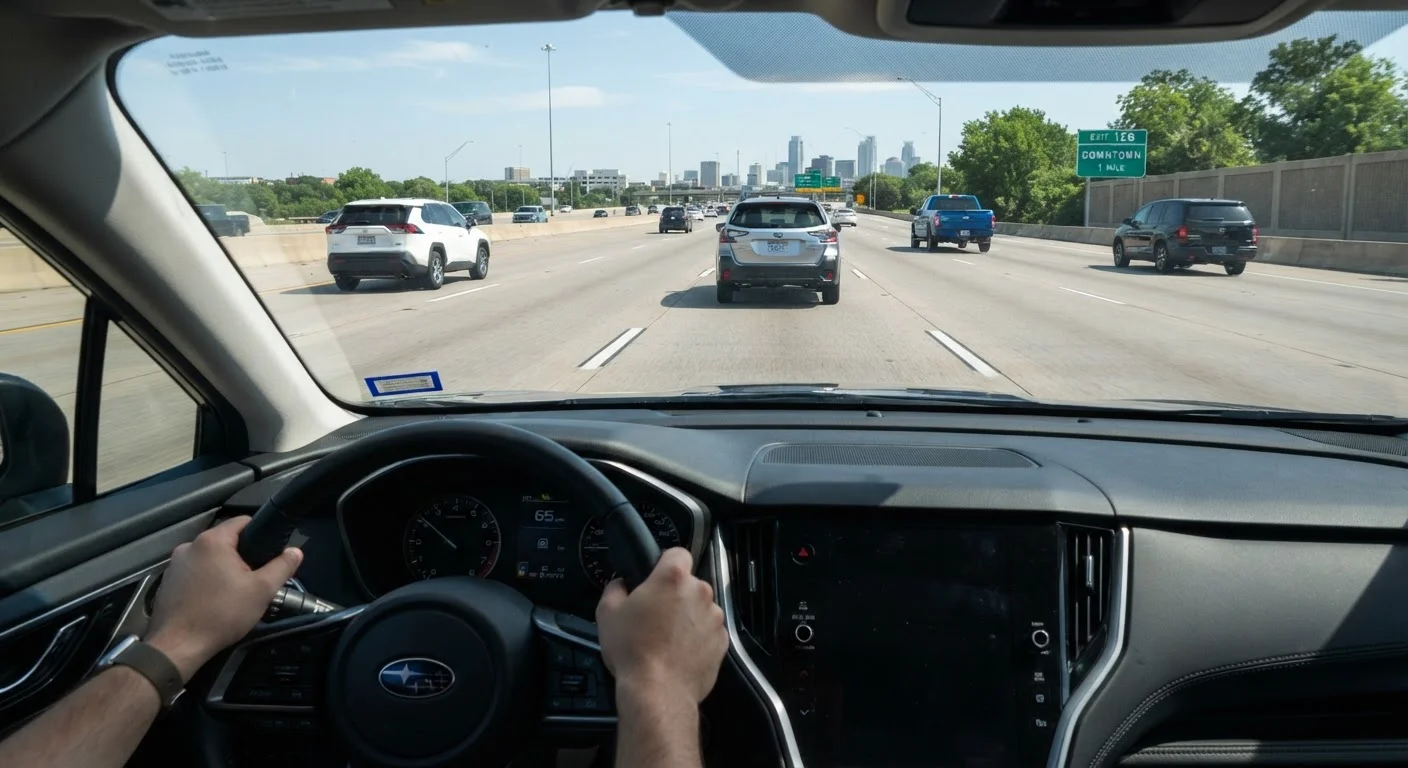
Photo: Online-Searches.net | Explore Insightful Blogs editorial
Key Takeaways
- The commonly cited two-second rule is a minimum in ideal conditions, not a universal standard.
- Reaction time alone — before braking even begins — typically consumes 1.5 seconds of that gap.
- Speed, weather, fatigue, and distraction all increase the following distance you actually need.
- Tailgating is a leading contributing factor in rear-end collisions, which account for a large share of U.S. crashes.
- Increasing your gap costs almost no extra travel time but meaningfully reduces collision risk.
Why the Two-Second Rule Is Only the Beginning
Most drivers learned the two-second rule at some point — pick a landmark, watch the car ahead pass it, and make sure two full seconds pass before you reach the same spot. It's a solid starting point. But treating it as a finish line is where a lot of drivers quietly accumulate risk.
The two-second rule was designed for dry roads, alert drivers, and moderate speeds. Strip away any one of those conditions — add rain, a fatigued driver, or a highway merge — and the physics change immediately. At 65 mph, two seconds of gap translates to roughly 190 feet. That sounds generous until you factor in that an average driver's reaction time alone (seeing a hazard, processing it, moving a foot to the brake pedal) consumes roughly 1.5 of those seconds before any actual braking begins.
What's left — about half a second of braking distance — often isn't enough to stop a vehicle traveling at speed. Safety researchers and driver education programs have long recommended three to four seconds as a more realistic baseline, and more in adverse conditions.
~29%
Share of U.S. crashes that are rear-end collisions
The National Highway Traffic Safety Administration (NHTSA) has consistently identified rear-end crashes as one of the most common crash types on U.S. roads, with following too closely cited as a key contributing factor.
1.5 sec
Average driver perception-reaction time
Commonly cited in traffic safety research and driver education literature; actual reaction time varies with alertness, age, and distraction level.
300+ ft
Total stopping distance at 65 mph
Based on standard physics calculations combining typical reaction distance and braking distance on dry pavement for an alert driver in a passenger vehicle.
The Real Variables That Shrink Your Safety Margin
Following distance isn't a fixed number — it's a calculation your brain has to make continuously, based on changing conditions. Several factors can silently erode the gap you think you have:
- Speed: Every increase in speed raises both your stopping distance and the energy involved in a collision. The relationship isn't linear — doubling speed roughly quadruples stopping distance.
- Weather and road surface: Wet, icy, or gravel-covered roads reduce tire grip and dramatically extend braking distances. Rain alone can double the stopping distance needed.
- Vehicle type and load: A fully loaded pickup truck or SUV takes significantly longer to stop than a lighter sedan. Trailers add further complexity.
- Tire condition: Worn tread reduces braking grip. Tire health directly affects how quickly your vehicle stops — a factor most drivers underestimate.
- Driver state: Fatigue and distraction both slow reaction time. Even seemingly minor distractions extend reaction time in measurable ways.
The compounding effect is significant. A tired driver on wet roads in a loaded vehicle may need two or three times the stopping distance they'd need under ideal conditions.
What Your Gap Reveals About Your Driving Mindset
Following distance isn't just a physics problem — it's a behavioral signal. Drivers who habitually maintain a generous cushion tend to be scanning further ahead, processing the traffic environment more broadly, and giving themselves options. Drivers who habitually tail closely are, whether consciously or not, removing their own margin for error.
This connects directly to the difference between defensive and aggressive driving. Defensive driving is built on maintaining options — space is one of the most important options you have. A driver who maintains space can steer around a hazard, absorb a slower merge without braking hard, and generally absorb the unpredictability of other road users.
“Space and time are the two things a driver can always manage. Everything else on the road is largely outside your control.”
— Cars & Driving Editorial Team, Automotive safety writers and editors
One practical reframe: think of your following gap not as wasted space, but as purchased reaction time. Every extra second of distance is a second you've given yourself to respond to whatever comes next — a sudden stop, a tire blowout ahead, an animal crossing the road.
Adjusting Your Gap in Practice
Building a consistent following-distance habit doesn't require complex math in the moment. A few practical principles cover most situations:
- Use the three-second rule as your dry-road default. Three seconds gives you reaction time plus meaningful braking distance at most highway speeds. Count by saying "one-thousand-one, one-thousand-two, one-thousand-three" after the vehicle ahead passes a fixed point.
- Double it in wet or low-visibility conditions. Rain, fog, dawn, and dusk all reduce your effective reaction window. Night driving introduces additional challenges that warrant a longer gap as a matter of course.
- Triple it on snow or ice. Braking distances on icy pavement can be ten times longer than on dry asphalt. Six seconds is not excessive.
- Re-establish your gap smoothly after a cut-in. When a driver merges into your space, ease off the accelerator — don't brake sharply — and let the gap rebuild naturally. Avoid the instinct to close back in immediately.
The cost of maintaining a larger gap is almost always negligible in real travel time. The difference between two seconds and four seconds of following distance, across a typical commute, rarely adds more than a minute to your journey. What it does add is a meaningful, practical layer of protection against the most common type of collision on U.S. roads.
Frequently Asked Questions
The content provided on our blog site traverses numerous categories, offering readers valuable and practical information. Readers can use the editorial team’s research and data to gain more insights into their topics of interest. However, they are requested not to treat the articles as conclusive. The website team cannot be held responsible for differences in data or inaccuracies found across other platforms. Please also note that the site might also miss out on various schemes and offers available that the readers may find more beneficial than the ones we cover.