
Reading a Nutrition Facts Label Without Getting Lost

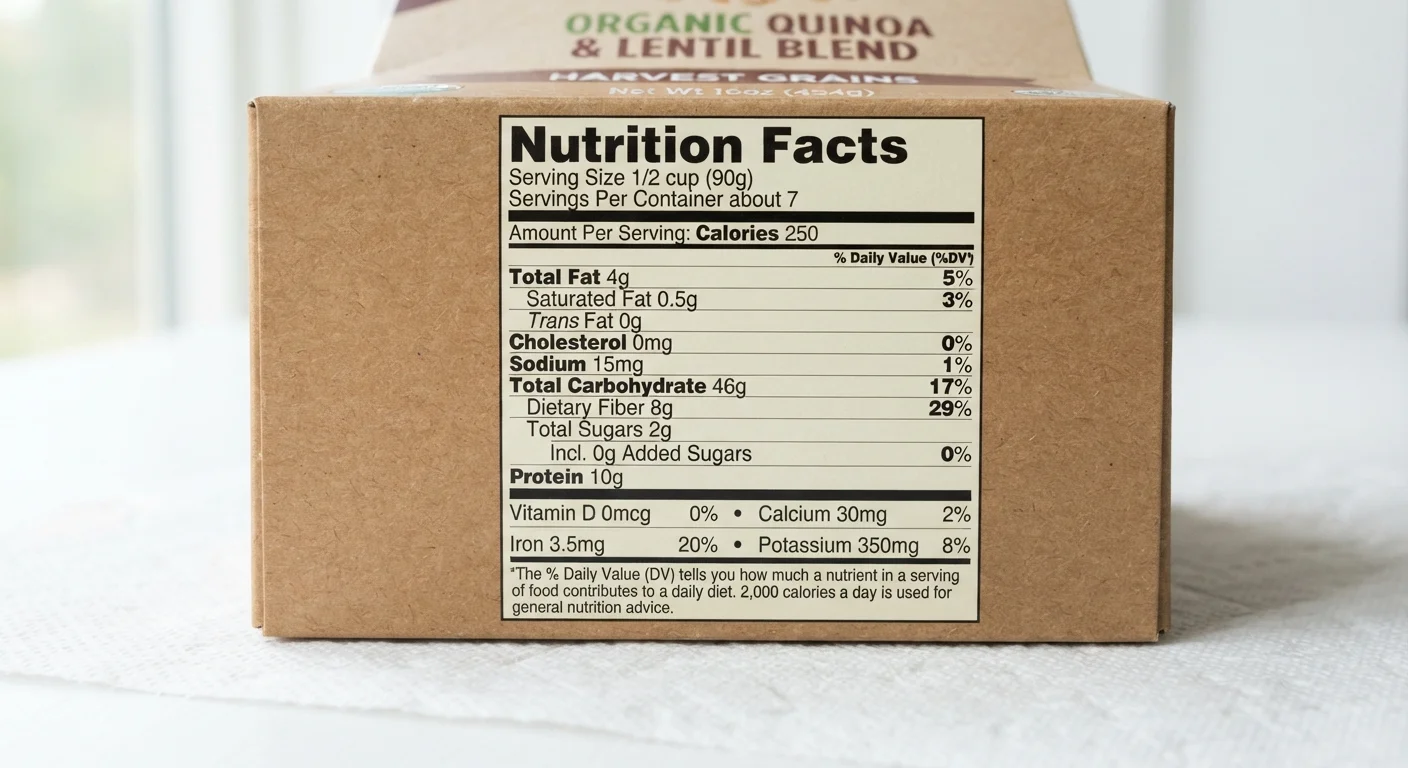
Photo: Online-Searches.net | Explore Insightful Blogs editorial
Key Takeaways
- Serving size is the foundation of every number on the label — check it first.
- Percent Daily Value (%DV) uses a 2,000-calorie reference diet; your actual needs may differ.
- Aim for lower %DV on saturated fat, sodium, and added sugars; higher on fiber and key vitamins.
- Added sugars are listed separately from total sugars — a critical distinction introduced in updated FDA rules.
- Ingredients appear in descending order by weight, giving context the Nutrition Facts panel alone cannot.
Why the Label Trips People Up
The U.S. Nutrition Facts panel is one of the most information-dense small spaces in everyday life. Rows of numbers, unfamiliar units, and percentages crowd together in a format designed for regulatory completeness — not casual reading. The result: most shoppers glance at calories and move on, missing the details that actually matter for their goals.
This guide walks through every major section of the label in the order it appears, so you can read any panel quickly and confidently. If you're just starting to think about how food choices fit together, the foundation guide to everyday nutrition provides useful context before diving into label mechanics.
One Label, Many Contexts
How to Read the Label: Step by Step
Follow these steps each time you pick up a package. With practice, the whole process takes under a minute.
Start with serving size
The very top of the panel shows the serving size and the number of servings per container. Every number below — calories, grams, percentages — is calculated for one serving, not the whole package. A bag labeled as containing 2.5 servings means you need to multiply all values by 2.5 if you eat the whole thing.
Note the calorie count in context
Calories tell you how much energy one serving delivers. This number matters most in relation to your overall daily intake — a number that varies significantly by age, sex, activity level, and health status. The label uses 2,000 calories as a reference point for %DV calculations, which is an average, not a universal target.
Review nutrients to limit
The next block covers total fat, broken into saturated fat and trans fat, then cholesterol and sodium. Dietary guidance from the U.S. Dietary Guidelines consistently links high intakes of saturated fat, trans fat, and sodium to cardiovascular risk at population level. Use %DV here: under 5% per serving is low, 20% or more is high.
Check total carbohydrates, fiber, and sugars
Total carbohydrates include dietary fiber, total sugars, and added sugars (listed separately). Dietary fiber supports digestive health and is under-consumed by most Americans — a higher %DV is beneficial. Added sugars are the ones manufacturers incorporate during processing; the %DV for added sugars is based on a daily limit of 50 g for a 2,000-calorie diet.
Look at protein
Protein does not carry a %DV on most labels because recommended amounts vary substantially by body weight and life stage. The gram count is the most useful figure here. For context, typical adult protein needs are often estimated around 0.8 g per kilogram of body weight, though individual needs differ — consult a healthcare professional for personalized guidance.
Scan the micronutrient section
The bottom section lists vitamin D, calcium, iron, and potassium — four nutrients the FDA identified as commonly under-consumed in the U.S. population. Each shows only a %DV. Higher percentages here generally represent a nutritional advantage, especially if the product is otherwise low in nutrients to limit.
Common Misreads and How to Avoid Them
"Low fat" doesn't mean low calorie
Manufacturers often compensate for removed fat by adding sugar or starch to maintain palatability. Check both the fat row and the added sugars row before assuming a reduced-fat product is a lighter choice.
Natural sugars vs. added sugars
Total sugars include naturally occurring sugars from fruit or dairy — not inherently a concern. Added sugars, listed on a separate row beneath total sugars, are the ones most linked to excess calorie intake with little nutritional payoff. For a deeper look at how manufacturers label these, see how to spot added sugars on ingredient lists.
%DV works in both directions
5% DV or less is considered low; 20% DV or more is considered high. Use that mental shortcut for every nutrient row — not just the ones you're trying to limit. Fiber, calcium, iron, and vitamin D are nutrients most Americans under-consume, so a high %DV there is a positive signal.
Front-of-Package Claims Are Not the Label
Ingredient list as a cross-check
Ingredients are listed by weight, largest first. If a form of sugar appears within the first three ingredients — or if several different sugars appear spread throughout the list — the product is likely higher in added sugars than the label number alone suggests. For broader nutrition vocabulary, the nutrition terms glossary explains terms you'll encounter across labels and packaging claims.
This article provides general nutrition education and is not a substitute for personalized advice from a registered dietitian or other qualified healthcare professional.
The content provided on our blog site traverses numerous categories, offering readers valuable and practical information. Readers can use the editorial team’s research and data to gain more insights into their topics of interest. However, they are requested not to treat the articles as conclusive. The website team cannot be held responsible for differences in data or inaccuracies found across other platforms. Please also note that the site might also miss out on various schemes and offers available that the readers may find more beneficial than the ones we cover.