
Plant-Based vs. Vegan: The Distinction Actually Matters

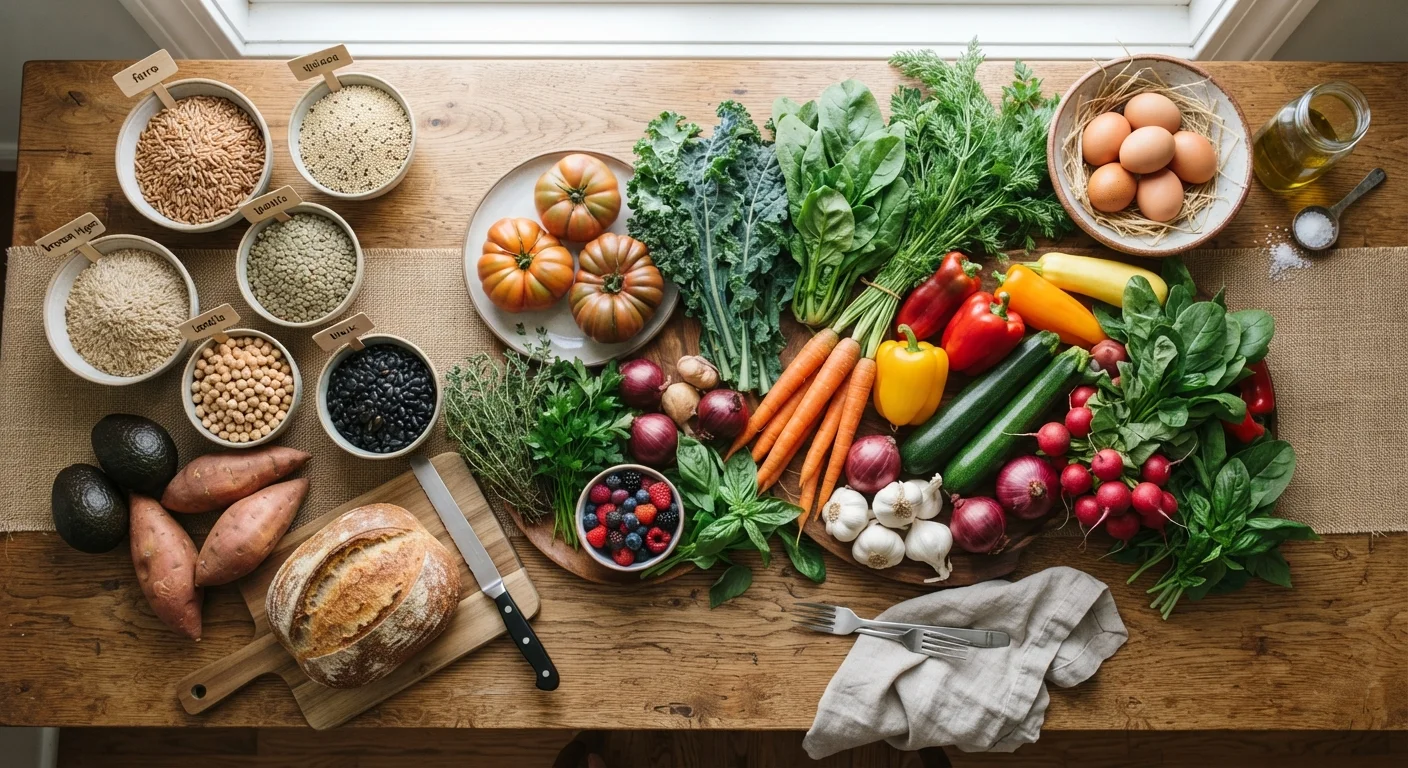
Photo: Online-Searches.net | Explore Insightful Blogs editorial
Key Takeaways
- Plant-based is a dietary philosophy emphasizing whole plant foods; vegan is a defined standard excluding all animal products.
- A plant-based eater may still consume occasional animal products; a vegan does not — by definition.
- Vegan diets are motivated by ethics, environment, or health; plant-based is primarily a nutritional framework.
- Neither approach automatically guarantees a nutritious diet — food quality and variety matter in both.
- Understanding which framework fits your values and lifestyle helps you maintain it long-term.
Why the Confusion Exists
Walk through any grocery store and you'll find the words "plant-based" and "vegan" stamped on packaging almost interchangeably. Food marketers have blurred the line so thoroughly that many people — including people who follow one or the other — use the terms as synonyms. They aren't.
The confusion is understandable: both approaches center heavily on foods that come from plants. But one is a flexible nutritional philosophy, and the other is a defined standard with a bright ethical line. Treating them as equivalent leads to mismatched expectations, whether you're choosing a dietary path for yourself or simply trying to understand what someone else eats.
This distinction matters most when you're deciding which approach actually fits your life — not just in theory, but across a typical week of meals, social situations, and grocery runs. For a broader look at how various structured diets differ in their rules and trade-offs, see how keto, paleo, and Whole30 compare.
What Each Term Actually Means
Plant-based eating is a dietary orientation, not a rulebook. At its core, it means building meals around whole, minimally processed plant foods — vegetables, fruits, legumes, whole grains, nuts, and seeds — while reducing reliance on animal products. The key word is reducing. A plant-based eater might still have eggs at brunch on Saturday or add a small portion of fish to a grain bowl. There's no universally enforced line. The philosophy is about the overall pattern of eating, not ingredient-level compliance.
Vegan is a defined standard. A vegan diet excludes all animal-derived ingredients: meat, poultry, fish, dairy, eggs, and typically honey. This applies across all meals, all the time — not as a general tendency, but as a consistent practice. For many people who identify as vegan, the diet is one expression of a broader ethical stance against using animals for food, clothing, or other purposes.
| Criterion | Plant-Based Eating | Vegan Diet |
|---|---|---|
| Definition | Flexible nutritional philosophy | Strict standard: no animal products |
| Animal products allowed? | Yes, in reduced amounts | No — none, by definition |
| Primary motivation | Health and food quality | Ethics, environment, or health |
| Flexibility | High — no bright-line rules | Low — consistent exclusion required |
| Label clarity in social settings | Variable; often misunderstood | Universally recognized definition |
| Nutrient planning effort | Moderate | Higher — B12 and others require attention |
In short: every vegan eats plant-based by default, but not every plant-based eater is vegan. That asymmetry is the crux of the distinction.
Motivation Changes the Experience
Beyond definitions, the underlying motivation for each approach shapes how people actually live with it day to day.
Plant-based eating is typically motivated by health goals — improving cardiovascular markers, managing weight, or simply eating more nutrient-dense food. Because the framework is flexible, there's room for adaptation. A bad week doesn't break the approach. This can make it easier to sustain, especially when social pressure, travel, or a limited food budget makes strict adherence difficult.
Veganism tends to be rooted in ethics or environmental conviction, which provides a different kind of staying power. When the reason for a dietary choice is values-based rather than outcome-based, the decision-making process simplifies: an ingredient is either vegan or it isn't. Many people find this clarity helpful. The trade-off is that navigating restaurants, family gatherings, and food labels requires more consistent vigilance.
Terminology Varies by Context
Neither motivation is inherently superior. What matters is whether the reasoning behind your dietary choices is strong enough to carry you through the moments when convenience or social dynamics push back. See how to evaluate which dietary approach actually fits your life for a structured way to think through that question.
Nutritional Considerations for Both
Neither label guarantees a nutritious diet. A bag of vegan cookies and a plate of french fries are technically vegan. Highly processed plant-based meat alternatives can contain significant sodium and additives. The quality of what you eat within either framework matters just as much as the framework itself.
That said, both approaches — when followed thoughtfully — tend to increase fiber intake, reduce saturated fat from animal sources, and raise consumption of micronutrient-rich vegetables and legumes. These shifts are broadly consistent with dietary patterns associated with lower rates of heart disease and type 2 diabetes, according to research reviewed by institutions such as the Harvard T.H. Chan School of Public Health.
People following vegan diets in particular need to pay deliberate attention to certain nutrients that are less abundant or less bioavailable from plant sources, including vitamin B12, iron, calcium, zinc, iodine, and long-chain omega-3 fatty acids. For a detailed breakdown of those gaps, nutrient gaps that frequently catch new vegans off guard is worth reading before making the switch. Plant-based eaters who include some animal products may face fewer gaps, though the specifics depend on what they actually eat. For context on how different proteins compare nutritionally, see protein sources across different eating patterns.
This article is for general informational purposes only and is not a substitute for personalized medical or nutritional advice. Consult a registered dietitian or qualified healthcare professional before making significant changes to your diet, especially if you have existing health conditions.
The content provided on our blog site traverses numerous categories, offering readers valuable and practical information. Readers can use the editorial team’s research and data to gain more insights into their topics of interest. However, they are requested not to treat the articles as conclusive. The website team cannot be held responsible for differences in data or inaccuracies found across other platforms. Please also note that the site might also miss out on various schemes and offers available that the readers may find more beneficial than the ones we cover.