
The Mediterranean Diet Explained: What It Actually Looks Like Day to Day

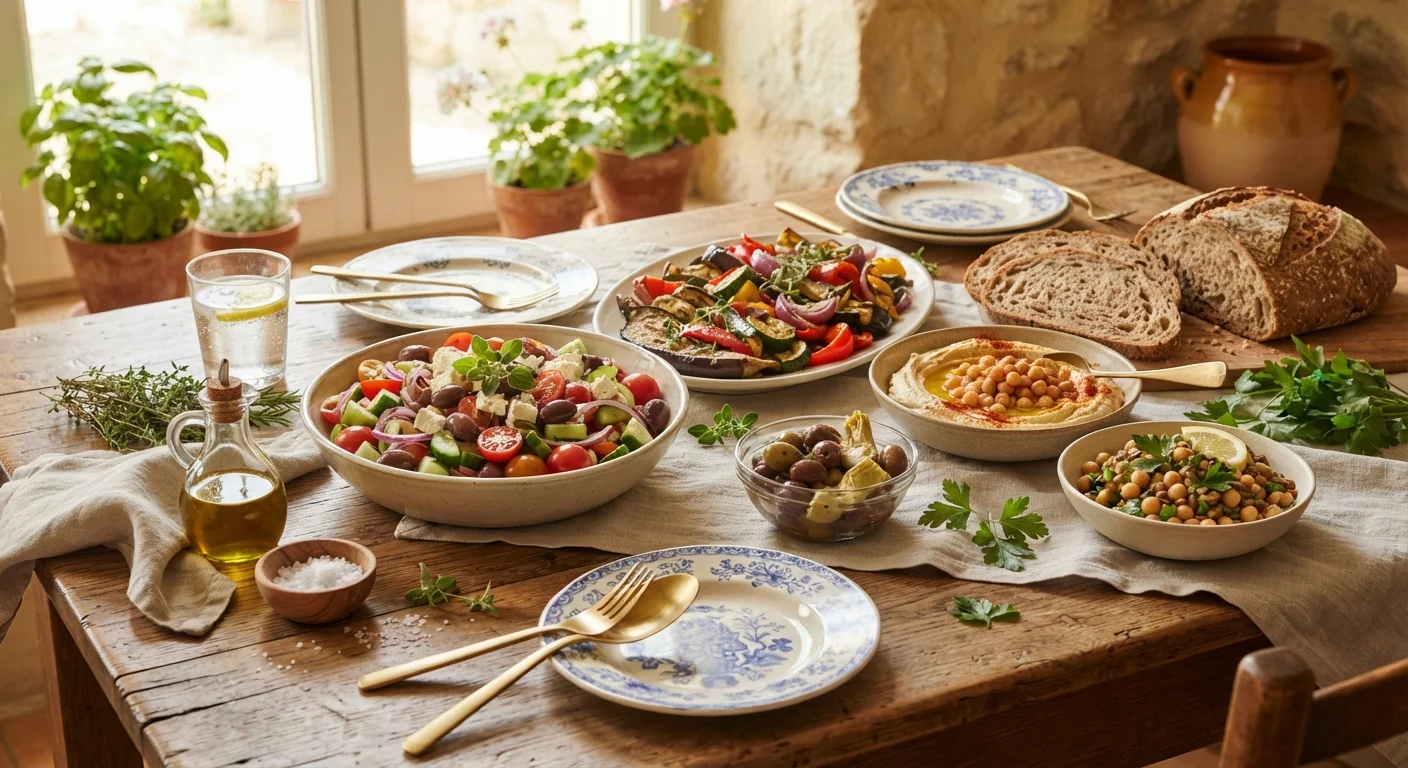
Photo: Online-Searches.net | Explore Insightful Blogs editorial
Key Takeaways
- The Mediterranean diet is a food pattern, not a calorie-counting plan or strict rulebook.
- Plant foods—vegetables, legumes, whole grains, nuts—form the foundation of every day's eating.
- Olive oil replaces butter and other saturated fats as the primary cooking fat.
- Fish and seafood appear regularly; red meat is eaten sparingly.
- Processed foods, added sugars, and refined grains are minimized, not forbidden.
- Consistency over time matters more than any single perfect meal.
What the Mediterranean Diet Is—and Isn't
The Mediterranean diet has attracted decades of research interest, but popular coverage has a habit of reducing it to a handful of photogenic foods: drizzled olive oil, a grilled salmon fillet, a glass of wine. The real picture is broader and more practical than that.
At its core, this is an eating pattern—a way of structuring food choices across the day and week rather than a precise prescription of grams and calories. It was first formally described by American physiologist Ancel Keys in the 1950s and 1960s, based on observations of dietary habits in countries like Greece and southern Italy. What Keys noted was not just what people ate, but how they ate: varied, plant-forward, and relatively unprocessed.
Understanding what the diet actually involves day to day helps cut through the noise. For a broader look at how evidence stacks up across popular diets, see our article on diet trends and the research behind them.
The Daily Food Pattern in Plain Terms
Think of the Mediterranean diet as organized by frequency rather than rules. Some foods appear at nearly every meal; others show up weekly; a few are occasional.
Every Day
- Vegetables — generously, across multiple meals. Leafy greens, tomatoes, peppers, zucchini, eggplant, onions, garlic.
- Fruits — typically as snacks or desserts rather than juice.
- Whole grains — bread, farro, bulgur, oats, pasta in moderate portions.
- Legumes — lentils, chickpeas, white beans. These often anchor a meal.
- Nuts and seeds — a small handful as a snack or ingredient.
- Olive oil — the primary fat for cooking and dressing.
Several Times Per Week
- Fish and seafood — salmon, sardines, mackerel, shrimp, and similar.
- Eggs — as a flexible, affordable protein source.
- Dairy (fermented) — plain yogurt and small amounts of aged cheese.
Infrequently
- Poultry — chicken or turkey, a few times per week at most.
- Red meat — red meat and processed meats are limited, not eliminated.
- Sweets and refined foods — present on occasion but not a daily fixture.
~60%
Proportion of calories from plant foods
Nutrition researchers characterizing traditional Mediterranean diets estimate that the majority of daily calories come from plant-based sources including grains, vegetables, legumes, and fruits.
2–3x
Weekly fish and seafood servings
Most dietary guidelines and research frameworks aligned with the Mediterranean pattern recommend fish or seafood at least two to three times per week.
~1–4x
Monthly red meat frequency
Traditional Mediterranean eating patterns included red meat only a few times per month, according to dietary survey data from Mediterranean populations studied in the mid-20th century.
This structure means a typical day might look like: Greek yogurt with fruit and walnuts at breakfast; a lentil and vegetable soup with whole grain bread at lunch; baked fish with roasted vegetables and a small pasta portion at dinner—finished with fresh fruit rather than a dessert.
The Role of Olive Oil, Herbs, and Flavor
One practical shift the Mediterranean diet asks of most American eaters is replacing butter and processed vegetable oils with extra-virgin olive oil as the go-to cooking fat. This isn't about using oil liberally without thought—it's about consciously choosing it as the foundation of flavor and cooking.
Alongside olive oil, the pattern leans heavily on fresh and dried herbs—oregano, thyme, rosemary, basil, parsley—and aromatics like garlic and lemon to build flavor without relying on sodium-heavy sauces or processed condiments. This is worth noting practically: eating this way does not mean bland food.
Start With One Meal, Not a Full Overhaul
Understanding how to build a satisfying, balanced plate within this framework is straightforward. Our guide on what a balanced plate actually looks like offers complementary visual guidance.
Flexibility, Sustainability, and What This Looks Like Long Term
One of the most important things to understand about the Mediterranean diet is that it tolerates imperfection well. A missed serving of fish, a meal heavy on refined carbohydrates, or a week of less-than-ideal choices doesn't undermine the pattern—because the pattern is defined by overall consistency, not daily perfection.
This makes it meaningfully different from elimination-based diets, where a single deviation can feel like failure. The Mediterranean approach builds in flexibility—occasional red meat, wine in moderate amounts for those who drink, desserts on special occasions—without abandoning its structure.
For readers weighing this against other approaches, our article on finding the right dietary approach for your actual life offers guidance on matching an eating pattern to real-world constraints rather than ideal conditions.
This article is for general informational purposes only and does not constitute medical or dietary advice. Consult a qualified healthcare professional before making significant changes to your diet, particularly if you have a health condition or are taking medication.
Frequently Asked Questions
The content provided on our blog site traverses numerous categories, offering readers valuable and practical information. Readers can use the editorial team’s research and data to gain more insights into their topics of interest. However, they are requested not to treat the articles as conclusive. The website team cannot be held responsible for differences in data or inaccuracies found across other platforms. Please also note that the site might also miss out on various schemes and offers available that the readers may find more beneficial than the ones we cover.