
What a Balanced Plate Actually Looks Like

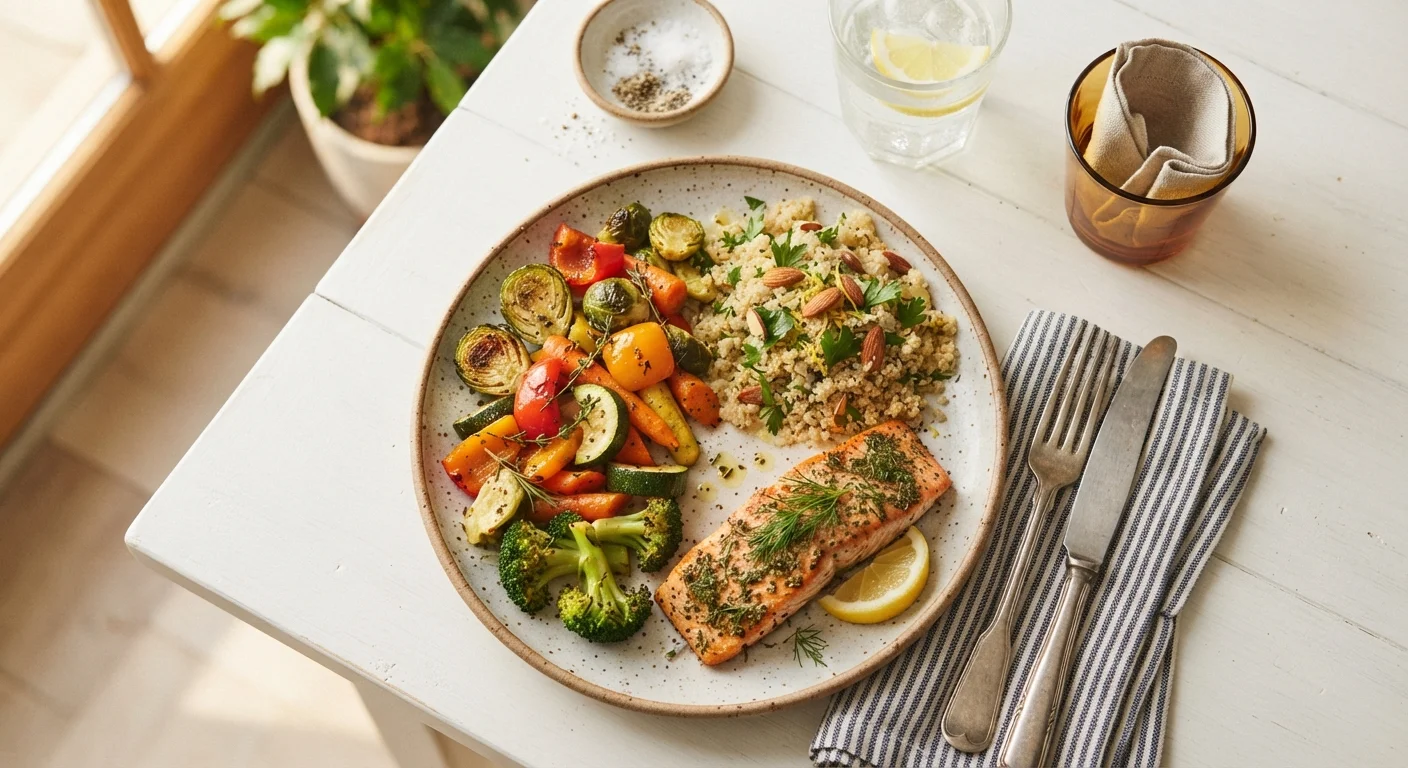
Photo: Online-Searches.net | Explore Insightful Blogs editorial
Key Takeaways
- Half your plate should be filled with non-starchy vegetables and fruit at most meals.
- About a quarter of the plate should be whole grains or other quality carbohydrate sources.
- The remaining quarter is for lean or plant-based protein.
- Healthy fats are used in cooking or added in small amounts — they're part of balance, not an afterthought.
- Balance is measured across the day, not judged on a single meal.
- No single food is required; variety and proportion matter more than perfection.
The Proportions That Actually Matter
Food pyramids have come and gone. What nutrition science keeps returning to is something simpler: a plate visual that reflects how much of each food type your body benefits from at a given meal. The widely referenced model — supported by public health nutrition research — breaks a plate into three main sections.
Half the plate: vegetables and fruit. Non-starchy vegetables should dominate this half — leafy greens, broccoli, peppers, cucumbers, tomatoes, and similar foods. Fruit fits here too, though most meals lean vegetable-heavy. This half provides fiber, vitamins, minerals, and water content that supports digestion and satiety.
One quarter: whole grains or quality carbohydrates. Brown rice, quinoa, whole wheat pasta, oats, or starchy vegetables like sweet potato fit here. These provide steady energy without the rapid blood sugar fluctuations associated with heavily refined grains. The emphasis is on less-processed sources where possible.
One quarter: protein. This could be lean poultry, fish, eggs, dairy, or plant-based proteins like lentils, beans, edamame, or tofu. Protein supports muscle maintenance, satiety, and numerous metabolic functions.
Healthy fats — olive oil for cooking, avocado, nuts or seeds as additions — are part of this picture but don't occupy a fixed section. They're used with the other components, not instead of them. For durable eating principles that hold up over time, this proportional thinking is a reliable starting point.
9 in 10
Americans fall short of daily vegetable recommendations
According to the CDC's State of Obesity report and dietary intake data from NHANES surveys, most American adults consume well below the recommended vegetable intake — making the half-plate vegetable target especially meaningful.
~25g
Daily fiber most Americans actually consume
The Dietary Guidelines for Americans note that most adults fall short of the 28–34g daily fiber recommendation, largely due to low intake of vegetables, legumes, and whole grains.
Half
Plate proportion recommended for vegetables and fruit
This proportion is consistent across multiple credible nutrition frameworks, including the USDA's MyPlate guidance and Harvard's Healthy Eating Plate model.
What This Looks Like in Real Meals
Translating a plate diagram into what you actually cook or order takes practice. Here's how the proportions map onto common meal formats:
- A grain bowl: Start with a base of farro or brown rice (the quarter), pile on roasted zucchini, spinach, and cherry tomatoes (the half), and add grilled chicken or chickpeas (the final quarter). Drizzle with olive oil or tahini for healthy fat.
- A stir-fry: Use a moderate amount of rice or noodles, load the wok with bok choy, snap peas, carrots, and bell peppers, and include tofu or shrimp. The sauce counts as seasoning, not a food group.
- A sandwich or wrap: Whole grain bread or wrap, a generous layer of vegetables (lettuce, tomato, cucumber, sprouts), a portion of turkey or hummus, and a side salad rather than chips to round out the balance.
Restaurant meals and takeout can approximate this too. Asking for extra vegetables, choosing a side salad over fries, or splitting a large portion are practical adjustments — not compromises. Meal planning can make hitting these proportions more consistent without requiring daily effort from scratch.
Common Misconceptions That Undermine Balance
Despite its simplicity, the balanced plate concept gets distorted by diet culture and food marketing in predictable ways.
Misconception 1: Carbohydrates don't belong on a healthy plate. Whole-food carbohydrates are an important energy source for most people. The question isn't whether to include them, but which types and in what proportion. A quarter-plate of brown rice is fundamentally different from a half-plate of white bread.
Misconception 2: More protein is always better. Protein is important, but exceeding the quarter-plate proportion at every meal by crowding out vegetables is a common trade-off that reduces fiber and micronutrient variety. Protein adequacy matters; excess protein isn't automatically beneficial.
Misconception 3: Fat-free means healthier. Dietary fat from whole food sources — nuts, seeds, avocado, olive oil — plays a role in nutrient absorption and satiety. Removing fat often means adding sugar or starch to compensate for flavor. Healthy fats belong in a balanced meal.
Misconception 4: Every meal must be perfectly balanced. Balance is a daily picture, not a per-meal mandate. A light lunch of soup and whole grain bread can be complemented by a vegetable-rich dinner. If you're curious about how specific dietary frameworks fit within this approach, exploring finding the right dietary approach for your lifestyle can help clarify what's sustainable for you personally.
Start With What's Already on Your Plate
This article is for general informational and educational purposes only and is not a substitute for personalized medical or dietary advice. Consult a qualified healthcare provider or registered dietitian for guidance specific to your health needs.
Frequently Asked Questions
The content provided on our blog site traverses numerous categories, offering readers valuable and practical information. Readers can use the editorial team’s research and data to gain more insights into their topics of interest. However, they are requested not to treat the articles as conclusive. The website team cannot be held responsible for differences in data or inaccuracies found across other platforms. Please also note that the site might also miss out on various schemes and offers available that the readers may find more beneficial than the ones we cover.