
What Meal Planning Actually Means — and What It Doesn't

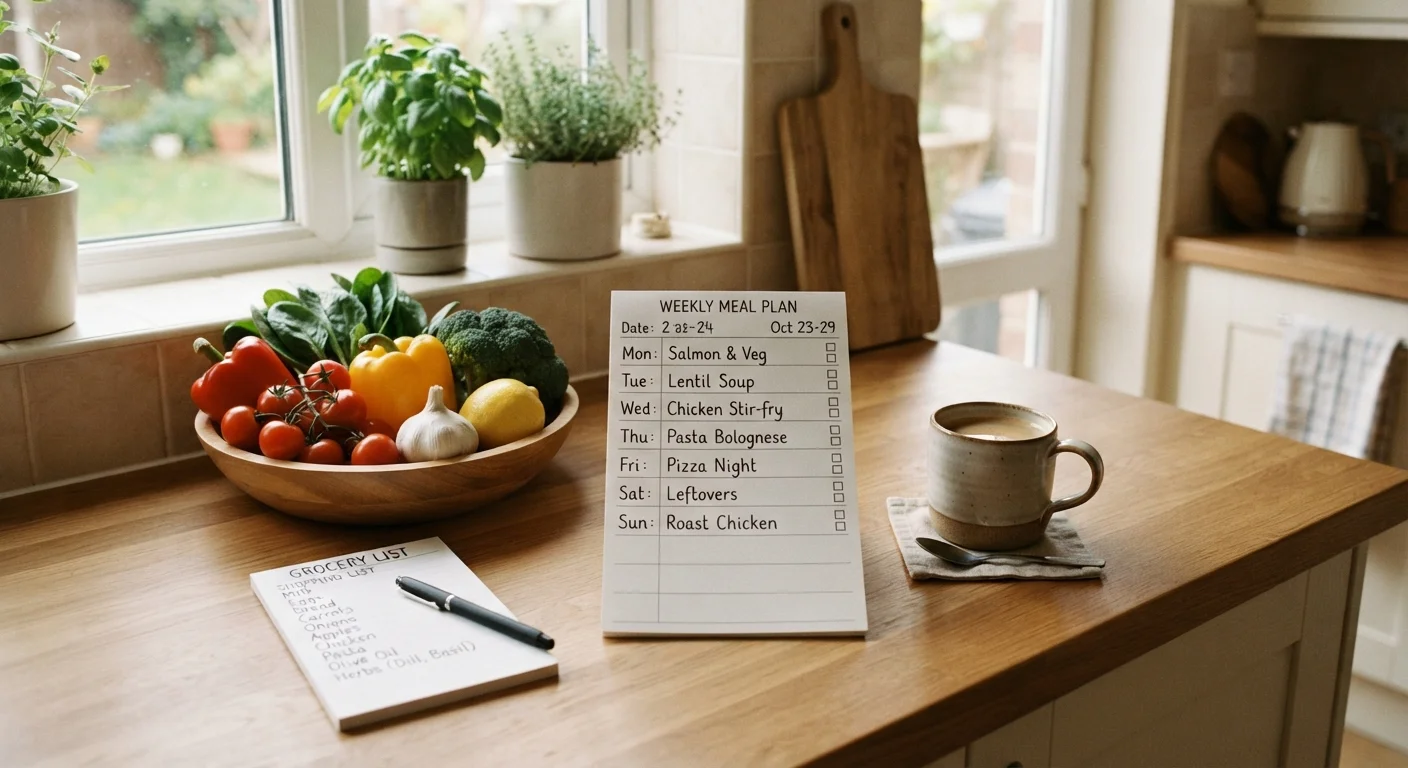
Photo: Online-Searches.net | Explore Insightful Blogs editorial
Key Takeaways
- Meal planning means deciding ahead of time what to eat — it does not require perfection or elaborate preparation.
- There is no single correct format; effective meal planning looks different for every household.
- A flexible approach often works better long-term than a rigid, day-by-day schedule.
- Meal planning supports grocery budgets and reduces food waste, not just nutrition goals.
- Starting small — planning just a few meals per week — is a valid and effective strategy.
The Actual Definition — Stripped of Assumptions
When most people hear "meal planning," they picture color-coded spreadsheets, identical Tupperware stacked in a fridge, and a Sunday consumed by chopping. That picture is one version of meal planning — but it's far from the definition.
At its core, meal planning is simply deciding in advance what you'll eat so that daily food choices become easier and less reactive. The format, frequency, and level of detail are entirely up to you. It might mean writing down five dinner ideas for the week. It might mean identifying which nights you'll cook versus use leftovers. It might mean building a grocery list around a handful of versatile ingredients rather than specific recipes.
What meal planning is not: a rigid schedule you must follow exactly, a requirement to cook everything yourself, or a system reserved for people pursuing a particular diet. It's a planning habit — practical, not prescriptive.
For a deeper look at the language that surrounds this topic, see our practical glossary of meal planning terms for clear definitions of concepts like batch cooking, mise en place, and more.
What Meal Planning Is Often Confused With
Several related ideas frequently get bundled into "meal planning" when they're actually distinct activities.
- Batch cooking — preparing large quantities of food at once — is one tool some planners use, but it's not required for planning to work.
- Meal prepping — portioning and packaging ready-to-eat meals ahead of time — is another optional method, not a defining feature of the practice.
- Strict calorie or macro tracking — while planning can support those goals, it doesn't inherently involve numerical tracking of nutrients.
- "Clean eating" or any specific dietary philosophy — meal planning is a logistics strategy, not a nutritional philosophy. You can plan meals around any dietary approach or none at all.
Confusing meal planning with these more intensive practices is one of the main reasons people assume it's too complicated or time-consuming to try. Understanding that these are optional add-ons — not requirements — removes a significant barrier to starting.
Meal Planning Isn't One-Size-Fits-All
If you're curious how "clean eating" concepts sometimes get incorrectly woven into meal planning advice, our piece on why "eating clean" is harder to define than it sounds offers a useful reality check.
The Real Benefits — and Realistic Limits
Meal planning's genuine advantages are practical, not magical.
~1/3
Household food wasted in the U.S.
The USDA estimates that roughly 30–40% of the U.S. food supply is wasted, much of it at the consumer level — a gap that intentional shopping lists tied to actual meals can help narrow.
~$1,500
Average annual household food waste cost
ReFED, a nonprofit focused on food waste solutions, has estimated that the average American household loses significant money annually through discarded food — a cost that meal-aligned grocery shopping tends to reduce.
Reduced decision fatigue is one of the most underappreciated benefits. When you already know what's for dinner, you avoid the "what should I make tonight?" spiral that often ends in takeout or a stress-driven trip to the store.
Lower grocery spending tends to follow when you shop with a list tied to actual meals, rather than browsing and guessing. Buying only what you'll use also cuts food waste meaningfully for most households.
More consistent eating habits are supported by planning, though not guaranteed. Having ingredients available and a rough idea of what to cook makes it more likely you'll follow through — but life intervenes, and that's normal.
What meal planning cannot do: fix an overly busy schedule on its own, guarantee nutritional perfection, or replace individualized guidance from a registered dietitian for people managing specific health conditions. It's a helpful structure, not a solution to every food challenge.
How Flexible — or Rigid — Should Your Plan Be?
One of the most common stumbling blocks is treating a meal plan like a contract. When Tuesday's planned stir-fry doesn't happen because of a long workday, the whole week can feel derailed — and the habit gets abandoned.
Evidence-based thinking in nutrition adherence research suggests that flexible approaches tend to support longer-term consistency better than rigid ones. A plan that allows for swapped meals, simplified alternatives, or one "open" night tends to survive contact with real life better than a day-by-day schedule with no give.
Practically, this looks like:
- Choosing meals for a week without assigning them to specific days
- Keeping a short list of "low-effort backup meals" for when plans fall through
- Planning ingredients rather than exact recipes, so the same components can serve different dishes
For a thorough comparison of rigid plans versus flexible templates, see our article rigid meal plans vs. flexible templates — it walks through the trade-offs in detail.
Start With Dinners, Not Every Meal
Getting Started Without Overcomplicating It
If meal planning has felt out of reach, the most important reframe is this: you don't have to plan everything to benefit from planning something. Start with just two or three dinners per week. Build a grocery list around those meals and a few reliable staples. Notice whether the week feels less chaotic. Adjust from there.
The habit builds on itself. What feels effortful in week one typically becomes second nature within a month, because the decisions become familiar patterns rather than fresh problems each time.
For a structured starting point, our guide meal planning from scratch covers the core tools and habits that make the process manageable — even for complete beginners. And if you're cooking for one, our article on meal planning for one addresses the specific challenges of variety and waste that come with single-person households.
This article is for general informational purposes only and is not a substitute for personalized advice from a registered dietitian or healthcare provider.
Frequently Asked Questions
The content provided on our blog site traverses numerous categories, offering readers valuable and practical information. Readers can use the editorial team’s research and data to gain more insights into their topics of interest. However, they are requested not to treat the articles as conclusive. The website team cannot be held responsible for differences in data or inaccuracies found across other platforms. Please also note that the site might also miss out on various schemes and offers available that the readers may find more beneficial than the ones we cover.