
Why 'Eating Clean' Is Harder to Define Than It Sounds

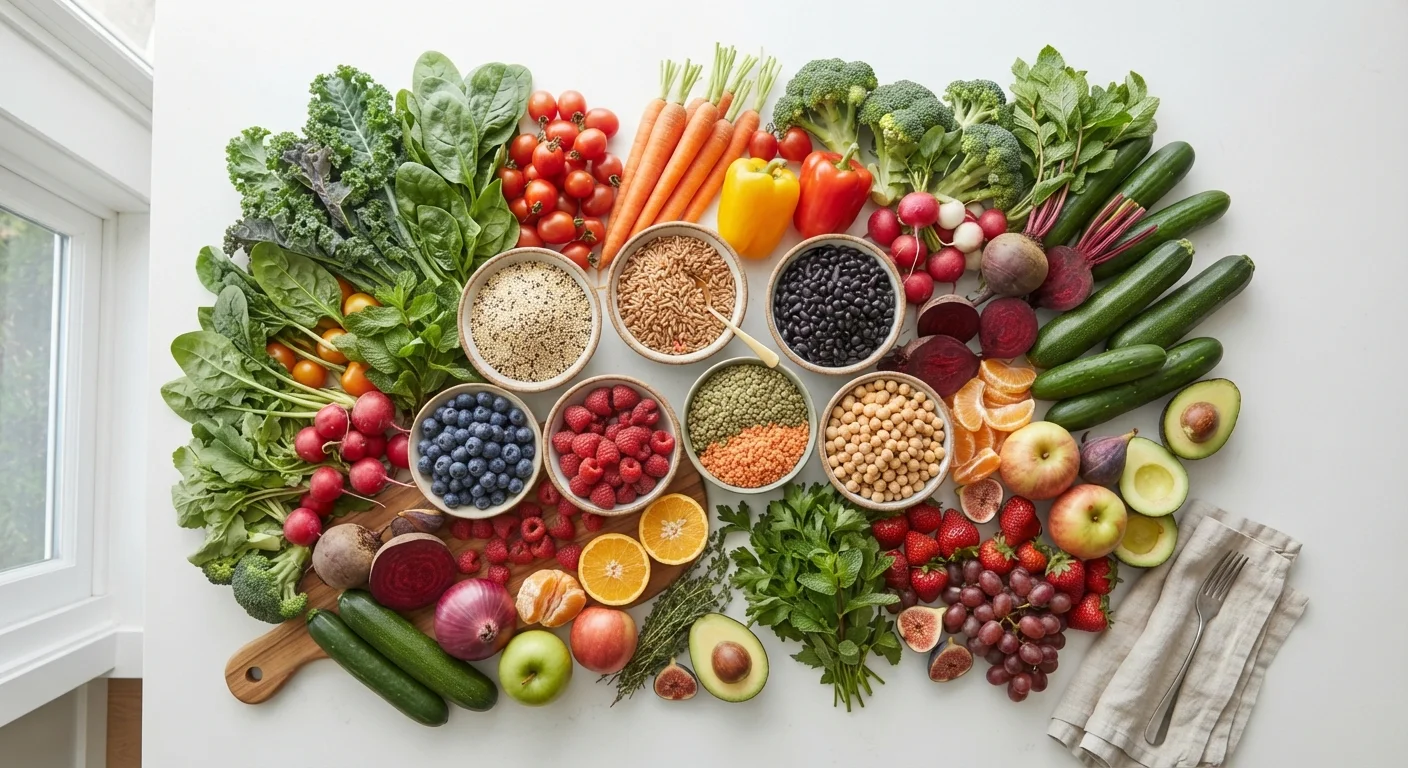
Photo: Online-Searches.net | Explore Insightful Blogs editorial
Key Takeaways
- "Clean eating" has no standard definition and means something different to nearly everyone who uses it.
- Many clean-eating rules are not backed by strong nutritional science and can vary wildly between sources.
- Labeling foods as "clean" or "dirty" can promote an unhealthy relationship with eating for some people.
- Evidence-based nutrition focuses on overall dietary patterns, not rigid food purity rules.
- Consulting a registered dietitian is the most reliable way to build an eating approach that fits your life.
A Term Without a Definition
"Clean eating" has been a fixture of wellness culture for well over a decade, yet no regulatory body, nutrition organization, or scientific consensus has ever formally defined it. Ask ten people what it means and you'll likely get ten different answers — no processed foods, no sugar, only organic produce, grain-free, whole foods only, or simply "nothing from a package."
That ambiguity is not a minor footnote. When a guiding principle of someone's diet is built on a term that shifts meaning depending on the source, the result is confusion rather than clarity. For a solid grounding in nutrition fundamentals before layering on trend-driven concepts, the Nutrition from Scratch guide offers a jargon-free starting point.
Common Myths About Clean Eating — Corrected
The clean-eating space is filled with confident-sounding rules that don't always hold up under scrutiny. Below, we address the most common misconceptions directly.
Myth
Processed food is always bad for you, and avoiding it entirely is the cornerstone of eating well.
Fact
Processing exists on a wide spectrum; minimally processed foods like canned beans, frozen vegetables, and plain yogurt are nutritionally valuable and widely endorsed by dietitians.
The word "processed" covers everything from flash-frozen spinach to ultra-processed snack foods engineered for overconsumption. Lumping them together obscures meaningful differences. Nutrition researchers often use frameworks like the NOVA classification to distinguish minimally processed from ultra-processed foods — a distinction that matters far more than a blanket "no processed food" rule. Eliminating the entire category can make a diet unnecessarily restrictive and expensive without a corresponding health benefit.
Myth
Organic food is nutritionally superior to conventionally grown produce.
Fact
Current evidence does not consistently show that organic produce delivers meaningfully better nutrient profiles than conventionally grown equivalents.
Organic certification speaks primarily to farming practices and pesticide use — not nutrient density. Large systematic reviews, including one published by Stanford researchers, have found minimal nutritional differences between organic and conventional foods. Concerns about pesticide residues are legitimate topics of ongoing research, but the claim that organic food is simply "cleaner" and therefore healthier is an oversimplification that nutrition science does not broadly support. Eating more fruits and vegetables — organic or not — is consistently the higher-impact choice.
Myth
Sugar is a toxin that must be completely eliminated from a clean diet.
Fact
Added sugars consumed in excess are linked to health concerns, but sugar as a compound — including naturally occurring sugars in fruit and dairy — is not a dietary toxin.
The concern about added sugars in excessive quantities is well-founded; major health bodies including the American Heart Association suggest limiting added sugar intake. However, describing sugar as a poison conflates biochemistry with rhetoric. Naturally occurring sugars in whole foods arrive packaged with fiber, vitamins, and other nutrients that change how the body processes them. A blanket "no sugar" rule, depending on how strictly applied, can lead people to avoid nutritious foods like fruit — an outcome that runs contrary to established dietary guidance.
Myth
If you eat clean enough, you don't need to pay attention to portion sizes or overall calories.
Fact
Energy balance — the relationship between calories consumed and expended — remains relevant regardless of food quality, though food quality affects satiety and nutrient adequacy.
Whole, minimally processed foods tend to be more satiating per calorie and richer in micronutrients, which is a genuine advantage. But it does not mean portion awareness becomes irrelevant. Foods commonly praised in clean-eating circles — nuts, avocado, whole grains, natural nut butters — are calorie-dense. Framing these foods as infinitely "safe" to eat can lead to unintended outcomes for people with specific health goals. Evidence-based nutrition holds food quality and quantity as complementary considerations, not mutually exclusive ones.
Myth
Eating clean requires following a specific, strict protocol — gluten-free, dairy-free, grain-free, or some combination.
Fact
Eliminating gluten, dairy, or grains is medically indicated for specific conditions but offers no documented benefit for people without those conditions.
Gluten-free eating is essential for people with celiac disease and may benefit those with confirmed non-celiac gluten sensitivity. Dairy avoidance is appropriate for those with lactose intolerance or a milk allergy. For everyone else, these restrictions carry a real cost: increased dietary complexity, higher food expenses, potential nutrient gaps (calcium, B vitamins), and unnecessary social friction around eating. Clean-eating frameworks that apply these rules universally are not grounded in population-level nutrition evidence. See key nutrition terms explained for plain-language context on these concepts.
When Clean Eating Causes More Harm Than Good
For many people, clean-eating frameworks are motivating and helpful in the short term. But the binary language of "clean" versus "dirty" food can tip into something more problematic for others. Research in eating behavior has documented a pattern called orthorexia — an obsessive focus on food purity that can interfere with daily functioning and social life — though it is not yet a formal clinical diagnosis in all frameworks.
When Food Rules Start Interfering With Daily Life
The broader concern is that all-or-nothing thinking rarely supports long-term healthy eating. A single "off-plan" meal becomes a failure rather than a normal part of a varied diet. The patterns that undermine healthy eating article explores exactly why these rigid frameworks tend to backfire over time.
What the Evidence Actually Supports
Mainstream nutrition science consistently points to dietary patterns — not individual food purity — as the strongest predictor of long-term health outcomes. Diets that emphasize vegetables, legumes, whole grains, lean proteins, and healthy fats while limiting heavily processed items and excess added sugar are associated with favorable health outcomes across large, long-running studies. That general direction overlaps with what many clean-eating advocates promote, which is partly why the concept feels credible.
The difference is that evidence-based guidance doesn't require labeling foods as morally good or bad, eliminating entire food groups without a medical reason, or following rules that shift from one influencer to the next. If you're weighing how a specific approach fits your actual circumstances, the guide to finding the right dietary approach walks through the factors worth considering.
~57%
of U.S. calories from ultra-processed foods
Research published in BMJ Open estimated that ultra-processed foods account for roughly 57% of energy intake in the average American diet — underscoring where genuine dietary improvement opportunity lies.
5+ servings
Fruits and vegetables linked to lower risk
A large meta-analysis in the International Journal of Epidemiology found consuming five or more daily servings of fruits and vegetables was associated with reduced risk of several chronic diseases, regardless of organic status.
Building sustainable habits around food — rather than chasing a moving definition of purity — is what most registered dietitians and evidence-based nutrition researchers recommend. For practical tools that support that approach without rigidity, what meal planning actually means is a useful companion read.
This article is for general informational and educational purposes only and is not a substitute for professional medical or nutritional advice. For personalized guidance, consult a qualified healthcare provider or registered dietitian.
The content provided on our blog site traverses numerous categories, offering readers valuable and practical information. Readers can use the editorial team’s research and data to gain more insights into their topics of interest. However, they are requested not to treat the articles as conclusive. The website team cannot be held responsible for differences in data or inaccuracies found across other platforms. Please also note that the site might also miss out on various schemes and offers available that the readers may find more beneficial than the ones we cover.