
Where Nutrition Thinking Often Goes Wrong — and Why It Keeps Happening

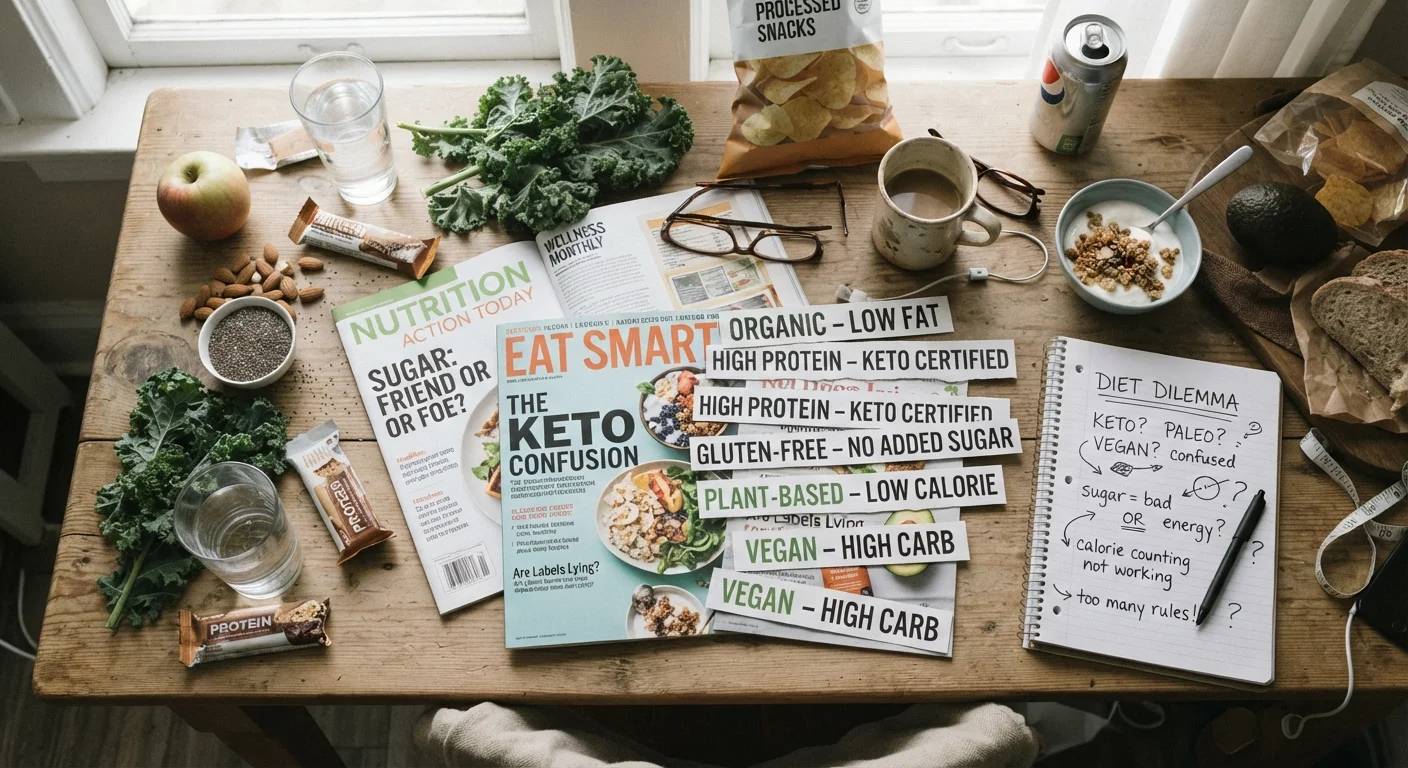
Photo: Online-Searches.net | Explore Insightful Blogs editorial
Key Takeaways
- All-or-nothing food rules are one of the most common barriers to sustainable healthy eating.
- Eliminating entire food groups without medical cause can create nutrient gaps over time.
- Chasing diet trends often means abandoning approaches before they have a chance to work.
- Context — portion size, frequency, overall diet pattern — matters far more than any single food.
- Nutrition research evolves; distinguishing established consensus from emerging findings prevents confusion.
Why Nutrition Confusion Is So Predictable
Nutrition is genuinely complex — but the confusion most people experience isn't mainly about the science. It's about the information environment around it. Headlines flip positions. Social media amplifies extreme approaches. And the loudest voices are rarely the most qualified ones.
The result is a set of recurring thinking patterns that steer people away from sustainable eating — not through bad intentions, but through entirely understandable responses to an overwhelming landscape. Recognizing these patterns is the first step toward cutting through them.
For a grounded starting point, core nutrition principles for everyday Americans offer a useful foundation before diving into specific approaches or trends.
45%
Adults who have tried a fad diet
Surveys from the International Food Information Council have consistently found that a substantial share of American adults report trying a trending or restrictive diet in the past year.
~80%
Diets abandoned within weeks
Research on dietary adherence suggests the majority of people who start a new eating plan discontinue it before meaningful habit formation occurs, often due to overly rigid rules.
The Most Common Nutrition Thinking Mistakes
The following errors show up repeatedly — across different diets, different demographics, and different levels of nutrition awareness. None of them reflect personal failure. They reflect how nutrition information typically reaches people.
Treating individual foods as either 'good' or 'bad' with no middle ground.
Eliminating entire food groups based on a trend rather than a medical reason.
Jumping between dietary approaches every few weeks without giving any one approach time to work.
Treating nutrition research headlines as settled science rather than one data point in a larger picture.
Ignoring hunger and fullness cues in favor of rigid external rules.
It's also worth noting that foods marketed with a health halo deserve the same critical eye. Foods often labeled healthy don't always deliver what their packaging implies — a useful reminder that critical thinking applies to store shelves as much as social media feeds.
This Is General Information, Not Medical Advice
Finding an Approach That Actually Fits Your Life
Correcting faulty thinking patterns isn't about finding the perfectly optimized diet — it's about developing a relationship with food that is flexible, realistic, and rooted in genuine nutritional principles rather than trend cycles.
That often means slowing down the search for the "right" plan and asking better questions: Does this approach fit how I actually live? Does it include foods I find satisfying? Does it account for my real schedule and budget? Finding a dietary approach that fits your actual life explores those questions in more depth.
Trend Diets Can Mask Real Nutritional Needs
And if a dietary approach has already stalled, it's worth understanding the mechanics behind that — why structured diets often fall apart after the first month is a direct look at the early stumbles that derail most people, without judgment. For those ready to put durable principles into practice, building a balanced plate with evidence-informed principles offers a practical next step.
This article is for general informational and educational purposes only and does not constitute medical or dietary advice. Consult a qualified healthcare professional or registered dietitian for guidance specific to your health situation.
The content provided on our blog site traverses numerous categories, offering readers valuable and practical information. Readers can use the editorial team’s research and data to gain more insights into their topics of interest. However, they are requested not to treat the articles as conclusive. The website team cannot be held responsible for differences in data or inaccuracies found across other platforms. Please also note that the site might also miss out on various schemes and offers available that the readers may find more beneficial than the ones we cover.