
Foods Often Labeled Healthy That Deserve a Closer Look

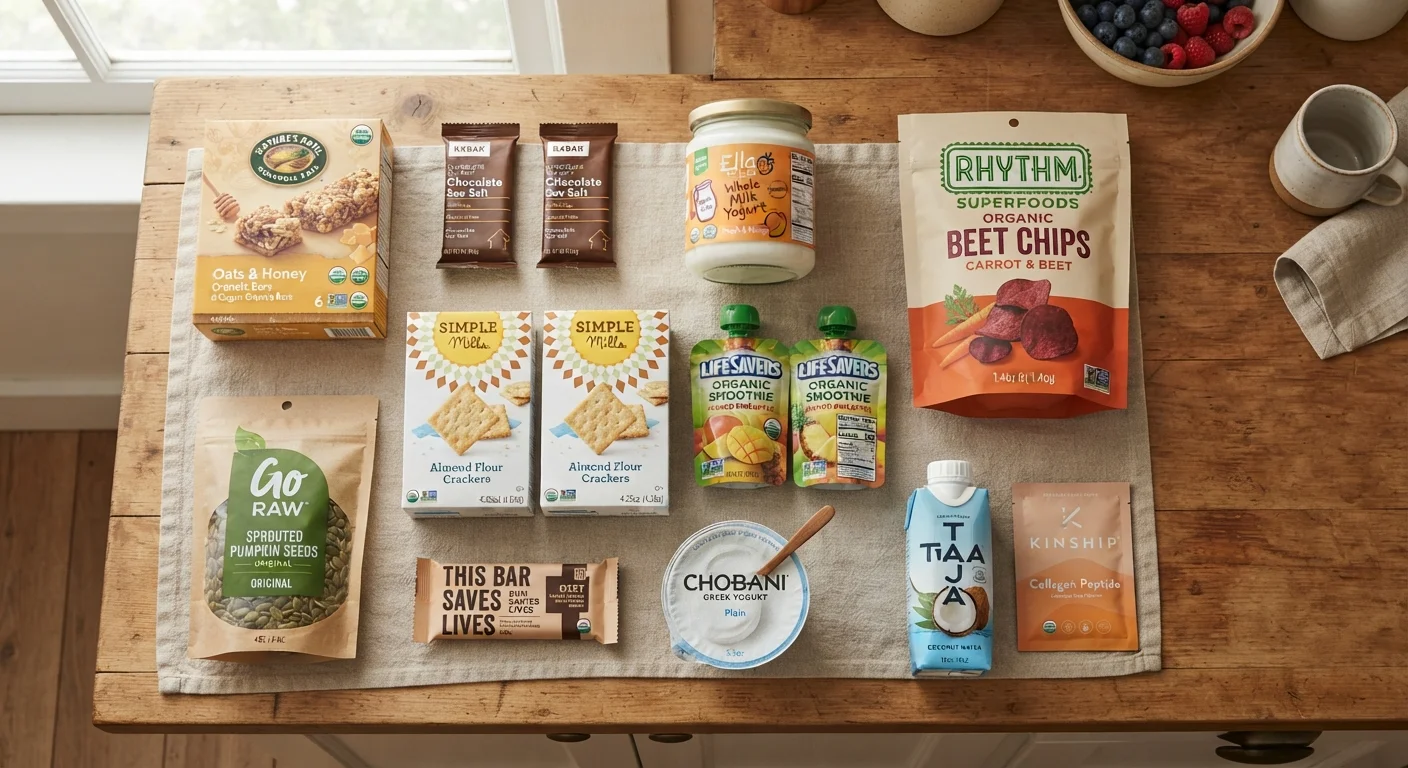
Photo: Online-Searches.net | Explore Insightful Blogs editorial
Key Takeaways
- Front-of-package health claims are marketing tools, not nutritional guarantees.
- Many foods with a health reputation carry significant added sugar, sodium, or refined ingredients.
- Reading the Nutrition Facts panel and ingredients list gives a clearer, more accurate picture.
- Context matters — occasional consumption of these foods is rarely harmful; habitual reliance is worth reconsidering.
- Whole, minimally processed alternatives often provide similar satisfaction with better nutritional value.
Why the Health Halo Exists
Food marketing is exceptionally good at one thing: making a product feel virtuous before you've read a single ingredient. Terms like "natural," "multigrain," "low-fat," and "made with real fruit" are largely unregulated on packaging — they can be applied generously without meeting a defined nutritional standard. The result is a category of foods that enjoy a health halo: a widespread public perception that they're nutritious, when the actual label tells a more complicated story.
This doesn't mean these foods are dangerous or should be avoided entirely. The goal here is clarity, not alarm. Understanding what's actually in commonly praised foods helps you make choices that genuinely align with your health goals — rather than choices that feel healthy in the shopping aisle but add up differently at the table. For a practical primer on decoding every row of the panel, see Reading a Nutrition Facts Label Without Getting Lost.
Flavored Yogurt
Yogurt earns its nutritional reputation from protein, calcium, and — in live-culture varieties — beneficial probiotics. Flavored yogurts, however, frequently carry added sugar levels that rival dessert items. A single serving of some fruit-on-the-bottom or blended varieties can contain 20–25 grams of added sugar, much of it from cane sugar or corn syrup rather than the fruit itself.
A smarter approach: choose plain, unsweetened yogurt and stir in fresh or frozen fruit, a drizzle of honey, or a small handful of nuts. You control the sweetness, and you keep the genuine nutritional benefits intact.
Some flavored yogurts contain as much added sugar as a candy bar.
Granola and Granola Bars
Oats, nuts, and dried fruit sound like a wholesome combination — and in their simplest form, they are. But commercial granola is almost always bound together with oils and sweeteners to achieve that appealing crunch and cluster texture. A quarter-cup serving (the standard label serving) can contain 8–12 grams of added sugar and a significant calorie count that scales quickly when you pour what most people actually eat.
Granola bars compress this further: many contain syrups, chocolate coatings, and refined grain binders that push added sugar and saturated fat well beyond what the wholesome packaging implies. Checking the ingredients list for sugar in its first three positions is a useful quick screen.
Standard granola label servings are often far smaller than a typical portion.
Veggie Chips and Veggie Straws
The vegetable imagery on these packages — spinach, beets, tomatoes — suggests something close to eating vegetables. In reality, most veggie chips are made primarily from potato starch or cornmeal with vegetable powder added for color. The fiber, vitamins, and phytonutrients present in whole vegetables are largely absent, while sodium and refined starch occupy their place.
They're not dramatically worse than regular chips, but they're not appreciably better either. If the appeal is crunch, actual roasted vegetables or lightly salted nuts deliver more nutritional value for a similar experience. See how to read nutrition labels for help comparing products side by side.
Veggie chips typically contain little of the actual nutrition found in fresh vegetables.
Multigrain Breads and Crackers
"Multigrain" means a product contains more than one type of grain — it says nothing about whether those grains are whole or refined. A multigrain loaf can be made almost entirely from enriched white flour with small amounts of other grains added for variety and marketing value. The result looks hearty but behaves metabolically more like white bread.
The key phrase to look for is "100% whole grain" or a specific whole grain listed first in the ingredients (e.g., "whole wheat flour"). Whole Grains vs. Refined Grains explains exactly what refining removes and why it matters for everyday eating.
Multigrain labels describe variety, not grain quality — look for whole grain listed first.
Smoothies and Juice Blends
Blended or pressed fruit drinks can deliver real vitamins and, in the case of whole-fruit smoothies, some fiber. The concern is volume and concentration: a 16-ounce smoothie or juice can contain the sugar equivalent of four or five pieces of fruit, often without the fiber that slows absorption when you eat fruit whole. Commercially prepared smoothies frequently add juice concentrates, syrups, or sweetened nut milks that amplify the sugar content further.
Eating whole fruit rather than drinking it is generally the more nutritionally efficient choice. When a smoothie is the preference, building it around vegetables — leafy greens, cucumber — with modest fruit for palatability keeps sugar in a more reasonable range.
A large smoothie can deliver the sugar of multiple fruit servings in one sitting.
Gluten-Free Packaged Foods
For people with celiac disease or confirmed gluten sensitivity, gluten-free products serve a genuine medical need. For everyone else, "gluten-free" on packaging signals only the absence of gluten — not superior nutrition. Many gluten-free breads, pastas, and baked goods substitute wheat with refined rice flour, tapioca starch, or potato flour, which often means less protein and fiber than their conventional counterparts, sometimes alongside more sodium or added fat to improve texture.
If you're exploring gluten-free eating without a diagnosis, Gluten-Free Eating When You Don't Have Celiac Disease offers an honest look at potential benefits and nutritional trade-offs worth understanding first.
Gluten-free means gluten is absent — it does not mean nutritionally superior.
Putting It in Perspective
None of the foods on this list are inherently off-limits. Nutrition is cumulative — what you eat most of the time matters far more than any single item. The problem with health-halo foods is less the foods themselves and more the assumption that they require no further scrutiny. When a granola bar gets a free pass that an equally sugary cookie doesn't, that's the halo doing work it hasn't earned.
A more durable habit is to treat front-of-package claims as a prompt to flip the package over, not a verdict. Compare the ingredients list to what you'd expect to find. Look at added sugars, sodium, and serving size against the full portion you'd actually eat. Whole Foods vs. Processed Foods: What the Research Actually Shows offers useful grounding here — processing exists on a spectrum, and not every packaged item is equally concerning. Likewise, common nutrition thinking errors reminds us that all-or-nothing framing rarely serves us well.
This article is for general informational and educational purposes only and is not a substitute for advice from a qualified healthcare or registered dietitian professional.
A Quick Label Check Takes 30 Seconds
The content provided on our blog site traverses numerous categories, offering readers valuable and practical information. Readers can use the editorial team’s research and data to gain more insights into their topics of interest. However, they are requested not to treat the articles as conclusive. The website team cannot be held responsible for differences in data or inaccuracies found across other platforms. Please also note that the site might also miss out on various schemes and offers available that the readers may find more beneficial than the ones we cover.