
Whole Foods vs. Processed Foods: What the Research Actually Shows

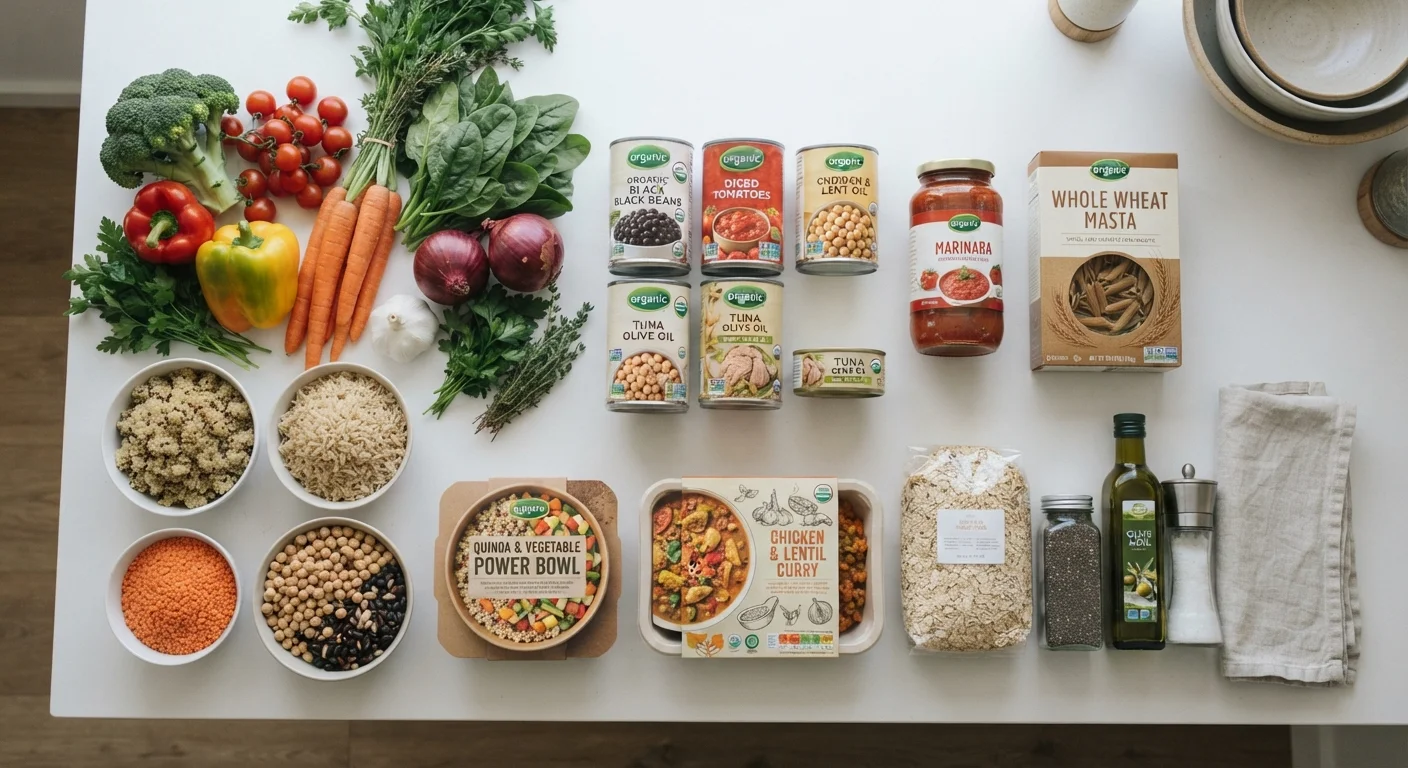
Photo: Online-Searches.net | Explore Insightful Blogs editorial
Key Takeaways
- Processing exists on a spectrum; canned beans and packaged cookies are not nutritionally equivalent.
- Ultra-processed foods — high in added sugar, sodium, and refined ingredients — are most consistently linked to negative health outcomes in research.
- Whole foods generally deliver more fiber, vitamins, and minerals per calorie than heavily processed alternatives.
- Minimally processed foods like frozen vegetables or plain yogurt can be nutritious, affordable, and practical.
- No single food category defines a healthy diet — overall patterns matter more than individual choices.
- Consult a registered dietitian for personalized guidance, especially if you have specific health conditions.
Defining the Terms: Processing Is a Spectrum
The word "processed" covers an enormous range. Technically, any food that has been washed, cut, cooked, frozen, or fermented has been processed. That puts plain frozen broccoli and a sugar-sweetened breakfast pastry in the same broad category — which tells you very little about nutrition.
Researchers have found it more useful to distinguish minimally processed foods (frozen vegetables, plain canned tomatoes, roasted nuts) from ultra-processed foods (UPFs) — industrially formulated products containing additives, colorings, emulsifiers, and flavor compounds not typically found in a home kitchen. The NOVA classification system, developed by researchers at the University of São Paulo, is one widely cited framework that separates foods into four groups based on the extent and purpose of processing.
Whole foods, by contrast, are foods consumed in or close to their natural form: fresh fruit, vegetables, legumes, whole grains, eggs, and plain cuts of meat or fish. They require little to no alteration before eating and tend to retain their naturally occurring nutrient profiles. For a deeper look at how food components interact, see our overview of dietary fat research.
| Criterion | Whole Foods | Processed Foods |
|---|---|---|
| Definition | Little to no alteration from natural state | Broad spectrum from mildly to heavily altered |
| Nutrient density | Generally high in fiber and micronutrients | Varies widely; UPFs often lower |
| Added sugar & sodium | Naturally low | Often high in ultra-processed products |
| Convenience | Often requires more prep time | Generally quicker and longer shelf life |
| Cost | Varies; fresh produce can be pricier | Often lower cost, especially in bulk |
| Research association | Linked to lower chronic disease risk | UPFs linked to higher disease risk in studies |
| Examples | Oats, lentils, broccoli, eggs, apples | Canned beans, frozen meals, packaged snacks |
What the Research Actually Shows
Large observational studies have consistently found associations between high consumption of ultra-processed foods and increased risk of obesity, cardiovascular disease, type 2 diabetes, and certain cancers. A 2019 study published in The BMJ involving more than 100,000 adults found that a 10% increase in the proportion of ultra-processed food in the diet was associated with a modest but significant increase in cardiovascular risk. Importantly, this is associational evidence — it shows a pattern, not a proven direct cause.
On the other side, diets rich in whole foods — particularly vegetables, legumes, whole grains, and fruit — are linked in long-running population studies to lower rates of chronic disease. These benefits are attributed to higher fiber content, greater micronutrient diversity, and lower levels of added sugar, sodium, and refined fats.
10%
Rise in UPF consumption linked to cardiovascular risk
A 2019 BMJ study of over 100,000 adults found a 10% increase in ultra-processed food intake was associated with a significant increase in cardiovascular disease risk.
~500 kcal/day
Extra calories consumed on ultra-processed diet
In the NIH controlled trial published in Cell Metabolism (2020), participants eating an ultra-processed diet consumed roughly 500 more calories per day than when eating an unprocessed diet.
57%
Share of U.S. caloric intake from ultra-processed foods
Research published in BMJ Open estimated that ultra-processed foods account for more than half of total daily energy intake among American adults.
Crucially, not all processing is harmful. A 2020 randomized controlled trial published in Cell Metabolism by researchers at the National Institutes of Health was among the first to test ultra-processed versus unprocessed diets under controlled conditions, finding that participants consumed more calories and gained more weight on the ultra-processed diet — even when both diets were matched for total sugar, fat, fiber, and macronutrients. This suggests something beyond simple nutrient content may be at play, though more research is needed to identify the precise mechanisms.
Foods marketed as healthy are not always what they seem — processing and marketing can blur the line significantly.
Practical Implications: Patterns Over Perfection
The takeaway from the research is not that any single processed food will harm you or that every whole food is automatically superior. Dietary patterns — what you eat consistently over weeks and months — matter far more than individual meals or ingredients.
A useful practical approach is to think in tiers. Prioritize whole and minimally processed foods as the foundation: fresh and frozen vegetables, whole grains like oats and brown rice, legumes, plain dairy, eggs, and fresh or frozen fish and poultry. Use minimally processed packaged foods — canned beans, plain nut butters, whole-grain bread with a short ingredient list — as practical complements. Limit ultra-processed products high in added sugar, sodium, refined flour, and artificial additives, not because they are forbidden, but because their regular consumption is where the research flags the clearest risk signals.
Cost is a real consideration for many households. Eating nutritiously on a budget is achievable, and some of the most nutritious foods — dried lentils, frozen spinach, canned sardines — are among the most affordable. For those following specific eating patterns, guidance on special diets can help apply these principles more directly. And if you are navigating specific health conditions or goals, a registered dietitian is the most reliable source of personalized guidance.
The NOVA Classification: A Research Tool, Not a Shopping Guide
This article is for general informational and educational purposes only and does not constitute medical or dietary advice. Consult a qualified healthcare professional or registered dietitian before making significant changes to your diet, particularly if you have underlying health conditions.
The content provided on our blog site traverses numerous categories, offering readers valuable and practical information. Readers can use the editorial team’s research and data to gain more insights into their topics of interest. However, they are requested not to treat the articles as conclusive. The website team cannot be held responsible for differences in data or inaccuracies found across other platforms. Please also note that the site might also miss out on various schemes and offers available that the readers may find more beneficial than the ones we cover.