
Healthy Eating on a Budget: What the Evidence Supports

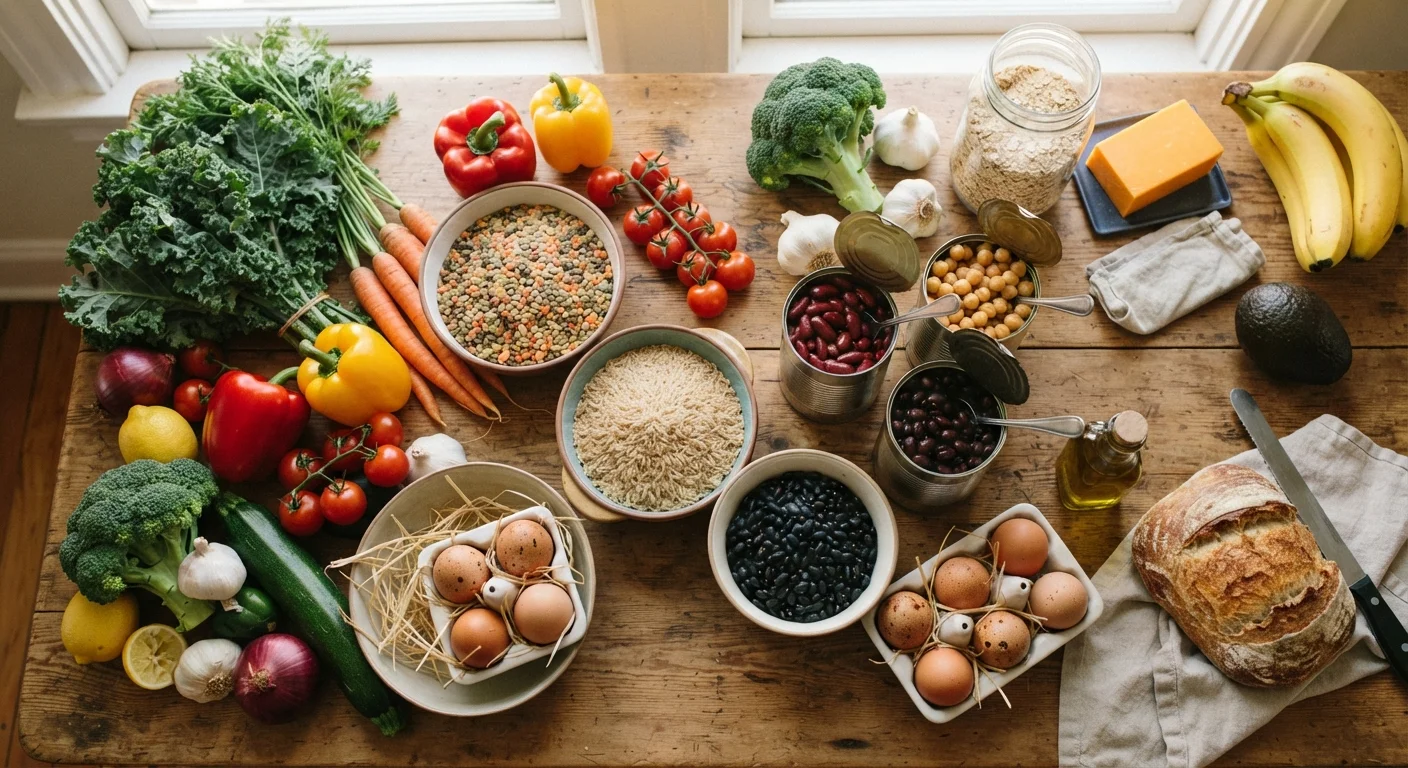
Photo: Online-Searches.net | Explore Insightful Blogs editorial
Key Takeaways
- Legumes, eggs, and whole grains consistently rank as high-nutrition, low-cost staples in dietary research.
- Frozen and canned vegetables offer comparable nutrient profiles to fresh at significantly lower prices.
- Cooking from basic ingredients rather than convenience foods is the most reliable way to reduce food costs without cutting nutrition.
- Eating well on a budget is a learnable skill built on a small set of durable food choices, not expensive superfoods.
Why the 'Healthy Eating Is Expensive' Narrative Deserves Scrutiny
The idea that eating well requires a large grocery budget is widely repeated — but the evidence behind it is more complicated than the headlines suggest. Research does show that some diet quality scores rise with income, but much of that gap is driven by costly choices like premium proteins, specialty snack foods, and branded health products that are not nutritional necessities.
When researchers focus on nutrient density per dollar — how much protein, fiber, vitamins, and minerals a food delivers relative to its cost — many inexpensive staples rank at or near the top. The challenge is practical, not biological: knowing which affordable foods genuinely support health, and how to make them work in real kitchens. For a grounded overview of core nutrition principles, see our guide to everyday nutrition.
“The evidence consistently shows that the most health-protective diets — high in vegetables, legumes, whole grains, and fruits — are not inherently expensive. The perception that they are is partly a function of how we shop, not what nutrition requires.”
— Walter Willett, Professor of Epidemiology and Nutrition, Harvard T.H. Chan School of Public Health
Evidence-Backed Practices for Nutritious, Affordable Eating
The following practices are grounded in peer-reviewed nutrition research and public health guidance. None requires specialty stores or significant extra time.
Build meals around legumes as your primary protein source several times per week.
Choose frozen vegetables freely — treat them as nutritionally equivalent to fresh.
Use eggs as a versatile, affordable high-quality protein source.
Anchor your grain choices to whole grains — especially oats, brown rice, and whole-wheat products.
Cook from basic ingredients rather than relying on ultra-processed convenience foods.
Prioritize seasonal and store-brand canned or dried goods over premium-labeled equivalents.
Quick Wins You Can Apply at Your Next Shopping Trip
These actions don't require a complete dietary overhaul — each one can meaningfully shift your nutrition-to-cost ratio starting immediately.
For a deeper look at structuring your weekly shopping around a set budget, see meal planning on a grocery budget.
What the Research Is — and Isn't — Saying
It's worth being precise about what evidence supports here. Strong, consistent findings point to dietary patterns rich in legumes, vegetables, fruits, whole grains, and moderate amounts of animal protein as associated with favorable long-term health outcomes. These foods happen to be affordable across most of the United States.
What the research does not support is the idea that specific superfoods, supplements, or premium-priced organic-only versions of everyday produce are necessary for good nutrition. The evidence on whole versus processed foods is also more nuanced than popular coverage implies — minimally processed convenience items like canned tomatoes or frozen spinach perform well nutritionally.
~$0.15
Average cost per serving of dried lentils
USDA food cost data consistently places dried legumes among the lowest cost-per-gram-of-protein foods available in U.S. grocery stores.
3x
More fiber in whole grains vs. refined grains
According to USDA nutrient data, whole-grain options like oats and brown rice contain roughly three times more dietary fiber than their refined counterparts.
~20%
Potential savings from store-brand staples
Consumer research generally estimates shoppers can reduce grocery spend by 15–25% by switching from name-brand to store-brand versions of pantry staples without changing nutritional quality.
If you're exploring a specific dietary pattern, our anti-inflammatory eating overview and diet trend analysis apply the same evidence-grounded lens.
This article is for general informational purposes only and does not constitute medical or dietary advice. Readers with specific health conditions, nutritional concerns, or questions about individual needs should consult a registered dietitian or qualified healthcare professional.
The content provided on our blog site traverses numerous categories, offering readers valuable and practical information. Readers can use the editorial team’s research and data to gain more insights into their topics of interest. However, they are requested not to treat the articles as conclusive. The website team cannot be held responsible for differences in data or inaccuracies found across other platforms. Please also note that the site might also miss out on various schemes and offers available that the readers may find more beneficial than the ones we cover.