
Meal Planning From Scratch: A Complete Starting Point for Busy Adults

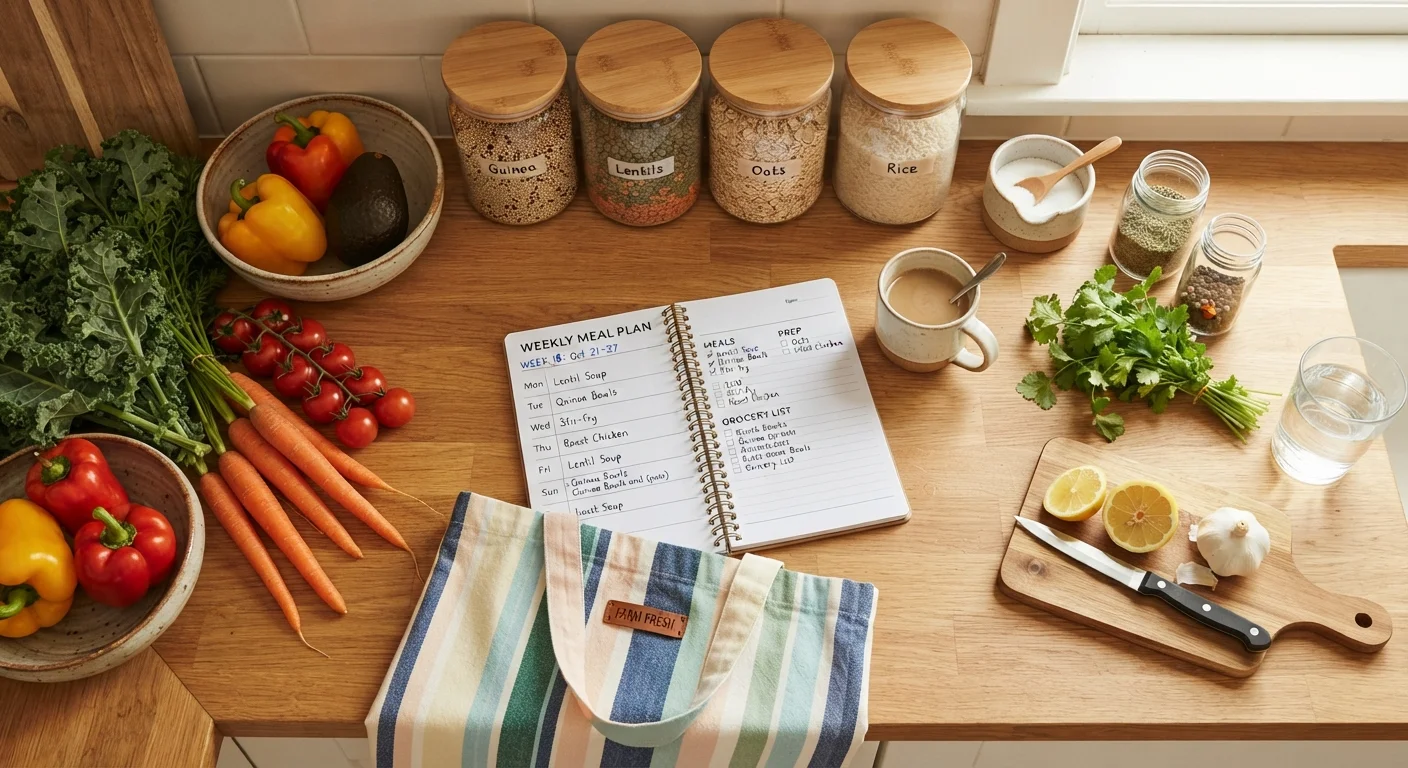
Photo: Online-Searches.net | Explore Insightful Blogs editorial
Key Takeaways
- Meal planning reduces weeknight decision fatigue and helps you eat more consistently.
- A flexible plan built around a few core meals is more sustainable than a rigid daily schedule.
- Planning before you shop reduces food waste and unnecessary spending.
- Batch cooking key ingredients — not full meals — gives you the most flexibility.
- Successful meal planning is a skill that improves with each week of practice.
Why Meal Planning Works
Meal planning isn't about perfection or filling every hour of your weekend in the kitchen. At its core, it's a decision-making tool — one that moves the hard choices about what to eat from a tired Tuesday evening to a calmer moment earlier in the week.
When you don't have a plan, hunger and fatigue drive food decisions. That tends to mean takeout, convenience foods, or skipped meals — none of which serve your health, budget, or energy levels well over time. A plan gives you a path of least resistance that actually leads somewhere useful.
Research consistently shows that people who plan their meals tend to eat a wider variety of foods and maintain more balanced diets than those who don't. The structure doesn't restrict choice — it creates space for better choices. If you've always felt like eating well requires too much time or willpower, a realistic planning system addresses both of those barriers directly.
Start With the Problem You're Trying to Solve
Core Concepts Before You Start
A few foundational ideas will make your planning more effective from the start. Understanding these terms will also help if you explore more advanced strategies later.
Meal plan
A written or digital record of what you intend to eat over a set period — usually a week. It guides your shopping and removes daily decision-making from mealtimes.
Batch cooking
Preparing larger quantities of one or more foods at once so they can be used across multiple meals throughout the week, saving time on busy days.
Pantry staples
Shelf-stable ingredients you keep stocked regularly — such as canned beans, pasta, rice, and olive oil — that form the backbone of many quick, affordable meals.
Ingredient overlap
Deliberately choosing recipes that share common ingredients so that one shopping trip and one prep session can support multiple different meals.
Flexible slot
An intentionally unscheduled meal in your weekly plan, used for leftovers, unexpected schedule changes, or nights when cooking simply isn't happening.
One concept worth clarifying early: meal planning and meal prepping are related but different. Planning is deciding what you'll eat. Prepping is physically preparing some or all of it in advance. You can plan without prepping, though combining both saves the most time. See our comparison of batch cooking vs. daily cooking for help deciding which approach fits your schedule.
It also helps to know your household's actual eating patterns before building a plan. How many nights a week do you genuinely cook at home? Which meals are most chaotic? Answering these questions honestly gives you a realistic starting point rather than an idealized one.
Building Your First Weekly Plan
Start with just dinners — they're typically the most time-consuming meal decision and the one most likely to derail into takeout. Choose three to five dinners for the week, keeping these principles in mind:
- Ingredient overlap: Pick meals that share at least one or two ingredients. If chicken thighs appear in Monday's dinner, they can anchor Wednesday's grain bowl too.
- Realistic effort matching: Slot simpler meals on your busiest days. A slow cooker meal or a sheet-pan dinner on a heavy workday makes the plan actually work.
- One flexible slot: Leave one evening unplanned as a buffer for leftovers, spontaneous plans, or simply not feeling like cooking.
Once dinner is mapped, add lunches and breakfasts only if it feels manageable. Many people find that planning lunches around dinner leftovers is the most efficient approach — it requires almost no additional thought.
If you cook for one, the challenge of portion size and variety is real. Our guide on meal planning for one covers strategies specific to solo households. For anyone who finds structured planning too rigid, flexible approaches to weekly meal organization offer a lower-commitment entry point.
Smart Shopping and Prep Habits
Your grocery list should flow directly from your meal plan — not from memory or habit. Before writing it, check your pantry, fridge, and freezer. Buying ingredients you already have is one of the most common sources of food waste and budget creep.
Organize your list by store section (produce, proteins, dairy, pantry staples) to move through the store efficiently and avoid backtracking. If budget is a consistent pressure, see our guide on planning meals around a grocery budget for a budget-first approach to the entire planning cycle.
For prep, focus on components rather than complete meals. Cook a batch of grains, roast a tray of vegetables, and prep a protein or two. These building blocks assemble into different meals throughout the week, keeping things from feeling repetitive. Proper storage matters more than most people expect — our article on food storage for meal prep explains which containers and temperatures actually keep prepared food safe and appealing.
Unfamiliar With Meal Planning Terms?
Making It a Lasting Habit
The biggest barrier to consistent meal planning isn't knowledge — it's follow-through. Most people start strong and abandon the habit within two or three weeks. A few structural choices make the difference between a one-time effort and a sustainable practice.
Set a recurring planning time. Sunday mornings, Friday evenings, or whatever suits your schedule — what matters is consistency. Treat it like a standing appointment, not a task you'll get to when you have time.
Keep a rotating list of reliable meals. A personal recipe repertoire of 10–15 meals you and your household enjoy removes the creative burden from planning. You're not inventing new meals every week — you're rotating through proven ones with occasional additions.
Review and adjust weekly. At the end of each week, briefly note what worked and what didn't. Did a meal get skipped? Was something too time-consuming? Small adjustments compound into a much better system over a month or two.
For a deeper look at every stage of the weekly food cycle — from planning through grocery runs to prep — the Weekly Meal Planning Playbook is a natural next step. If you'd like to reduce reliance on recipes entirely, ingredient-based planning offers a practical alternative framework.
This article is for general informational and educational purposes only. It is not a substitute for advice from a registered dietitian or qualified healthcare professional. If you have specific health conditions, dietary restrictions, or medical concerns, please consult a qualified professional before making significant changes to your diet.
Frequently Asked Questions
The content provided on our blog site traverses numerous categories, offering readers valuable and practical information. Readers can use the editorial team’s research and data to gain more insights into their topics of interest. However, they are requested not to treat the articles as conclusive. The website team cannot be held responsible for differences in data or inaccuracies found across other platforms. Please also note that the site might also miss out on various schemes and offers available that the readers may find more beneficial than the ones we cover.