
Batch Cooking vs. Daily Cooking: Which Approach Fits Your Life?

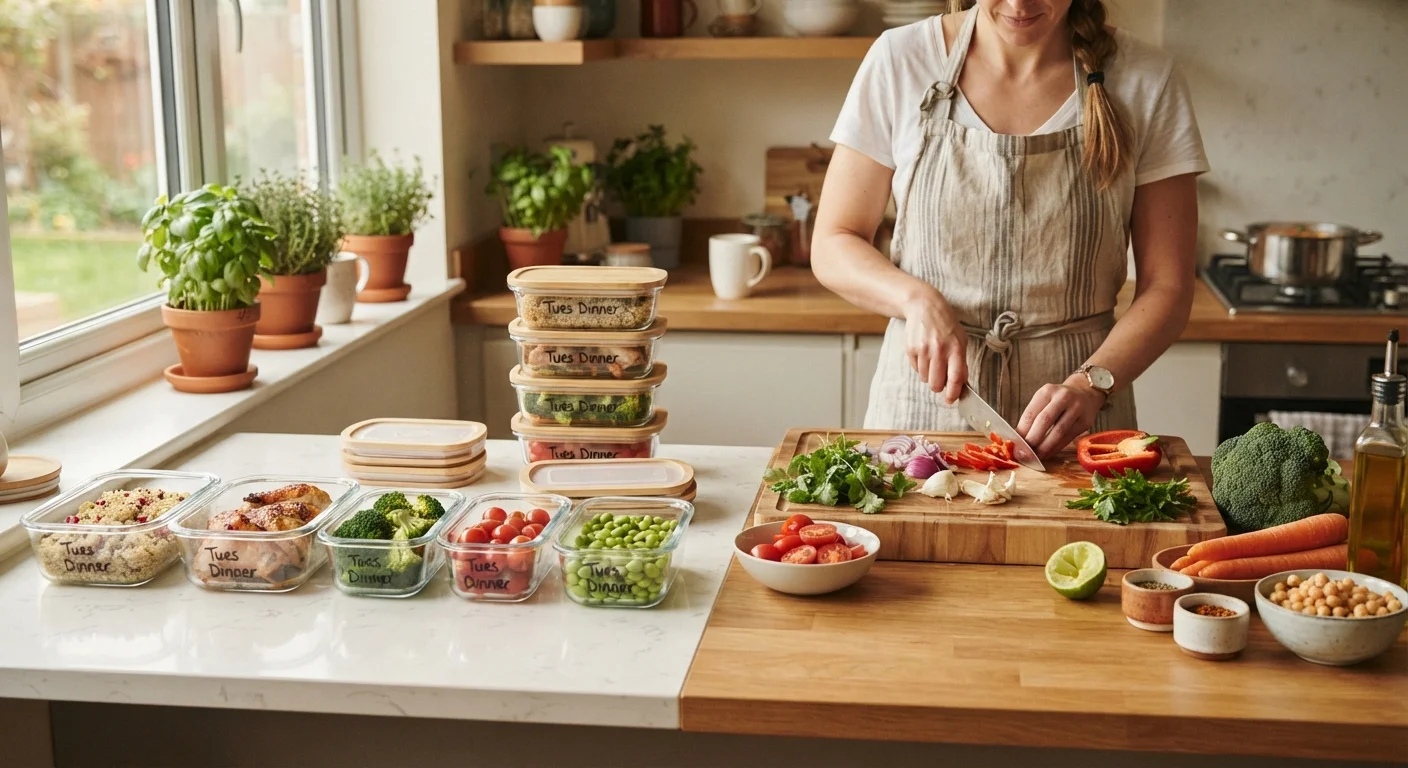
Photo: Online-Searches.net | Explore Insightful Blogs editorial
Key Takeaways
- Batch cooking saves significant time during the week but requires a dedicated cooking session upfront.
- Daily cooking offers more variety and freshness but demands consistent effort and decision-making each day.
- Food safety and storage planning are essential when cooking in large quantities ahead of time.
- A hybrid model — prepping some components while cooking others fresh — works well for many households.
- Neither approach is universally superior; the right fit depends on your schedule, household size, and cooking preferences.
What Each Approach Actually Means
Before comparing the two, it helps to define them clearly. Batch cooking means preparing large quantities of one or more dishes in a single session — typically once or twice a week — so that meals are ready to reheat or assemble throughout the days ahead. Daily cooking means preparing meals from scratch (or near-scratch) each day, responding to what's available, what sounds good, and who's eating.
These aren't rigid categories. Most households land somewhere between them. For a deeper look at how these terms fit into broader meal planning language, see our meal planning glossary.
What matters is understanding the real trade-offs — not which approach sounds more disciplined or virtuous.
| Criterion | Batch Cooking | Daily Cooking |
|---|---|---|
| Time investment | Large upfront block; minimal daily effort | Distributed daily; no single large session |
| Meal variety | Limited within the week | High; changes daily |
| Food freshness | Declines after 3–4 days | Consistently fresh |
| Grocery planning | Structured; planned in advance | More flexible; can be improvised |
| Flexibility | Lower; committed to preset meals | High; adapts to daily needs |
| Food waste risk | Lower when planned well | Higher without daily awareness |
| Skill level needed | Moderate; scaling recipes helps | Beginner-friendly in small portions |
| Best household size | Solo to small family | Any size; especially varied households |
The Case for Batch Cooking
The core appeal of batch cooking is time consolidation. Instead of making multiple daily decisions about what to eat and then spending time cooking, you invest a couple of focused hours once or twice a week and distribute the benefit across several days.
Research on decision fatigue suggests that reducing the number of choices we make each day can help preserve mental energy for other tasks — and meal decisions are a surprisingly common source of daily friction. When dinner is already portioned and ready, that friction disappears.
Batch cooking also tends to support more consistent grocery habits. When you plan what you'll cook in advance, you buy only what you need, which can reduce both food waste and impulse spending. For households watching their grocery budget, this structure adds up over time.
3–4 days
Safe refrigerator life for most cooked foods
According to USDA food safety guidelines, most cooked proteins, grains, and vegetables remain safe to eat within this window when stored properly.
~31%
Food wasted by average American household
The USDA estimates that households discard roughly a third of the food they acquire, much of it due to lack of planning or underutilized ingredients.
1–2 hrs
Typical batch cooking session length
Most batch cooking guides suggest a focused one-to-two-hour session covers a reasonable week of core meal components for one to four people.
The main limitation: batch-cooked meals have a shelf life. Most cooked proteins, grains, and vegetables stay safe in the refrigerator for three to four days according to USDA food safety guidelines. Anything beyond that typically needs to be frozen — which requires planning and adequate freezer space. If variety matters a lot to you, eating the same roasted chicken and rice on Tuesday, Wednesday, and Thursday can feel repetitive fast.
The Case for Daily Cooking
Daily cooking has real advantages that tend to get undervalued in productivity-focused meal planning conversations. Cooking each day means you can respond to what's in the fridge, what's on sale, and what your body feels like eating — without being locked into decisions made days earlier.
For households with young children, picky eaters, or members with varying schedules, this flexibility is often more practical than it first appears. A family where one person works late Tuesday and someone else wants soup on Wednesday doesn't always fit neatly into a batch-cooking plan.
Daily cooking also keeps meals fresher in texture and flavor. Certain foods — leafy salads, sautéed greens, fish, eggs — genuinely taste better made fresh. If your enjoyment of food is closely tied to quality, the sensory trade-off of reheated meals may outweigh the time savings.
The honest challenge is consistency. Daily cooking requires daily effort, and on low-energy days that effort can feel like a real barrier. Without some advance structure — at minimum a loose idea of what you'll make — daily cooking can drift into decision fatigue or unplanned takeout. For readers who want structure without rigidity, flexible meal planning approaches offer a useful middle ground.
Finding Your Fit: Hybrid Strategies That Work
Most experienced home cooks don't choose one approach exclusively — they borrow from both. A practical hybrid model might look like this: cook a big pot of grains and roast a sheet pan of vegetables on Sunday, then build different meals around those components each day with fresh proteins or sauces. The repetition stays in the background; the foreground changes daily.
This component-based approach is covered in detail in The Weekly Meal Planning Playbook, which walks through practical ways to structure a week of eating without over-committing to any single method.
A few questions can help you decide where to start:
- How many days a week do you genuinely have time to cook? If the honest answer is two or three, batch cooking fills the gaps.
- How much does variety matter to you? If eating the same thing twice in a row feels like a punishment, lean toward daily cooking or a component-based hybrid.
- How many people are you feeding? Solo cooks often find batch cooking more efficient; larger households may find daily cooking more responsive.
If you're newer to building a consistent cooking routine, Meal Planning From Scratch provides a grounded starting point without assuming you have hours to spare each week.
Food Safety Matters With Batch Cooking
This article is for general informational purposes only and is not a substitute for personalized nutrition or dietary advice. Consult a registered dietitian or qualified healthcare professional for guidance specific to your health needs.
The content provided on our blog site traverses numerous categories, offering readers valuable and practical information. Readers can use the editorial team’s research and data to gain more insights into their topics of interest. However, they are requested not to treat the articles as conclusive. The website team cannot be held responsible for differences in data or inaccuracies found across other platforms. Please also note that the site might also miss out on various schemes and offers available that the readers may find more beneficial than the ones we cover.