
The Weekly Meal Planning Playbook: Strategies That Hold Up in Real Life

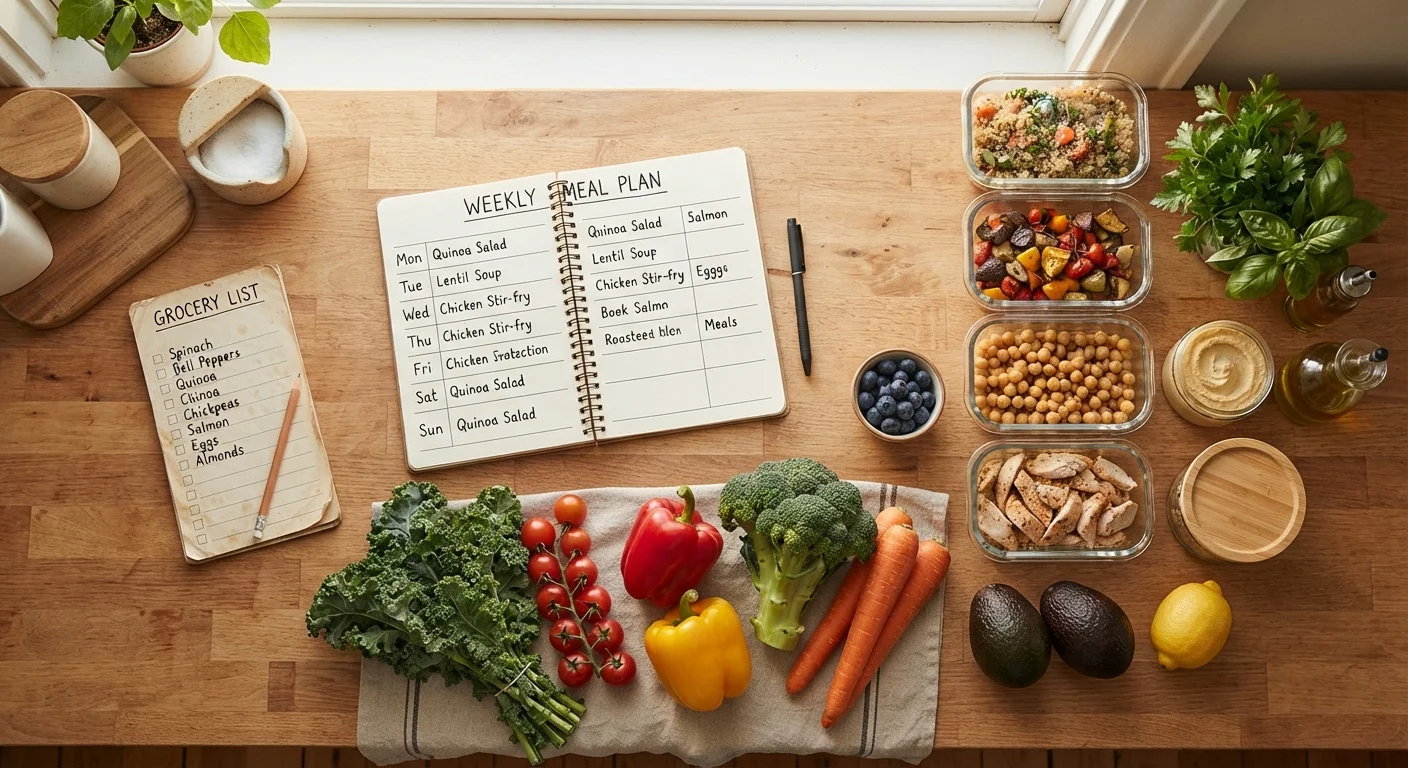
Photo: Online-Searches.net | Explore Insightful Blogs editorial
Key Takeaways
- A flexible template outperforms a rigid daily plan for long-term consistency.
- Grouping grocery shopping by store section saves time and prevents impulse purchases.
- Strategic batch cooking of two or three components — not full meals — provides the most flexibility.
- Building in one planned "flex night" per week dramatically reduces plan abandonment.
- Ingredient overlap between meals is a feature, not a shortcut — it reduces waste and cognitive load.
Why Most Meal Plans Fail Before Wednesday
Meal planning sounds straightforward — decide what you'll eat, shop once, cook efficiently. Yet most people who try it hit a wall mid-week: an unexpected work event, a craving that derails the schedule, or a forgotten ingredient that makes Tuesday's dinner impossible. The plan collapses, and by Thursday it's back to takeout.
The problem is rarely effort or intention. It's that most approaches treat meal planning like a rigid contract rather than a flexible system. When one variable changes, the whole structure fails. Research consistently shows that the gap between planning and follow-through widens when plans allow no room for real-life disruption.
If you find the traditional approach too restrictive, the flexible low-effort alternative may resonate — but even structure-resistant planners benefit from understanding the mechanics covered here. The goal of this guide is a system durable enough to survive a busy week.
Start With Three Dinners, Not Seven
Building Your Weekly Menu Framework
Instead of assigning specific meals to every day, start with a weekly template — a loose framework of meal categories rather than exact recipes. For example: a protein-forward bowl night, a soup or stew night, a pasta or grain night, a quick protein-plus-vegetable night, and a flex night for leftovers or takeout. This approach is explored in depth in our guide on themed dinner nights and rotating structures.
Within each category, you choose the specific meal based on what you have, how much time you have, and what sounds good. This preserves decision-making autonomy while still preventing the daily "what's for dinner?" spiral.
- Anchor two or three proteins for the week — chicken thighs, canned beans, and eggs, for instance — and build meals around them rather than planning in isolation.
- Overlap ingredients deliberately. Roasted sweet potatoes used Tuesday in a grain bowl can reappear Thursday in a quesadilla. This isn't lazy — it's efficient and waste-reducing.
- Leave one night open. A planned flex night removes the guilt of deviating and paradoxically makes the rest of the plan more likely to hold.
For a detailed comparison of rigid plans versus this kind of template approach, see how flexible templates compare to strict plans in practice.
Plan your two most complex meals for days when you know you'll have time — and let the other nights be simple by design. Asymmetry in effort is a feature of sustainable planning, not a sign of failure.
Before writing a new weekly plan, spend two minutes reviewing what didn't get used last week. Carry those ingredients forward into the new plan rather than starting from a blank slate.
Keep a short "always have" list of five to seven pantry staples — canned beans, olive oil, pasta, eggs, a whole grain — that never run out. These backstop your plan when fresh ingredients fall through.
Mastering the Grocery List
A well-constructed grocery list is the backbone of any working meal plan. The most common mistake is organizing the list by meal — everything for Monday, then everything for Tuesday — which leads to backtracking through the store and forgetting items.
Instead, organize your list by store section: produce, proteins, dairy, dry goods, frozen. This mirrors how most grocery stores are laid out, cuts shopping time significantly, and makes it easier to spot what's missing at a glance.
A few principles that consistently improve grocery efficiency:
- Check your pantry first. Duplicating staples you already own is one of the most common budget drains.
- Buy produce in stages. Delicate greens and ripe fruit may need a mid-week refresh, while root vegetables and cruciferous vegetables hold all week.
- Batch similar quantities. If two meals this week use canned tomatoes, buy both cans at once — obvious in retrospect, but easy to miss when planning meal by meal.
~30–40%
Food wasted by U.S. households annually
According to USDA estimates, American families discard a substantial share of purchased food, much of it fresh produce.
1 hour
Average time saved per week with a grocery list
Consumer behavior research consistently shows that shoppers with organized lists spend less time in-store and make fewer return trips.
~$1,500
Estimated annual savings from eating at home more often
The Bureau of Labor Statistics reports a persistent gap between average household spending on food at home versus food away from home.
Keeping a running digital or paper list on your refrigerator or phone throughout the week — adding items as you run out — turns grocery shopping from a stressful recall exercise into a simple grab-and-go task.
Strategic Prep: What to Do Before the Week Starts
Meal prepping has accumulated a lot of mythology — the idea that you need a four-hour Sunday session and a wall of matching containers. In practice, the most sustainable prep targets components, not complete meals.
Cooked grains, washed and chopped vegetables, a batch of hard-boiled eggs, or a marinated protein in the fridge do more work across the week than five identical pre-portioned lunch containers. They give you raw material that can flex into multiple meals depending on the day.
Our guide on what meal prepping actually requires separates the practical from the performative. For most households, 30–45 minutes of targeted prep accomplishes the same weekly payoff as hours of full-meal cooking.
High-value prep tasks to consider:
- Cook a large batch of a versatile grain (brown rice, farro, or quinoa)
- Roast a sheet pan of mixed vegetables
- Pre-wash and dry salad greens
- Portion and freeze any proteins not used within two days
Pair this with a sound understanding of what a nutritionally balanced plate looks like to make sure your prepped components cover the nutritional bases across the week.
Keeping It Flexible Without Losing Structure
Flexibility and structure aren't opposites — the most durable meal plans are structured enough to provide a default but flexible enough to absorb disruption. The key mechanism is decision rules rather than fixed menus.
A decision rule might be: "If I haven't cooked by 7 p.m., the default is eggs or a grain bowl with whatever vegetables are in the fridge." This isn't giving up on the plan — it's executing a pre-made choice under pressure, which is far easier than improvising from scratch when you're tired.
If your household resists traditional meal planning altogether, the low-structure approach outlined here may be a better starting point. For solo households, meal planning for one addresses the specific challenge of variety and portion scale without waste.
The broader principle: structure exists to reduce decision fatigue, not to punish deviation. Treat plan adjustments as system updates, not failures.
Reducing Food Waste While Staying on Budget
Food waste is both a financial and a planning problem. The USDA estimates that American households waste a significant share of the food they purchase — much of it fresh produce that was purchased with good intentions but no specific plan for use.
Deliberate ingredient overlap is the most effective countermeasure. When every item on your grocery list has at least two planned uses, waste drops substantially. Spinach that goes into Wednesday's omelet can also go into Thursday's pasta. A large bunch of cilantro used in a grain bowl also tops Friday's tacos.
Practical habits that compound over time:
- "Use it up" meals. Designate one dinner per week — often Friday — as a cook-from-what's-left night. Frittatas, stir-fries, and grain bowls are ideal vehicles.
- Freeze proactively. Proteins, cooked grains, and even some vegetables freeze well. Don't wait until something is past its prime.
- Shop your pantry first. Before finalizing each week's plan, spend five minutes identifying what already needs to be used — and build at least one meal around it.
A meal planning system that minimizes waste also naturally limits overspending. When you buy with a plan and use what you buy, grocery costs tend to stabilize — not because you're tracking every dollar, but because randomness and impulse have less room to operate.
This article is for informational and educational purposes only and does not constitute medical or dietary advice. Consult a qualified healthcare professional or registered dietitian for personalized nutrition guidance.
The content provided on our blog site traverses numerous categories, offering readers valuable and practical information. Readers can use the editorial team’s research and data to gain more insights into their topics of interest. However, they are requested not to treat the articles as conclusive. The website team cannot be held responsible for differences in data or inaccuracies found across other platforms. Please also note that the site might also miss out on various schemes and offers available that the readers may find more beneficial than the ones we cover.