Home Organization, End to End: A Complete Resource

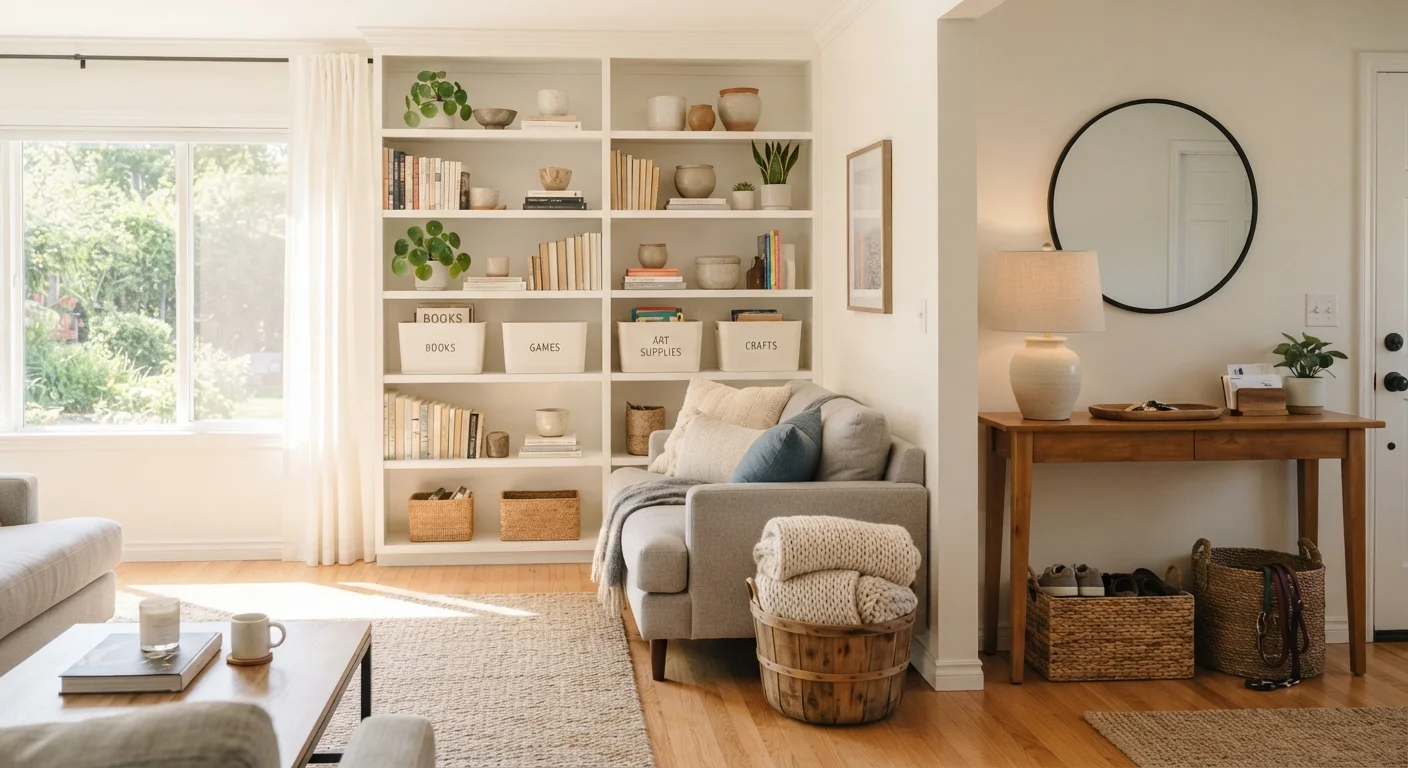
Photo: Online-Searches.net | Explore Insightful Blogs editorial
Key Takeaways
- Always declutter before investing in any storage products or systems.
- A room-by-room approach prevents overwhelm and delivers visible momentum.
- Labeling and consistent zones are the backbone of long-term maintenance.
- Fifteen-minute daily resets outperform occasional marathon tidying sessions.
- Integrating organization into routines — not treating it as a one-time event — sustains results.
Why Home Organization Matters
A disorganized home is more than an aesthetic problem. Research consistently links cluttered environments to elevated stress, reduced focus, and difficulty unwinding at the end of the day. For busy American households juggling work, school, and errands, a chaotic living space can quietly drain the mental energy you need for everything else.
The good news: you don't need a perfectly designed home or a large budget to build order. What you need is a repeatable system — one that fits your actual lifestyle, not a magazine version of it. This guide walks you through every stage, from your first big sort to the habits that keep spaces functional for years.
54%
Americans feel overwhelmed by clutter at home
According to a survey by IKEA's Life at Home research project, more than half of respondents reported feeling that clutter negatively affected their wellbeing.
30 min
Average time lost searching for misplaced items weekly
Organizational research commonly estimates that households lose significant time each week to locating misplaced everyday items.
80%
Optimal storage fill level for easy maintenance
Professional organizers widely recommend keeping storage areas no more than 80% full to allow easy retrieval and return of items.
The Declutter-First Principle
The most common organization mistake is buying storage before reducing what you own. Bins and baskets can't fix too much stuff — they just relocate it. Before you buy a single organizer, work through each area using a simple sort: keep, donate, discard, or relocate.
A Practical Sorting Framework
- Keep: Used in the last 12 months, has a clear home, and serves your current life.
- Donate: Functional but no longer needed — pass it on rather than landfill it.
- Discard: Broken, expired, or genuinely unusable.
- Relocate: Belongs in a different room; sort it there, not here.
Work in short sessions — 30 to 45 minutes per area — to avoid decision fatigue. Commit to one zone before moving to the next. A half-sorted room is more demoralizing than an unsorted one.
Start your declutter with the easiest category, not the hardest. Clearing out expired pantry items or single-use duplicates builds momentum before you tackle emotionally loaded items like sentimental boxes.
Photograph sentimental items you're ready to let go of before donating them. The photo preserves the memory without requiring you to keep the object.
Room-by-Room Organization Strategy
Every room has a primary function, and your organization system should support that function above all else. Here's how to approach the spaces that challenge most households.
Kitchen
Group items by task: prep tools near the cutting surface, baking supplies together, daily dishes within easy reach. Purge duplicate gadgets and expired pantry items before assigning permanent spots. A well-organized pantry also supports weekly meal planning, making grocery trips faster and food waste lower.
Bedrooms and Closets
Closets function best when you categorize clothing by type, then by frequency of use. Daily items at eye level, seasonal or rarely worn pieces higher up or in bins. Under-bed storage suits flat items — extra linens, off-season clothing in sealed bags.
Garage and Utility Spaces
Zone your garage by activity: lawn and garden equipment, tools, sporting goods, automotive supplies. Wall-mounted pegboards and shelving keep floors clear and make items retrievable. If your garage doubles as a workshop, consult our home improvement hub for layout ideas suited to DIY projects.
Home Office and Entryway
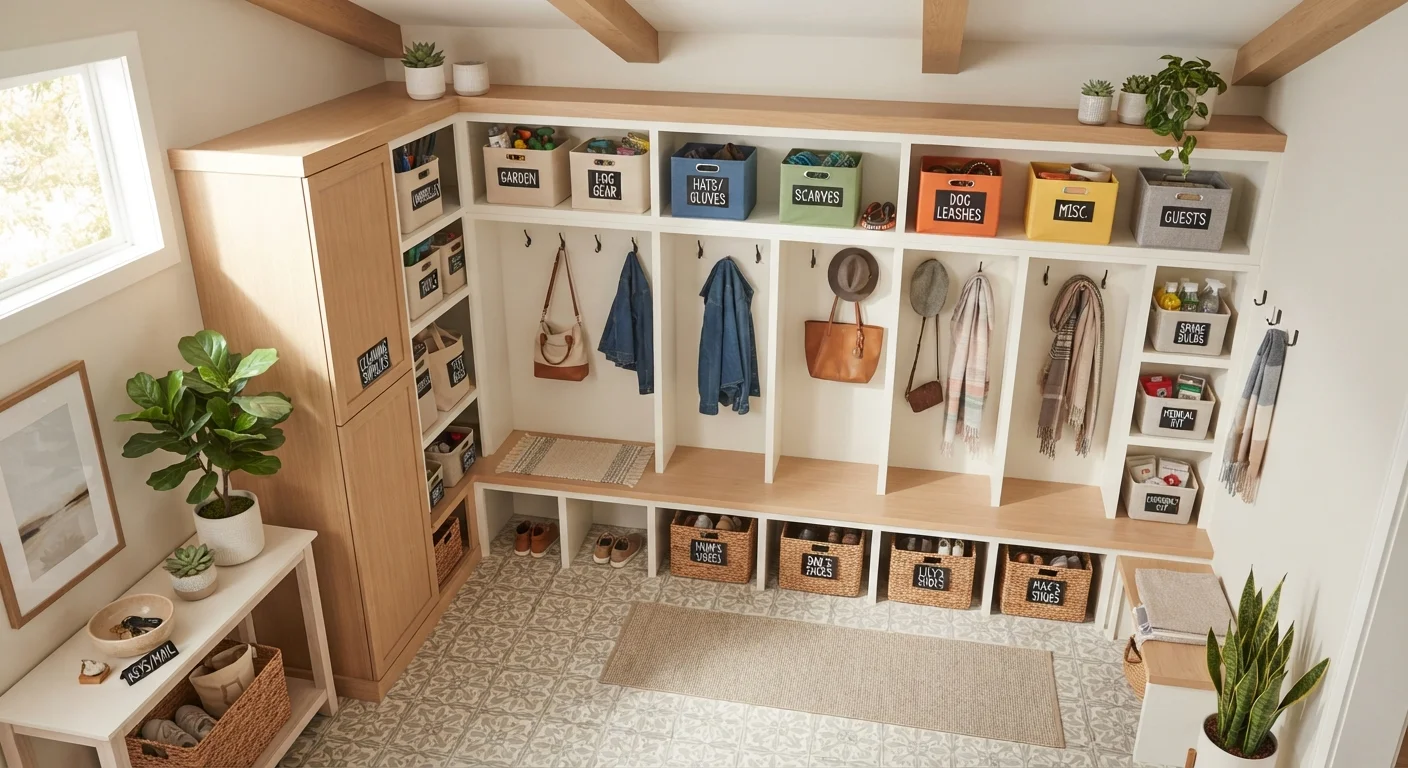
The entryway sets the tone for the entire home. A consistent drop zone — hooks, a tray, a small shelf — prevents the pile-up of keys, bags, and mail. In a home office, paper management is the central challenge; a simple inbox-action-archive system handles most of it.
Storage Systems That Actually Work
Once you've decluttered and defined each room's zones, storage products become genuinely useful. The goal is visibility and retrieval speed — you should be able to find and return any item in under 30 seconds.
Core Principles
- Like with like: Group by category, not by container size or color.
- Label everything: Labels remove the mental effort of remembering where things live, especially for others in the household.
- Contain at the right scale: Oversized bins encourage overstuffing. Smaller containers enforce limits.
- Leave breathing room: A storage area at 80% capacity is easier to maintain than one packed to the edge.
Vertical space is almost always underused. Shelving on walls — particularly in closets, garages, and laundry rooms — multiplies usable square footage without renovation. For larger projects that involve built-ins or structural shelving, verify local permit requirements and consider consulting a qualified contractor.
Maintaining Order Over Time
Organization isn't a one-time project — it's a practice. The households that stay organized aren't those with the best systems at the outset; they're the ones with the simplest daily habits.
The Daily Reset
A 10-to-15-minute reset each evening — returning items to their homes, clearing surfaces, processing any mail or bags from the day — prevents small disorder from compounding into large overwhelm. Tie it to an existing routine, like after dinner, so it becomes automatic rather than effortful.
Seasonal Reviews
Schedule a light review of each major area twice a year. What's accumulated that you no longer need? What's being stored in the wrong place? This is also a good moment to reassess zones as your household's needs change — a child aging out of toys, a hobby shift, or a new work-from-home arrangement.
If you maintain an outdoor area, seasonal reviews can connect to your garden calendar too. Properly storing tools and repurposing organic kitchen waste — through a compost system, for example — supports both a tidy home and a healthier yard. Our guide to home composting covers the basics of turning scraps into garden-ready material.
When Clutter Returns
It will. Life is dynamic, and some disorder is normal. The measure of a good system is how quickly it can be restored, not whether it ever falls apart. When a space starts slipping, return to the declutter-first principle: sort before you store, and reset the zone from scratch if needed.
The content provided on our blog site traverses numerous categories, offering readers valuable and practical information. Readers can use the editorial team’s research and data to gain more insights into their topics of interest. However, they are requested not to treat the articles as conclusive. The website team cannot be held responsible for differences in data or inaccuracies found across other platforms. Please also note that the site might also miss out on various schemes and offers available that the readers may find more beneficial than the ones we cover.