
The Home Gardener's Guide to Composting

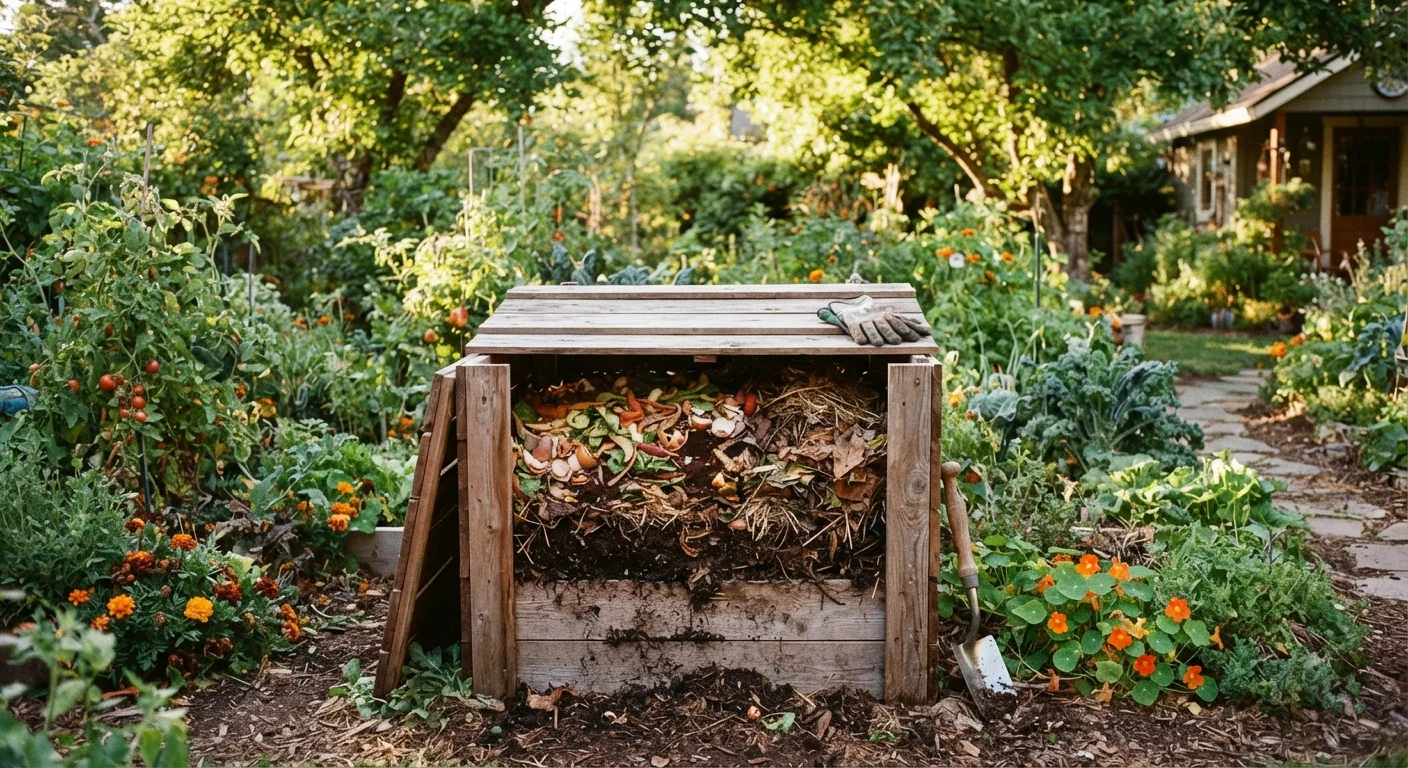
Photo: Online-Searches.net | Explore Insightful Blogs editorial
Key Takeaways
- Compost improves soil structure, drainage, and fertility without synthetic inputs.
- A successful pile needs a balance of carbon-rich browns and nitrogen-rich greens.
- Moisture, airflow, and particle size are the three levers that control decomposition speed.
- Finished compost looks and smells like dark, crumbly earth — not rotting food.
- Even a small urban yard can support a compost system with the right container setup.
What Composting Actually Does for Your Soil
Composting is the controlled decomposition of organic matter into a stable, humus-rich material that feeds soil biology and improves plant performance. Unlike synthetic fertilizers that deliver nutrients in a single flush, finished compost works gradually — releasing nutrients as soil microbes need them, improving both sandy and clay soils by moderating drainage and water retention.
For gardeners growing vegetables or working to establish a healthy lawn, compost is one of the highest-return inputs available. It supports the microbial life that makes nutrients accessible to plant roots, reduces compaction, and buffers soil pH over time. If you're planning a vegetable garden, our complete guide for home growers covers how soil health fits into the broader planting picture.
Browns
Carbon-rich organic materials added to a compost pile, such as dry leaves, cardboard, straw, and paper. They provide the energy source microbes need to function.
Greens
Nitrogen-rich organic materials such as vegetable scraps, grass clippings, and coffee grounds. Nitrogen fuels microbial growth and activity in the pile.
Hot composting
An active composting method where the pile reaches high internal temperatures (roughly 130–160°F), accelerating decomposition and killing weed seeds and pathogens.
Vermicomposting
A composting method using red wiggler worms to break down organic matter, producing worm castings — a concentrated, nutrient-rich soil amendment.
Humus
The stable, dark organic matter that remains after decomposition is complete. It improves soil structure, water retention, and nutrient availability.
Carbon-to-nitrogen ratio (C:N)
The proportion of carbon to nitrogen in compost materials. A balanced ratio — typically around 25–30:1 — supports efficient decomposition without odor problems.
What to Add (and What to Keep Out)
A functional compost pile is built from two categories of material. Greens are nitrogen-rich: vegetable and fruit scraps, fresh grass clippings, coffee grounds, and plant trimmings. Browns are carbon-rich: dry leaves, cardboard torn into pieces, paper bags, straw, and untreated wood chips.
Aim for roughly three parts browns to one part greens by volume. Too many greens produce a wet, smelly pile; too many browns result in a pile that barely decomposes.
- Add freely: fruit and vegetable scraps, eggshells, coffee grounds and filters, tea bags (paper only), yard trimmings, dry leaves, shredded paper, cardboard
- Avoid: meat, fish, bones, dairy, oily or heavily cooked food, pet waste, diseased plants, weeds that have gone to seed
Compost pairs well with mulch as part of an overall soil management strategy. Our guide to garden mulch types and uses explains how different mulches interact with the soil surface between growing seasons.
Avoid These Common Additions
Setting Up Your Compost System
The right system depends on your space, how much material you generate, and how quickly you want results. The three most practical options for home gardeners are:
- Open pile or three-bin system
- Best for yards with significant leaf or clipping volume. A three-bin setup lets you move material from active decomposition to curing to finished stages in a logical sequence. Requires the most space but is the highest-volume option.
- Enclosed tumbler bin
- A sealed drum on a rotating frame. Tumblers heat up faster, deter pests more reliably, and require less manual turning than open piles. Better suited to kitchen-scrap-heavy households with limited yard space.
- Worm bin (vermicomposting)
- Uses red wiggler worms to process kitchen scraps indoors or in a garage. Produces worm castings and liquid fertilizer. Ideal for apartments or households generating mostly food scraps rather than yard waste.
Choose a site that gets partial shade, has access to water, and is reasonably close to where you generate material. A pile that's inconvenient to reach rarely gets tended.
Maintaining Your Pile and Troubleshooting Problems
Three variables control how fast your pile breaks down: moisture, airflow, and particle size. The pile should feel like a wrung-out sponge — damp but not dripping. Turn it every one to two weeks to introduce oxygen; decomposition stalls in anaerobic (airless) conditions. Shredding or chopping material before adding it dramatically increases surface area and speeds breakdown.
Common problems and fixes
| Symptom | Likely Cause | Fix |
|---|---|---|
| Pile smells like ammonia | Too many greens | Add browns; turn to aerate |
| Pile smells like rotten eggs | Too wet, insufficient air | Turn thoroughly; add dry browns |
| Pile is dry and not breaking down | Too little moisture or all browns | Water lightly; add greens |
| Pile attracts flies or rodents | Exposed food scraps | Bury scraps; avoid meat or dairy |
Speed Things Up With a Simple Habit
How and When to Use Finished Compost
Finished compost is dark brown to black, crumbles easily in your hand, and smells like damp forest soil. If you can still identify the original materials, give it more time. Once ready, compost is versatile:
- Garden beds: Work 2–3 inches into the top 6–8 inches of soil before planting, or apply as a top dressing around established plants.
- Lawn care: A thin layer (no more than ¼ inch) spread across an existing lawn improves organic matter over time without smothering grass. For a new lawn, incorporate compost into the seedbed during soil prep — our season-by-season lawn seeding guide covers the timing in detail.
- Potting mix amendment: Blend finished compost with other components to improve moisture retention in containers — typically no more than 25–30% of the total mix.
- Compost tea: Steeping finished compost in water produces a liquid that can be applied to soil around plants, though research on its effectiveness relative to direct application is still evolving.
Compost is not a quick fix — its benefits build cumulatively season over season. Gardeners who apply it consistently often find they need less supplemental watering and fewer additional soil amendments over time.
Frequently Asked Questions
The content provided on our blog site traverses numerous categories, offering readers valuable and practical information. Readers can use the editorial team’s research and data to gain more insights into their topics of interest. However, they are requested not to treat the articles as conclusive. The website team cannot be held responsible for differences in data or inaccuracies found across other platforms. Please also note that the site might also miss out on various schemes and offers available that the readers may find more beneficial than the ones we cover.