
Vegetable Garden Planning: A Complete Approach for Home Growers

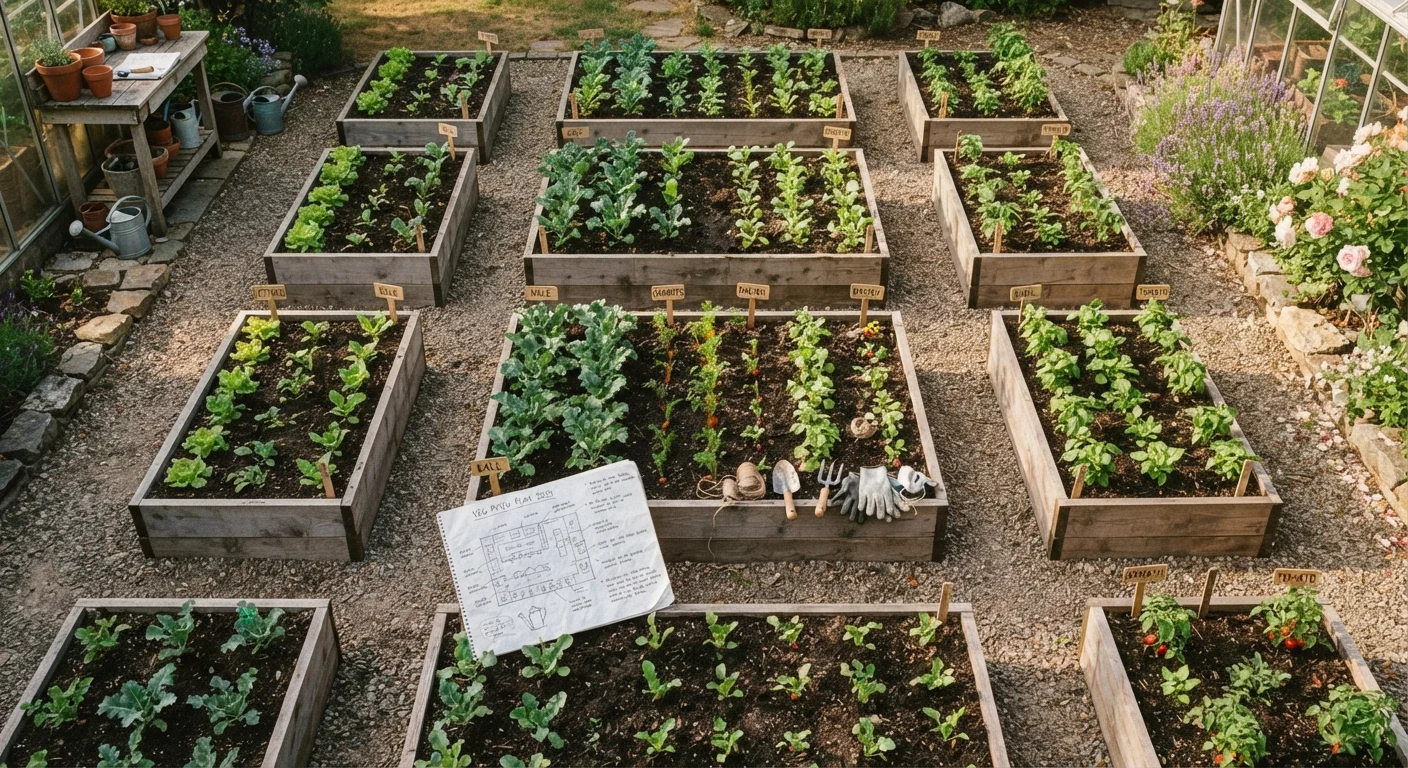
Photo: Online-Searches.net | Explore Insightful Blogs editorial
Key Takeaways
- At least six hours of direct sun daily is the baseline for most productive food crops.
- Rotating plant families across beds each year helps prevent soil-borne disease buildup.
- Companion planting can reduce pest pressure without chemical intervention.
- Succession sowing every two to three weeks extends your harvest window significantly.
- Healthy, well-amended soil is the single biggest factor in vegetable garden success.
- Raised beds offer soil control advantages but require consistent watering management.
Start With Site Assessment
Before ordering seeds or marking out beds, spend at least a week observing your yard. Track where sunlight falls at different times of day — most vegetables need a minimum of six hours of direct sun, with eight or more preferred for heavy producers like tomatoes, peppers, and squash. Leafy greens and herbs are more tolerant of partial shade, making them useful for spots that get only four to five hours. If your yard skews shady, see our guide on plants that genuinely thrive in low-light conditions for realistic alternatives.
Note water drainage patterns after rainfall. Consistently waterlogged ground stunts roots and promotes disease; raised beds are one practical solution. Compare the full picture of that approach in our article on raised garden beds: the full picture before you build. Also identify proximity to water access — dragging hoses long distances is one of the most common reasons home gardens get neglected mid-season.
Sketch a rough map of the space with compass orientation noted. North–south row orientation minimizes shading between plants as they grow taller. Record what was grown in each area in previous years if possible — this information feeds directly into your crop rotation plan.
Draw your garden plan on paper before you buy a single seed — even a rough sketch forces you to think through spacing, sun angles, and rotation zones in ways that mental planning never does.
Use seed packets as your primary planning source: the days-to-maturity number and spacing recommendations printed on each packet are specific to that variety, making them more reliable than general guides.
Keep a simple garden journal with planting dates, germination notes, and harvest observations — even brief entries build the year-over-year knowledge that makes your specific plot easier to manage.
Choosing a Layout That Works for Your Space
Most home gardeners work with one of three basic layouts: traditional in-ground rows, raised beds, or intensive block planting. Each has real trade-offs.
- In-ground rows suit larger plots and are easier to scale, but soil compaction from walking between rows is a persistent issue. Leave permanent pathways of at least 18 inches between planted rows.
- Raised beds give precise control over soil quality, warm up faster in spring, and make season extension simpler. A standard 4-foot width allows comfortable reach from both sides without stepping in.
- Block planting groups crops in dense squares or grids rather than single-file rows, making efficient use of smaller spaces and crowding out weeds through canopy coverage.
Whatever layout you choose, group plants by mature height — tallest crops on the north side of the plot so they don't shade shorter neighbors. Factor in permanent features: perennials like asparagus and strawberries should occupy dedicated beds that won't be disrupted during annual soil preparation. For watering system decisions, our comparison of drip irrigation vs. sprinkler systems for home gardens walks through coverage, efficiency, and maintenance factors worth weighing before you commit to an approach.
Crop Rotation: Why It Matters and How to Do It
Planting the same family of vegetables in the same ground year after year allows pest and disease populations to build in the soil over time. Rotating plant families disrupts those cycles, reduces the need for interventions, and helps maintain soil nutrient balance.
Organize your crops into four broad family groups for rotation purposes:
- Solanaceae (nightshades): tomatoes, peppers, eggplant, potatoes
- Brassicaceae (brassicas): cabbage, broccoli, kale, Brussels sprouts, radishes
- Fabaceae (legumes): beans, peas — these fix nitrogen and benefit beds before heavy feeders
- Apiaceae / roots / others: carrots, parsnips, onions, garlic, lettuce, cucumbers
Each group moves one position around your beds each year in a consistent direction. A simple four-bed layout makes this rotation straightforward to track on paper. Keep a garden journal or a basic spreadsheet — memory alone rarely holds up from one season to the next. The soil you build through rotation and amendment also feeds future composting cycles; our guide The Home Gardener's Guide to Composting explains how to turn kitchen and garden waste into a reliable soil amendment.
Don't Skip the Rotation Records
Companion Planting Basics
Companion planting uses strategic crop pairings to improve growing conditions, deter pests, or attract beneficial insects. Not every pairing is supported by rigorous research, but several have consistent evidence behind them in home garden practice.
Well-documented pairings worth using:
- Basil near tomatoes — commonly reported to repel aphids and thrips; easy to integrate since both need similar sun and warmth.
- Nasturtiums as trap crops — aphids prefer nasturtiums, drawing them away from beans and brassicas. Plant them at bed edges where you can monitor and remove infested growth.
- The Three Sisters (corn, beans, squash) — a long-practiced Indigenous polyculture: corn provides structure for beans, beans fix nitrogen, squash leaves shade soil to retain moisture and suppress weeds.
- Dill and fennel near brassicas — attract parasitic wasps that prey on cabbage worms, though fennel can inhibit some crops and is often better grown in its own container.
Avoid planting onion-family crops (alliums) near beans and peas — alliums are commonly noted to suppress legume growth. Keep records of what you observe season to season; your own garden's conditions matter as much as general guidelines.
Succession Sowing for a Continuous Harvest
A common beginner mistake is planting everything at once, producing a glut that's impossible to use followed by a long gap. Succession sowing — planting the same crop in small batches every two to three weeks — levels out that curve and keeps your kitchen supplied steadily rather than in bursts.
2–3 weeks
Ideal interval between succession sowings
Generally recommended by extension horticulturalists for crops like lettuce and radishes to maintain continuous harvest without overlap.
6+ hours
Minimum daily sun for most food crops
Standard guidance from university cooperative extension programs across the US for productive vegetable gardening.
1 inch/week
General water need for vegetable crops
A widely cited benchmark from horticultural extension resources; actual needs vary by soil type, crop, and local climate.
Crops that respond especially well to succession sowing include lettuce, radishes, salad greens, green beans, beet, cilantro, and carrots. Fast-maturing varieties (check days-to-maturity on seed packets) are particularly suited to multiple rounds within a single growing season.
For crops with long maturity windows like tomatoes, peppers, or winter squash, succession isn't practical — start these as a single planting and focus instead on selecting varieties with staggered maturity dates if you want spread-out production. If you find yourself with a reliable harvest, integrating what you grow with your weekly cooking is easier when you have a planning framework in place — our resource on meal planning from scratch is a useful complement to what you grow.
Soil, Water, and Feeding Essentials
Productive vegetable gardens run on healthy soil. Before planting, conduct a basic soil test — many cooperative extension services offer low-cost testing that tells you pH and primary nutrient levels. Most vegetables prefer a pH between 6.0 and 7.0. Amending based on test results is far more effective than guessing.
Work several inches of finished compost into beds each spring before planting. This improves drainage in clay soils, increases water retention in sandy soils, and adds a slow-release source of nutrients. Compost alone won't always supply all the nitrogen heavy feeders like corn and tomatoes need mid-season — a balanced organic fertilizer side-dressed at flowering time addresses that gap without overapplication.
Water consistency matters more than volume. Deep, infrequent watering encourages roots to grow down rather than staying shallow. About one inch of water per week — from rain or irrigation combined — is a general guideline for most vegetable crops during the growing season, though sandy soils and hot climates may require more. Mulching bare soil between plants with straw, wood chips, or shredded leaves reduces surface evaporation, moderates soil temperature, and suppresses weed germination. For a broader seasonal yard maintenance framework, our lawn care through the year reference guide covers how garden tasks integrate with overall property upkeep month by month.
The content provided on our blog site traverses numerous categories, offering readers valuable and practical information. Readers can use the editorial team’s research and data to gain more insights into their topics of interest. However, they are requested not to treat the articles as conclusive. The website team cannot be held responsible for differences in data or inaccuracies found across other platforms. Please also note that the site might also miss out on various schemes and offers available that the readers may find more beneficial than the ones we cover.