Drip Irrigation vs. Sprinkler Systems for Home Gardens

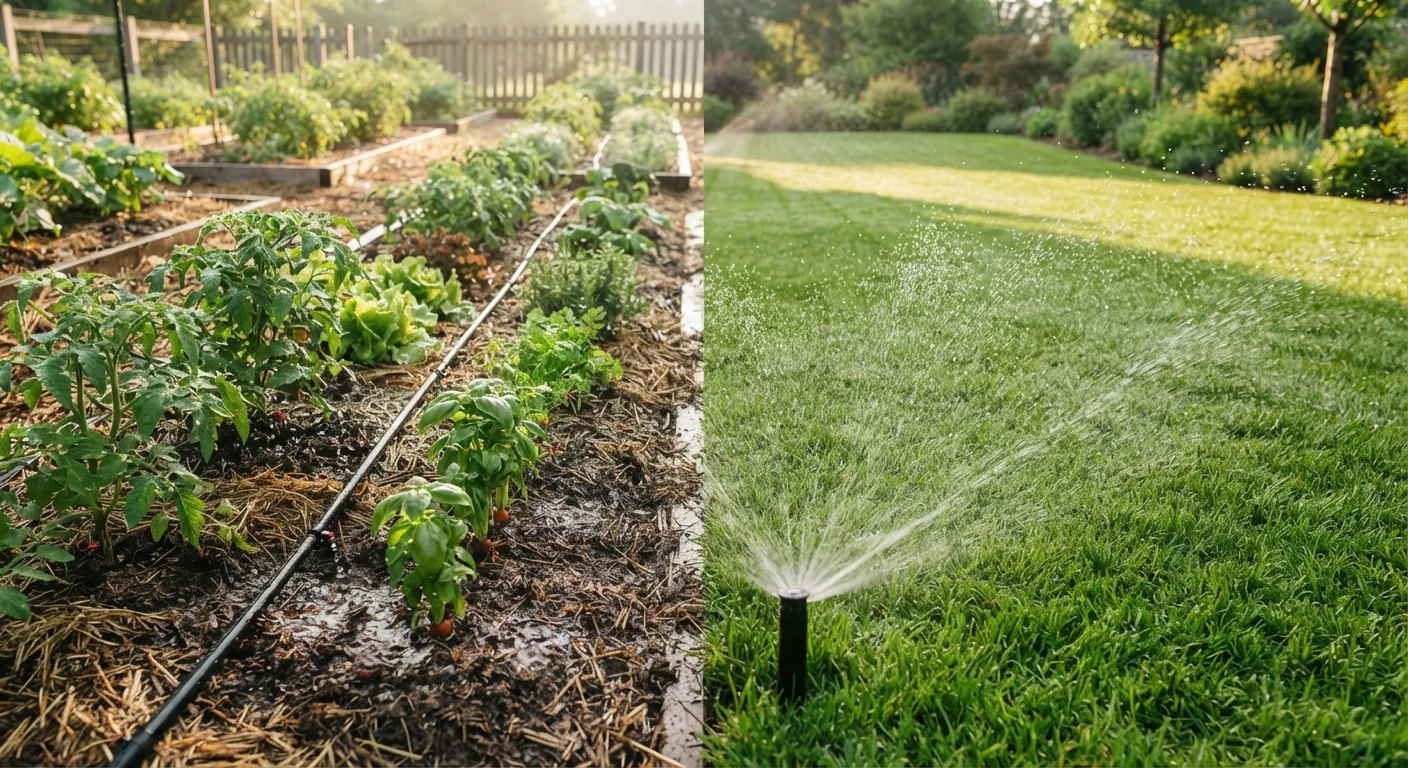
Photo: Online-Searches.net | Explore Insightful Blogs editorial
Key Takeaways
- Drip irrigation delivers water directly to plant roots, reducing evaporation and limiting weed growth.
- Sprinkler systems cover large areas efficiently, making them the practical choice for lawns and open turf.
- Setup complexity and cost vary significantly — drip systems require more targeted planning while sprinklers involve more infrastructure.
- Both systems benefit from a timer or smart controller to reduce water waste and guesswork.
- Your garden type — lawn versus beds versus mixed — should drive which system you choose.
How Each System Works
Understanding the mechanical difference between these two approaches helps clarify which is the right fit before you buy a single component.
Drip irrigation delivers water slowly and directly to the root zone of individual plants through a network of flexible tubing, emitters, and micro-sprayers. Water seeps into the soil gradually — often at a rate of one to two gallons per hour per emitter — with very little surface runoff or airborne spray. Systems are typically connected to a standard outdoor hose bib and can be configured with a basic timer.
Sprinkler systems distribute water through the air using rotating or stationary spray heads installed in the ground or on risers. They're designed to cover areas uniformly, which makes them well-suited to lawns where every square foot needs equal moisture. In-ground systems run on pressurized supply lines and are zoned so that different areas can be watered independently. Above-ground oscillating or impact sprinklers offer a lower-commitment alternative, though they require manual repositioning.
Water Efficiency and Plant Health
Efficiency is where drip irrigation holds a clear advantage. Because water is applied directly at the root zone with minimal exposure to air, evaporation losses are substantially lower compared to overhead watering. Wet foliage — a common result of sprinkler use — can also encourage fungal disease in vegetable gardens and dense plantings.
Drip systems can also be designed to deliver precise moisture levels to specific plant types, which is useful when growing vegetables with very different water needs in the same bed. For more on building out a productive food garden, see our complete vegetable garden planning guide.
Sprinklers, by contrast, are highly effective for turf grass, which absorbs water across its entire surface area. Lawns are typically too large and densely planted to drip-irrigate practically. That said, poor sprinkler timing — watering midday or late at night — can undermine efficiency. Common watering myths often lead homeowners to water more frequently than grass actually needs.
| Drip Irrigation | Sprinkler Systems | |
|---|---|---|
| Best suited for | Garden beds, vegetables, shrubs | Lawns and large turf areas |
| Water efficiency | High — minimal evaporation loss | Moderate — some evaporation and runoff |
| Foliage wetting | None — water stays at root level | Yes — overhead spray wets leaves |
| DIY installation | Generally straightforward | In-ground systems often need a pro |
| Upfront cost | Low to moderate | Moderate to high (in-ground) |
| Coverage area | Targeted, plant-by-plant | Broad, uniform area coverage |
| Maintenance | Emitter checks, occasional flushing | Head adjustment, seasonal winterizing |
Setup, Cost, and Maintenance
Both systems require upfront planning, but the nature of that effort differs considerably.
Drip irrigation is largely a DIY-friendly project. Kits are available in various sizes, and most can be assembled with basic hand tools. The main planning task is mapping emitter placement to match your plant layout — something that changes as your garden evolves. Emitters can clog over time, particularly in areas with hard water, and lines near the soil surface may need repositioning after heavy digging or seasonal planting.
In-ground sprinkler systems involve trenching, pressurized pipe connections, and often a backflow preventer — work that typically requires a licensed irrigation contractor in many jurisdictions. Always check local permit and licensing requirements before beginning any underground plumbing work. Once installed, sprinkler systems are relatively low-maintenance, though heads need periodic cleaning and adjustment, and systems should be winterized before freezing temperatures arrive.
Add a Smart Controller for Either System
If you're establishing a new lawn alongside an irrigation project, our season-by-season lawn seeding walkthrough covers the watering needs at each growth stage.
Choosing the Right System for Your Space
The honest answer for most homeowners is that the two systems aren't really competing — they serve different areas of the same property.
- Garden beds, raised planters, and shrub borders: Drip irrigation is the practical choice. It conserves water, keeps foliage dry, and is adaptable as planting layouts change. Raised beds in particular benefit from consistent root-zone moisture. See our raised garden bed planning guide for more context on watering considerations before you build.
- Lawn and turf areas: Sprinkler systems — whether in-ground or portable — provide the broad, even coverage that grass requires. A seasonal lawn care schedule can help you coordinate watering with fertilizing, aeration, and overseeding tasks throughout the year.
- Mixed properties: Running drip lines in beds while a separate sprinkler zone handles the lawn is a well-established approach. Smart controllers that manage both zones independently make this easier to maintain without constant manual adjustment.
Whatever system you choose, a timer or smart irrigation controller is a worthwhile addition — it removes the guesswork and reduces the likelihood of over- or under-watering across seasons.
The content provided on our blog site traverses numerous categories, offering readers valuable and practical information. Readers can use the editorial team’s research and data to gain more insights into their topics of interest. However, they are requested not to treat the articles as conclusive. The website team cannot be held responsible for differences in data or inaccuracies found across other platforms. Please also note that the site might also miss out on various schemes and offers available that the readers may find more beneficial than the ones we cover.