
Plants That Actually Survive Low-Light Yards

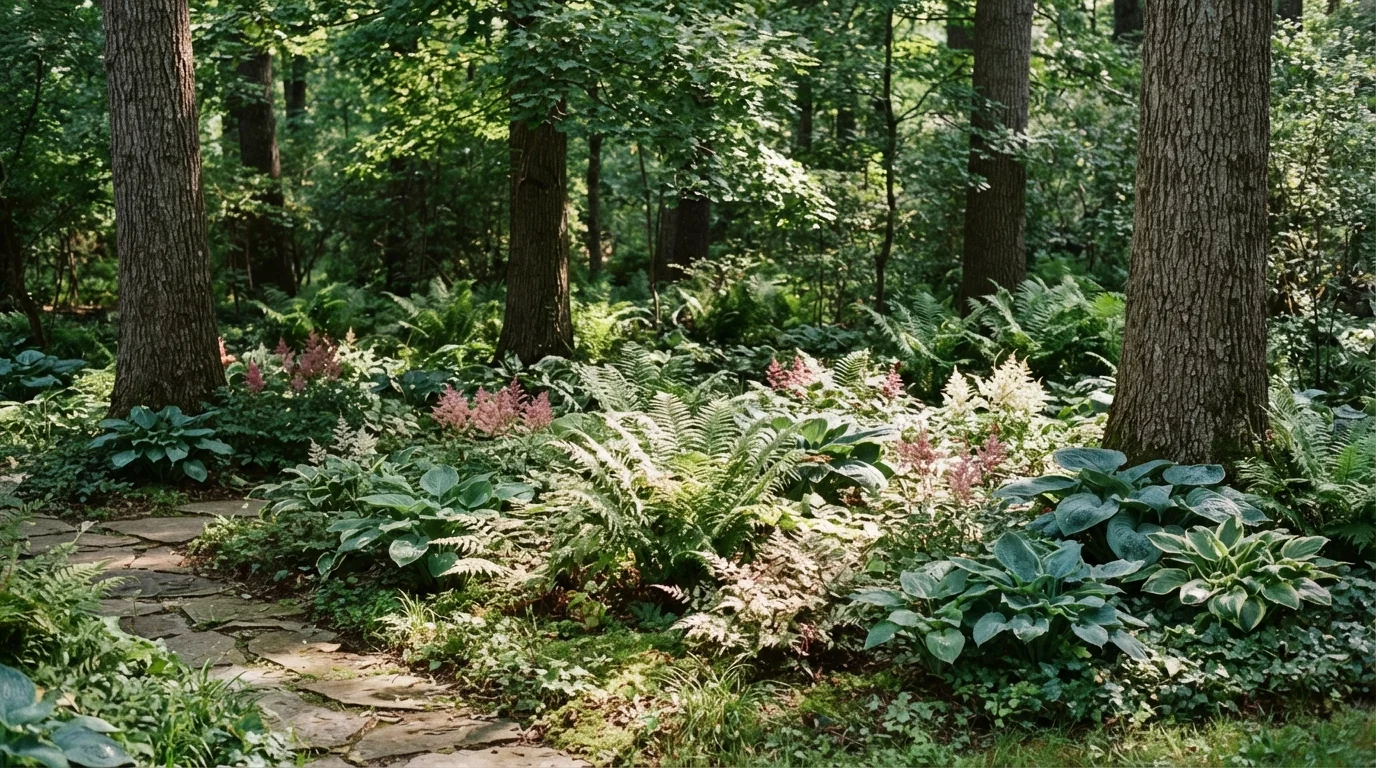
Photo: Online-Searches.net | Explore Insightful Blogs editorial
Key Takeaways
- Many attractive, hardy plants thrive with fewer than three hours of direct sunlight daily.
- Matching plants to your specific shade type — deep, partial, or dappled — is the key to success.
- Layering plants by height and texture creates a finished, intentional look in low-light yards.
- Soil preparation and moisture management matter more in shade than sun for long-term plant health.
- Several shade-tolerant plants also suppress weeds naturally, reducing ongoing maintenance.
Working With What the Shade Gives You
A low-light yard isn't a gardening dead end — it's simply a different set of conditions that rewards the right plant choices. Many homeowners assume that shade means bare soil or a scrubby lawn that never quite fills in. In reality, some of the most elegant, low-maintenance garden beds in North America are built entirely in shade.
Before selecting plants, take a few days to observe exactly how much light your space receives. Deep shade gets fewer than one hour of direct sun; partial shade gets two to four hours; and dappled shade sits beneath a tree canopy where light shifts throughout the day. Each category supports a different plant palette, so identifying yours first saves a lot of replacement cost later. Also check drainage — shaded soil under roof overhangs can be surprisingly dry, while areas beneath dense tree canopies can alternate between dry and soggy.
Unlike a vegetable plot — where sun exposure is almost non-negotiable (see our vegetable garden planning guide for a full breakdown) — ornamental shade gardens are genuinely forgiving once you match plant to place.
Hostas
Hostas are the cornerstone of shade gardening in the United States for good reason. They come in sizes ranging from teacup-small to dinner-plate enormous, with leaf colors spanning blue-green, chartreuse, gold, and variegated combinations. Most varieties perform well in partial to deep shade and are reliably cold-hardy across a wide range of USDA zones.
Plant hostas in amended, well-draining soil rich in organic matter. They're drought-tolerant once established but appreciate consistent moisture during hot summers. Watch for slug damage on young leaves — a layer of coarse mulch around the base can help deter them. Hostas die back in winter and re-emerge dependably each spring, making them a true set-it-and-forget-it perennial.
Hostas offer unmatched variety in color and size for any shade condition.
Ferns (Native Species)
Native ferns — including ostrich fern, Christmas fern, and cinnamon fern — are some of the most adaptable plants available for low-light yards. They thrive in moist, humus-rich soil and handle deep shade that would defeat most other ornamentals. Ostrich fern spreads by underground runners, which makes it excellent for quickly filling large bare areas beneath trees.
Christmas fern is semi-evergreen, keeping its fronds through mild winters and offering year-round structure. Native ferns also support local wildlife and pollinators as part of a broader ecosystem planting strategy. Avoid over-fertilizing — ferns in shade rarely need supplemental feeding if the soil contains adequate organic matter.
Native ferns fill deep shade reliably while supporting local wildlife ecosystems.
Astilbe
Astilbe earns its place in shade beds with feathery plumes in shades of white, pink, red, and purple that bloom from late spring through midsummer, depending on the variety. Unlike many shade plants that rely purely on foliage, astilbe brings genuine flower color to low-light spaces.
It performs best in partial shade with consistently moist soil — it struggles in dry conditions, particularly under shallow-rooted trees. Planting in groups of three or five creates the most visual impact. After flowering, the spent plumes turn a warm tan color and can be left for winter interest or cut back in fall. Divide clumps every three to four years to keep plants vigorous.
Astilbe delivers real flower color to shaded beds where few other plants will bloom.
Bleeding Heart (Lamprocapnos spectabilis)
Bleeding heart is a classic cottage-garden perennial that naturally grows in woodland settings, making partial to full shade its preferred environment. The arching stems hung with heart-shaped pink or white flowers are a distinctive early-spring sight. It pairs beautifully with hostas and ferns, which fill in the space when bleeding heart goes dormant by midsummer in hot climates.
Plant in well-drained, organically rich soil. Once established, bleeding heart is low-maintenance and long-lived. Note: All parts of the plant are toxic if ingested — keep this in mind in yards frequented by young children or pets. Fringed bleeding heart (Lamprocapnos eximia) is a compact alternative that remains in leaf and even reblooms into fall.
Bleeding heart's spring display is hard to match in shaded beds, but plan for summer dormancy.
Ajuga (Bugleweed)
Ajuga is one of the most effective ground covers for low-light yards, spreading readily to form a weed-suppressing mat of rich, often burgundy or bronze foliage. In spring it sends up short spikes of small blue-purple flowers that attract bees. It tolerates a range of shade conditions — from partial to fairly deep — and even handles occasional foot traffic better than most ornamental ground covers.
Ajuga spreads by stolons (above-ground runners), so it can move into lawn areas if not edged periodically. In garden beds, this spreading habit is an asset. It's drought-tolerant once established and requires virtually no feeding or special care. Use it to edge pathways, cover slopes, or fill awkward corners beneath shrubs where little else will grow.
Ajuga spreads quickly to form a weed-suppressing ground cover in even difficult shade.
Solomon's Seal (Polygonatum)
Solomon's seal offers elegant, arching stems lined with oval leaves and small dangling white flowers in late spring. It's a native woodland perennial that handles deep shade gracefully and returns reliably year after year with minimal attention. Its horizontal growth habit and architectural form make it an excellent structural plant at the back of a shade border.
It spreads slowly by rhizomes and eventually forms substantial clumps. The variegated cultivar — with cream-edged leaves — brightens dark corners particularly well. Solomon's seal pairs well with ferns and hostas and is rarely troubled by pests or disease. Give it time: like many woodland perennials, it takes a year or two to settle in before putting on its best show.
Solomon's seal brings architectural elegance and reliability to the deepest shade conditions.
Putting It All Together
The most effective shade gardens layer plants intentionally: tall structural plants like ferns or Solomon's seal at the back or center, mid-height fillers like astilbe and bleeding heart in the middle, and ground-hugging spreaders like ajuga or sweet woodruff at the edges. This approach maximizes leaf coverage and suppresses bare patches where weeds would otherwise take hold.
Amend Soil Before Planting in Shade
Speaking of weeds — dense, low-growing shade plants are one of the best long-term strategies for keeping them at bay naturally. Pairing ground covers with a layer of wood chip mulch works especially well in shaded beds. For a deeper look at non-chemical weed management across the rest of your yard, our weed control without chemicals guide covers the most effective approaches.
Start with two or three species rather than a dozen, give plants a full season to establish, and resist the urge to over-water. Most shade-tolerant perennials reward patience — by the second or third year, a thoughtfully planted low-light bed often looks better than anything a full-sun border can offer.
The content provided on our blog site traverses numerous categories, offering readers valuable and practical information. Readers can use the editorial team’s research and data to gain more insights into their topics of interest. However, they are requested not to treat the articles as conclusive. The website team cannot be held responsible for differences in data or inaccuracies found across other platforms. Please also note that the site might also miss out on various schemes and offers available that the readers may find more beneficial than the ones we cover.