
Dollar-Cost Averaging: A Disciplined Approach to Investing Over Time

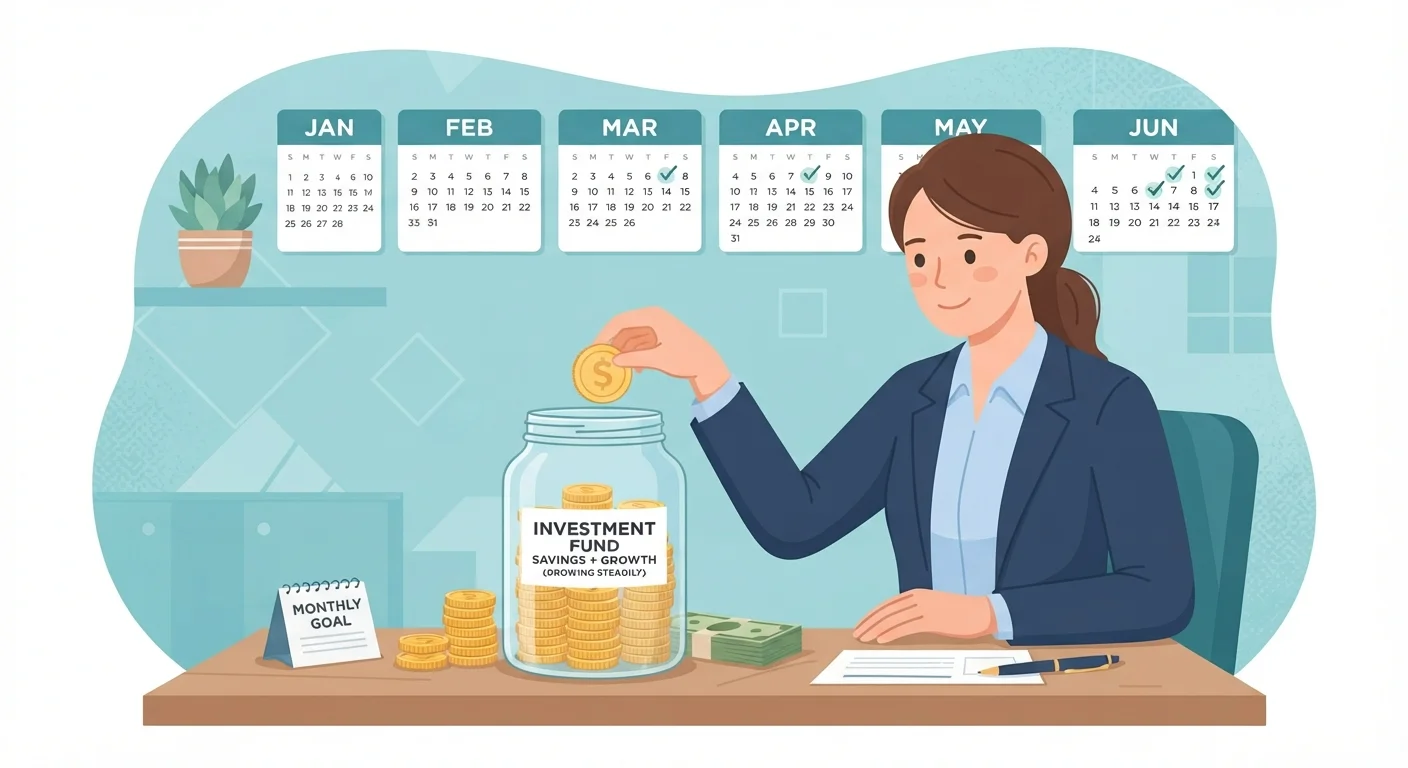
Photo: Online-Searches.net | Explore Insightful Blogs editorial
Key Takeaways
- DCA means investing a fixed amount on a regular schedule, regardless of market conditions.
- It removes the pressure of trying to 'time the market,' which even professionals find unreliable.
- When prices fall, your fixed amount automatically buys more shares, potentially lowering your average cost.
- DCA works best as a long-term habit, not a short-term trading tactic.
- Many workplace retirement plans, such as 401(k)s, already use DCA by design.
- No investment strategy eliminates risk — DCA manages it, it does not remove it.
Why 'When to Invest' Is the Wrong Question
Most people who hesitate to start investing are waiting for the 'right moment' — a market dip, a clearer economic picture, or a personal financial milestone. The problem is that no one, including professional fund managers, consistently predicts short-term market movements with accuracy. Trying to time the market often leads to paralysis or costly mistakes.
Dollar-cost averaging sidesteps that trap entirely. Instead of asking when to invest, DCA shifts the question to how consistently you invest. By committing to a fixed amount on a fixed schedule, you remove the emotional decision-making that derails many investors before they ever get started.
This connects to a broader principle: consistency and patience are more reliably associated with investing success than market-timing skill. DCA is a structural way to build those habits into your financial routine.
~66%
Of the time lump-sum investing outperforms DCA
Analysis by Vanguard research has found that, in markets with a long-term upward trend, investing a lump sum immediately tends to outperform spreading purchases over time roughly two-thirds of the time.
$7.3T+
Assets held in U.S. 401(k) plans
According to the Investment Company Institute, over $7 trillion is held in 401(k) plans — the majority of which are funded through automatic payroll contributions, a built-in form of dollar-cost averaging.
20+ years
Typical investment horizon where DCA consistency matters most
Financial educators broadly agree that the benefit of disciplined, regular investing compounds most significantly over multi-decade time horizons, reinforcing DCA as a long-term strategy.
How Dollar-Cost Averaging Works in Practice
The mechanics are straightforward. Suppose you decide to invest $200 every month into a diversified index fund. Here is what that might look like over three months:
| Month | Amount Invested | Share Price | Shares Purchased |
|---|---|---|---|
| Month 1 | $200 | $20 | 10.0 |
| Month 2 | $200 | $16 | 12.5 |
| Month 3 | $200 | $25 | 8.0 |
Total invested: $600. Total shares: 30.5. Average cost per share: approximately $19.67 — lower than Month 3's price of $25, even though you never tried to 'catch' the dip deliberately.
This mathematical outcome — buying more shares when prices fall — is why DCA can reduce average cost over time. It does not require you to identify market lows; it benefits from them automatically.
Where DCA Fits in a Broader Investment Strategy
Dollar-cost averaging is a method of how you invest, not what you invest in. It works best when paired with well-considered choices about the underlying assets. For most long-term investors, that means diversified, low-cost funds rather than individual stocks or speculative assets.
If you are new to thinking about which types of funds make sense, consider exploring the differences covered in our look at index funds vs. actively managed funds. Understanding cost structures and strategy differences can meaningfully affect long-term outcomes.
DCA also pairs naturally with compound interest. Each purchase you make starts generating returns that compound over time, meaning the earlier and more consistently you invest, the more time compounding has to work. And because DCA encourages holding investments over a long horizon, it aligns closely with diversification principles — spreading risk across many assets and many points in time.
“The stock market is a device for transferring money from the impatient to the patient.”
— Warren Buffett, Chairman and CEO of Berkshire Hathaway, widely recognized long-term value investor
This article is for general informational and educational purposes only and does not constitute personalized financial, investment, or tax advice. Consult a qualified financial professional before making investment decisions based on your individual circumstances.
Frequently Asked Questions
The content provided on our blog site traverses numerous categories, offering readers valuable and practical information. Readers can use the editorial team’s research and data to gain more insights into their topics of interest. However, they are requested not to treat the articles as conclusive. The website team cannot be held responsible for differences in data or inaccuracies found across other platforms. Please also note that the site might also miss out on various schemes and offers available that the readers may find more beneficial than the ones we cover.