
Underrated American Road Trip Corridors Worth Mapping Out

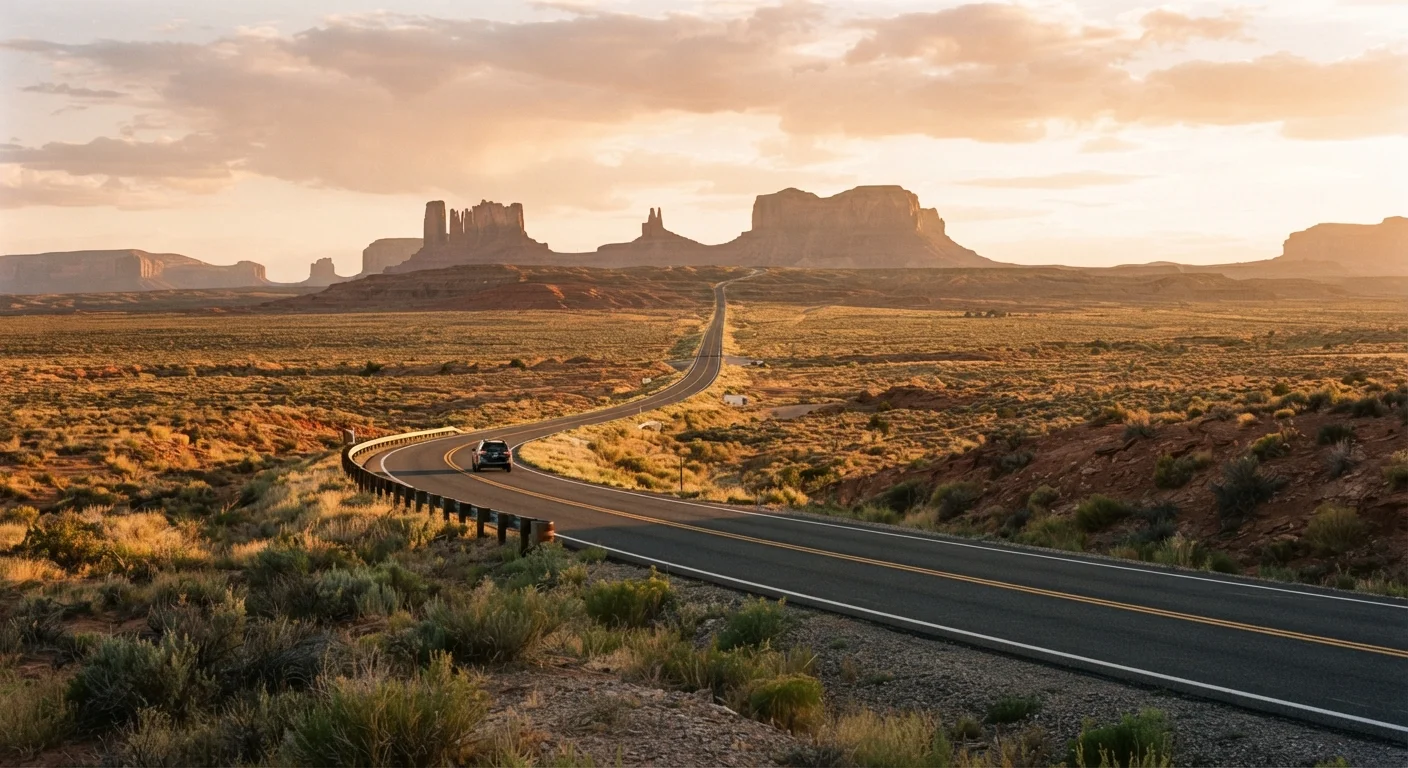
Photo: Online-Searches.net | Explore Insightful Blogs editorial
Key Takeaways
- Several underrated US driving corridors offer dramatic scenery and cultural depth without the crowds of famous routes.
- Each corridor highlighted here connects distinct landscapes, small towns, and regional history worth slowing down for.
- Planning ahead for fuel stops, seasonal access, and lodging is especially important on less-traveled roads.
- Combining one of these routes with a solid itinerary framework can transform a drive into a genuinely memorable journey.
The Case for Skipping the Obvious Routes
Route 66 deserves every postcard it's ever graced — but it's far from the whole story of American road tripping. Across the country, there are driving corridors that quietly thread together river valleys, forgotten downtowns, wild coastlines, and mountain passes that most travelers zoom past on the interstate. These routes aren't secret, exactly, but they're consistently overlooked in favor of the marquee names.
What makes an underrated corridor worth your time? Usually it's a combination of things: varied scenery that changes as you go, genuine stops with local character, manageable length for a long weekend or week, and that particular feeling of discovering something on your own terms. The corridors below each deliver on those qualities in their own way. Before you head out, it's worth building a proper plan — our guide to itinerary structure explains how to pace a drive so you actually enjoy the stops instead of racing between them.
The Loneliest Road — US Route 50 Across Nevada
Life Magazine once called US-50 across Nevada "the loneliest road in America" — and the state leaned into it, turning the description into a badge of honor. Stretching roughly 410 miles from Fernley to the Utah border, the highway crosses the Basin and Range province, a corrugated landscape of dry valleys and stark mountain ranges with almost nothing in between.
Towns like Austin and Ely are few and far between, which is precisely the point. The emptiness itself becomes the attraction — a chance to recalibrate and notice how much sky exists when civilization isn't crowding it out. Historic Pony Express stations, copper mining heritage, and the occasional ghost town add cultural texture to what might otherwise feel like pure endurance driving. Fill up your tank whenever you get the chance; fuel stops are genuinely sparse.
US-50 across Nevada turns emptiness itself into the attraction — an antidote to the overscheduled trip.
The Natchez Trace Parkway — Mississippi to Tennessee
Running about 444 miles from Natchez, Mississippi, to Nashville, Tennessee, the Natchez Trace Parkway is one of the most graceful drives in the country. Administered by the National Park Service, the road is free of commercial traffic and billboards — a remarkable rarity that makes the whole experience feel suspended from the modern world.
The route follows a path originally worn by Indigenous peoples and later used by traders and settlers in the late 18th and early 19th centuries. Pull-offs lead to ancient Native American mounds, Civil War sites, waterfalls, and stands of hardwood forest that turn extraordinary shades of amber and crimson in autumn. The 50-mph speed limit isn't a frustration here — it's an invitation. Pair it with a look at national park regions to round out a broader Southern itinerary.
No billboards, no commercial trucks — the Natchez Trace Parkway is what a road looks like when calm is built in.
The Olympic Peninsula Loop — Washington State
Washington's Olympic Peninsula can be driven as a loose loop of roughly 300–350 miles, encircling one of the most ecologically varied corners of North America. Within a single day's drive, you can move from temperate rainforest dripping with moss to rugged Pacific coastline to the rain shadow farmland of the Sequim valley.
US-101 forms the backbone of the loop, dipping into Olympic National Park and skirting glacially carved lakes. The Hoh Rain Forest, where annual rainfall can exceed 140 inches, feels genuinely otherworldly. The coastal stretch near Ruby Beach offers tide pools, sea stacks, and dramatic driftwood-strewn shores. This is a route that genuinely demands more than a single pass — consider breaking it into at least two nights to do it justice. Check road and park conditions before you go, especially in winter, as some sections can be affected by storm damage or snow.
The Olympic Peninsula loop packs rainforest, ocean coastline, and mountain scenery into a single, unhurried circuit.
The Turquoise Trail — New Mexico's Route 14
New Mexico's Route 14 — commonly called the Turquoise Trail — connects Albuquerque to Santa Fe via a 50-mile alternative to I-25 that passes through old mining towns, high desert scrubland, and the Sandia Mountains foothills. It's short enough to do as a day drive but rich enough to deserve more time.
The village of Madrid, once an abandoned coal town, has reinvented itself as an arts community with galleries, studios, and a handful of distinctively New Mexican cafés. Cerrillos, another historic mining settlement, feels like it has barely changed in a century — in the best possible way. Turquoise was mined in this area for centuries before European contact, and the region's Indigenous and Spanish Colonial history runs deep. For travelers building a larger Southwest swing, this corridor slots naturally alongside exploring what each Southwest state offers.
The Turquoise Trail turns a 50-mile detour into a genuine lesson in New Mexico's layered cultural history.
The Seaway Trail — Lake Ontario and Lake Erie, New York
Few people associate the Great Lakes with road tripping, but New York's Seaway Trail traces about 518 miles of shoreline along Lake Ontario, the St. Lawrence River, and Lake Erie — much of it through countryside that rarely appears on travel radar. Lighthouses, Revolutionary War and War of 1812 sites, working harbors, and fruit orchards fill the route with stopping points that tell a genuinely underrepresented chapter of American history.
Towns like Sackets Harbor, Cape Vincent, and Olcott Beach each carry their own distinct character. In summer, farm stands overflow with cherries and apples. In shoulder seasons, the light on the water turns photogenic in ways that justify every slow mile. This is a corridor that rewards travelers who aren't chasing a highlight reel — it's cumulative, layered, and quietly impressive. Make sure to double-check any border-adjacent logistics if you're venturing near the Canadian side, consulting official government sources for current entry requirements.
New York's Seaway Trail quietly delivers lighthouses, Revolutionary War history, and Great Lakes scenery few travelers have discovered.
The Lonesome Pine Trail — Virginia's Coal Country
Southwest Virginia's coalfields and mountain ridges form one of the most historically layered landscapes in the eastern US, and the Lonesome Pine Trail region — centered on US-58 west of the Blue Ridge — brings it all into view. This is Appalachian Virginia: narrow valleys, timbered ridges, and small towns with deep roots in music, mining, and mountain culture.
The Crooked Road, a Virginia heritage music trail that overlaps parts of this corridor, connects venues and communities where old-time and bluegrass traditions remain genuinely alive rather than merely performed for tourists. Natural Tunnel State Park — where a creek has carved a 850-foot tunnel through a limestone ridge — is one of the most astonishing natural features in the state and draws a fraction of the attention it deserves. Pair your driving plan with a check of the details that derail otherwise good trips to make sure logistics don't overshadow the experience.
Southwest Virginia's mountain corridors offer living Appalachian music culture and geological wonders that fly entirely under the radar.
Hit the Road with Your Eyes Wide Open
Every one of these corridors rewards travelers who resist the urge to blast straight through. Pull off for the small-town diner, the overlook with no guardrail, the roadside historical marker that nobody else stopped for. That's the texture that makes a road trip memorable rather than just a way to get somewhere.
Build in Buffer Time on Remote Routes
For the logistics side — vehicle prep, fuel planning, overnight options — our complete US road trip planning guide covers the practical groundwork in detail. And if your route grazes the Southwest, this region-by-region Southwest breakdown can help you decide which states to prioritize. The open road is out there — these corridors are just the beginning.
The content provided on our blog site traverses numerous categories, offering readers valuable and practical information. Readers can use the editorial team’s research and data to gain more insights into their topics of interest. However, they are requested not to treat the articles as conclusive. The website team cannot be held responsible for differences in data or inaccuracies found across other platforms. Please also note that the site might also miss out on various schemes and offers available that the readers may find more beneficial than the ones we cover.