
The American Southwest: A Region-by-Region Breakdown for First-Time Visitors

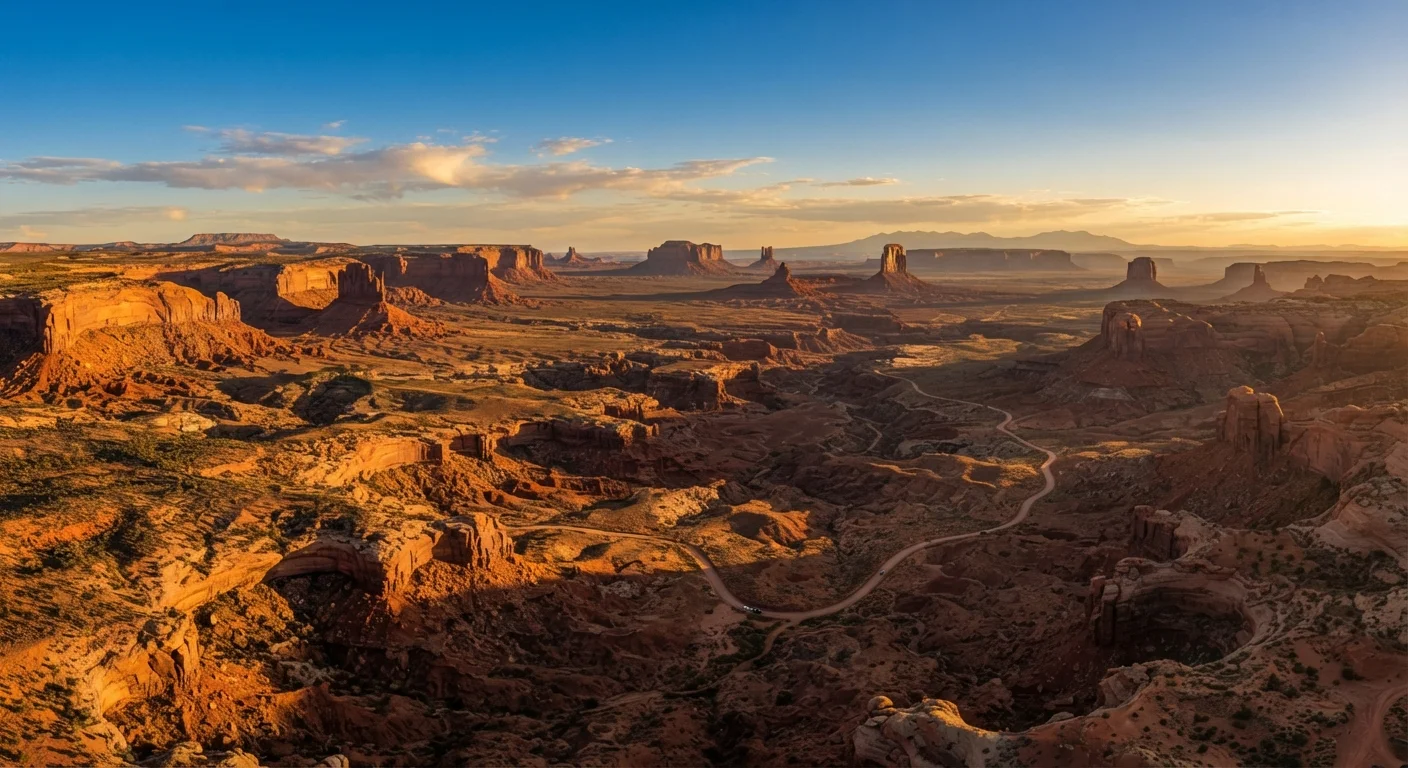
Photo: Online-Searches.net | Explore Insightful Blogs editorial
Key Takeaways
- Each Southwest state offers a genuinely distinct landscape, culture, and traveler experience.
- Utah concentrates five national parks within a few hours of each other — unmatched for scenic density.
- Arizona blends desert ecology, Indigenous heritage, and vibrant urban culture in one state.
- New Mexico is the region's most underappreciated destination for food, art, and ancient history.
- Nevada's public lands far outshine its casino reputation for outdoor-focused visitors.
- Spring and fall are generally the most comfortable seasons for Southwest travel across all four states.
Why the Southwest Deserves More Than a Single-State Trip
Most first-time visitors make the mistake of treating the American Southwest as a single monolithic destination — show up, see a canyon, head home. But Arizona, Utah, Nevada, and New Mexico each have a distinct personality shaped by geology, Indigenous cultures, and centuries of layered history. Lumping them together is like calling all of New England "Boston."
That said, the region's geography makes multi-state itineraries genuinely practical. Major landmarks often sit close to state borders, distances between anchor stops are driveable, and the road scenery itself is part of the experience. Before you finalize any plans, it's worth reading our guide to building a well-structured itinerary — the Southwest has a way of expanding to fill whatever time you give it.
85%
Nevada land managed by federal agencies
According to the Congressional Research Service, Nevada has the highest proportion of federally managed land of any U.S. state.
6M+
Annual Grand Canyon visitors
The National Park Service consistently records the Grand Canyon among the most visited national parks in the United States.
5
Utah national parks within ~5 hrs of each other
Utah's 'Mighty Five' national parks are among the most geographically concentrated collections of national parks in the country.
Arizona: Desert Icons and Cultural Depth
Arizona is where most Southwest trips begin — and for good reason. The Grand Canyon's South Rim is the single most visited natural landmark in the region, but anchoring a whole trip there undersells the state's range. Sedona's red rock formations offer hiking from gentle walks to technical scrambles, with a distinctive high-desert energy that draws visitors year-round. Saguaro National Park, split across two sections near Tucson, is the place to understand the iconic Sonoran Desert ecosystem.
Beyond landscapes, Arizona carries one of the country's richest concentrations of Indigenous heritage. Monument Valley straddles the Arizona-Utah border and holds deep cultural significance for the Navajo Nation — visit respectfully, stay on designated paths, and consider guided tours led by Navajo guides for fuller context. The Heard Museum in Phoenix provides a grounding introduction to the history and contemporary life of Southwest Indigenous peoples.
When visiting Monument Valley or other areas within Navajo Nation, check whether a tribal recreation pass is required — rules and fees can differ from standard National Park Service access and are managed independently.
Book Zion National Park shuttle access or timed-entry permits well in advance if you're visiting between April and October — the park has implemented strict capacity management during peak season.
Best for: First-timers who want dramatic scenery paired with cultural substance. Phoenix serves as a convenient gateway with direct flights from most major U.S. cities.
Utah: The Concentration of Jaw-Dropping Scenery
No other state packs as much dramatic landscape into a driveable radius as Utah. The "Mighty Five" — Zion, Bryce Canyon, Capitol Reef, Canyonlands, and Arches — are all within roughly five hours of each other, making Utah the logical choice for visitors whose primary goal is national park landscapes.
Zion's Narrows (a hike through the Virgin River canyon floor) and Bryce Canyon's hoodoo-filled amphitheaters are among the most photographed scenes in the country, but even without those marquee spots, Utah's highway corridors — particularly US-89 and Scenic Byway 12 — deliver scenery that would headline any other state. Byway 12, connecting Bryce Canyon to Capitol Reef, is widely considered one of the most scenic roads in the entire country.
For more context on how Utah fits into the wider Southwest road trip picture, see our complete U.S. road trip planning guide.
Best for: Hikers, photographers, and families who want to anchor an outdoor-focused trip with maximum payoff per mile driven.
Nevada: Beyond the Strip
Nevada's reputation is dominated by Las Vegas, but its public lands make up about 85% of the state's total area — an extraordinary figure. Great Basin National Park, in eastern Nevada near the Utah border, offers ancient bristlecone pines and a marble cave system with almost no crowds. The Valley of Fire State Park, just an hour from Las Vegas, features some of the most vivid red sandstone formations in the region.
Las Vegas itself functions as a practical hub: cheap flights, car rental availability, and a wide range of accommodation price points. Many itineraries use it as a starting or ending point for a broader Southwest loop rather than a destination in its own right.
Best for: Travelers who want logistical convenience without sacrificing outdoor access, and anyone interested in exploring genuinely off-the-beaten-path desert terrain.
New Mexico: Art, Culture, and Ancient History
New Mexico is the Southwest's most underestimated state. Santa Fe holds the country's oldest continuously occupied capital city, a world-class art market, and a culinary scene centered on green and red chile that locals will happily argue about at length. Taos Pueblo — an Indigenous community with roots going back roughly 1,000 years — is a UNESCO World Heritage Site and one of the most profound historical sites in North America.
White Sands National Park, in the southern part of the state, offers an experience unlike anywhere else in the region: miles of brilliant white gypsum dunes that feel genuinely otherworldly. Carlsbad Caverns, also in southern New Mexico, gives visitors access to one of the largest cave systems in North America.
For visitors curious about lesser-known regional driving routes, our piece on underrated American road trip corridors includes some New Mexico highlights worth considering.
Best for: Culturally curious travelers, history enthusiasts, and food lovers looking for depth over density.
How to Build Your Southwest Route
The most common mistake in Southwest planning is trying to cover all four states in a single week. A week can reasonably handle two states done well; ten to fourteen days opens up a satisfying three- or four-state loop. Prioritize by interest first — scenery, culture, history, or a blend — then build geography around that.
Spring (March–May) and fall (September–November) offer the most comfortable temperatures across the region. Summer heat in lower elevations — particularly in Arizona and Nevada — can be extreme and physically risky for unprepared hikers. Always carry more water than you think you need; the dry desert air accelerates dehydration faster than most visitors expect.
Heat Safety Is Not Optional in the Southwest
For a broader view of how the Southwest's national parks compare to other U.S. regions, our national parks regional guide is a helpful companion read before you commit to a route.
Whatever route you choose, build in unscheduled time. Some of the Southwest's best moments happen when you pull over for an unexpected viewpoint, linger over a meal in a small town, or simply sit still long enough to watch the desert light shift at dusk.
The content provided on our blog site traverses numerous categories, offering readers valuable and practical information. Readers can use the editorial team’s research and data to gain more insights into their topics of interest. However, they are requested not to treat the articles as conclusive. The website team cannot be held responsible for differences in data or inaccuracies found across other platforms. Please also note that the site might also miss out on various schemes and offers available that the readers may find more beneficial than the ones we cover.