
Airport Security Myths That Still Trip Up Frequent Flyers

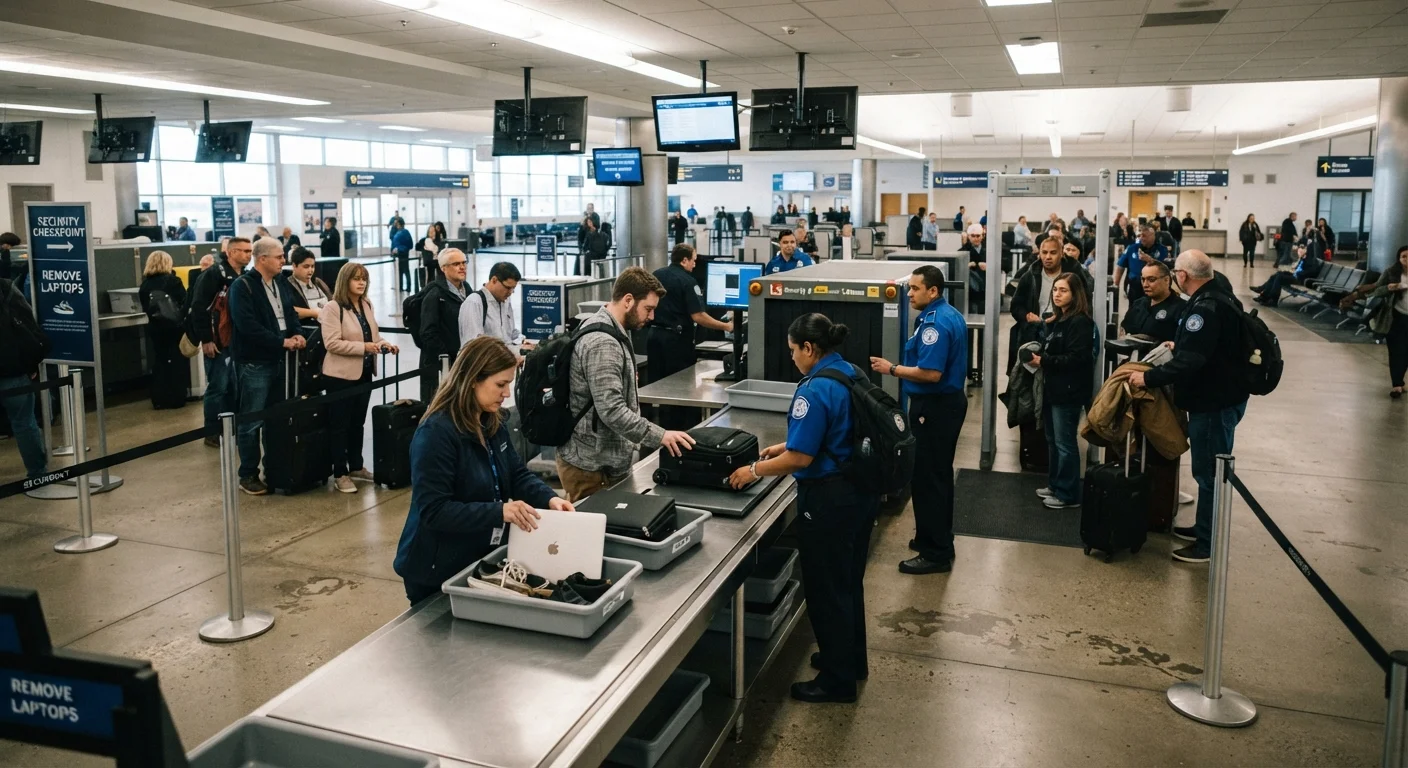
Photo: Online-Searches.net | Explore Insightful Blogs editorial
Key Takeaways
- The 3-1-1 liquids rule applies to carry-on bags only — checked luggage has different standards.
- Laptops must be removed from bags at standard TSA lanes, but Precheck exempts them.
- TSA agents are looking for prohibited items, not searching for general contraband like small amounts of legal medication.
- Wearing slip-on shoes is smart, but you only must remove shoes at standard security lanes.
- Metal detectors and body scanners have different rules — know which you're walking through.
Why Airport Security Confusion Is So Common
Even people who fly a dozen times a year stumble at the security checkpoint. The rules have evolved over the years, signage varies by airport, and well-meaning advice from friends often mixes up outdated policies with current ones. The result? Unnecessary stress, repacked bags, and sometimes a missed flight.
The good news: once you separate the myths from the actual TSA guidelines, getting through security becomes genuinely straightforward. Think of this as your myth-busting briefing before your next departure. And if you want a wider look at travel misconceptions, our guide on common travel planning myths is a great place to start.
Myth
You can bring any size liquid in your checked bag, so the 3-1-1 rule applies to all luggage.
Fact
The 3-1-1 rule applies only to carry-on bags. Checked bags follow different — generally more lenient — rules for liquids, though some dangerous items are prohibited regardless.
The TSA's 3-1-1 rule means each passenger may carry liquids in containers of 3.4 ounces (100ml) or less, all fitting in one quart-sized clear bag, with one bag per person. This applies exclusively to your carry-on. Checked baggage isn't subject to the same volume limits for most liquids, though flammable, pressurized, or otherwise hazardous items are regulated separately. Always verify the TSA's current prohibited items list for checked bags before you pack.
Myth
You always have to remove your shoes at airport security.
Fact
Shoe removal is required at standard TSA lanes, but TSA PreCheck passengers and children under 12 are generally exempt.
The shoe removal requirement stems from post-2001 screening protocols for standard lanes. However, TSA PreCheck members can keep their shoes on, along with their belts and light jackets. Children 12 and under and adults 75 and older may also have modified screening. Slip-on shoes are still a smart packing choice for comfort and speed, but they aren't always mandatory.
Myth
Your laptop can stay in your bag — the scanner can see through it.
Fact
At standard security lanes, laptops must be removed and placed in a separate bin. TSA PreCheck passengers are exempt from this rule.
Laptops are dense enough to obscure other items in the X-ray image, which is why TSA requires them to be screened separately in standard lanes. Tablets, e-readers, and gaming devices typically do not need to be removed, though rules can vary by checkpoint. If you're in a PreCheck lane, your laptop stays in your bag. When in doubt, look for signage or ask the TSA officer before placing your bag on the belt.
Myth
TSA agents will confiscate any medication they find that looks suspicious.
Fact
TSA is primarily screening for security threats, not searching for medications. Prescription and over-the-counter medications are generally allowed in carry-ons in reasonable quantities.
TSA's mission is aviation security — officers are not searching for legal medications or acting as pharmaceutical enforcement. Prescription drugs, vitamins, and over-the-counter medications are generally permitted in carry-on or checked bags. Liquid medications may exceed the 3.4 oz limit if medically necessary and declared to the officer. That said, if you're traveling internationally, customs rules at your destination are a separate matter entirely. For a thorough look at traveling with prescriptions across borders, see what U.S. travelers need to know about carrying medications.
Myth
A body scanner and a metal detector are basically the same thing.
Fact
They work very differently and trigger alerts for different reasons. Metal detectors sense metal; body scanners (millimeter-wave) detect both metallic and non-metallic items.
Advanced Imaging Technology (AIT) body scanners use millimeter-wave imaging to create a generic outline of the body and flag anomalies — including non-metallic items that a traditional metal detector would miss entirely. Metal detectors only flag metallic objects. This distinction matters: some items that sail through a metal detector may be flagged by a body scanner, and vice versa. If you receive an alarm, a pat-down or additional screening may follow — this is standard procedure, not a sign of suspicion.
Myth
Wearing a lot of jewelry will always trigger a security alarm.
Fact
Most everyday jewelry — rings, earrings, necklaces — does not set off modern airport security equipment in most cases.
While large metal belt buckles and heavy layered necklaces can occasionally trigger alerts, most standard jewelry passes through without issue. The anxiety around jewelry stems from early-generation metal detectors that were more sensitive to small items. Modern equipment is better calibrated. That said, experiences vary by airport and scanner type, so if you're prone to extra screening, removing bulky metal pieces before you queue is still a practical time-saver.
What These Rules Mean for Your Next Trip
Understanding security policy isn't just about avoiding hassle — it's about moving through the airport with genuine confidence. A few habits make a real difference: pack your carry-on so the top layer is easy to open, keep your liquids bag accessible, and if you travel frequently, TSA PreCheck is worth looking into for the smoother lane experience it provides.
Don't Assume PreCheck Rules Apply Everywhere
If you carry prescription medications, that's a whole additional layer to be aware of. Our article on traveling with medications walks through what U.S. travelers should verify before heading to the airport. And for even more low-effort routines that make travel smoother from start to finish, see small habits that make every trip easier.
The content provided on our blog site traverses numerous categories, offering readers valuable and practical information. Readers can use the editorial team’s research and data to gain more insights into their topics of interest. However, they are requested not to treat the articles as conclusive. The website team cannot be held responsible for differences in data or inaccuracies found across other platforms. Please also note that the site might also miss out on various schemes and offers available that the readers may find more beneficial than the ones we cover.