
Carry-On Only: What It Actually Takes to Pack Light for Any Trip

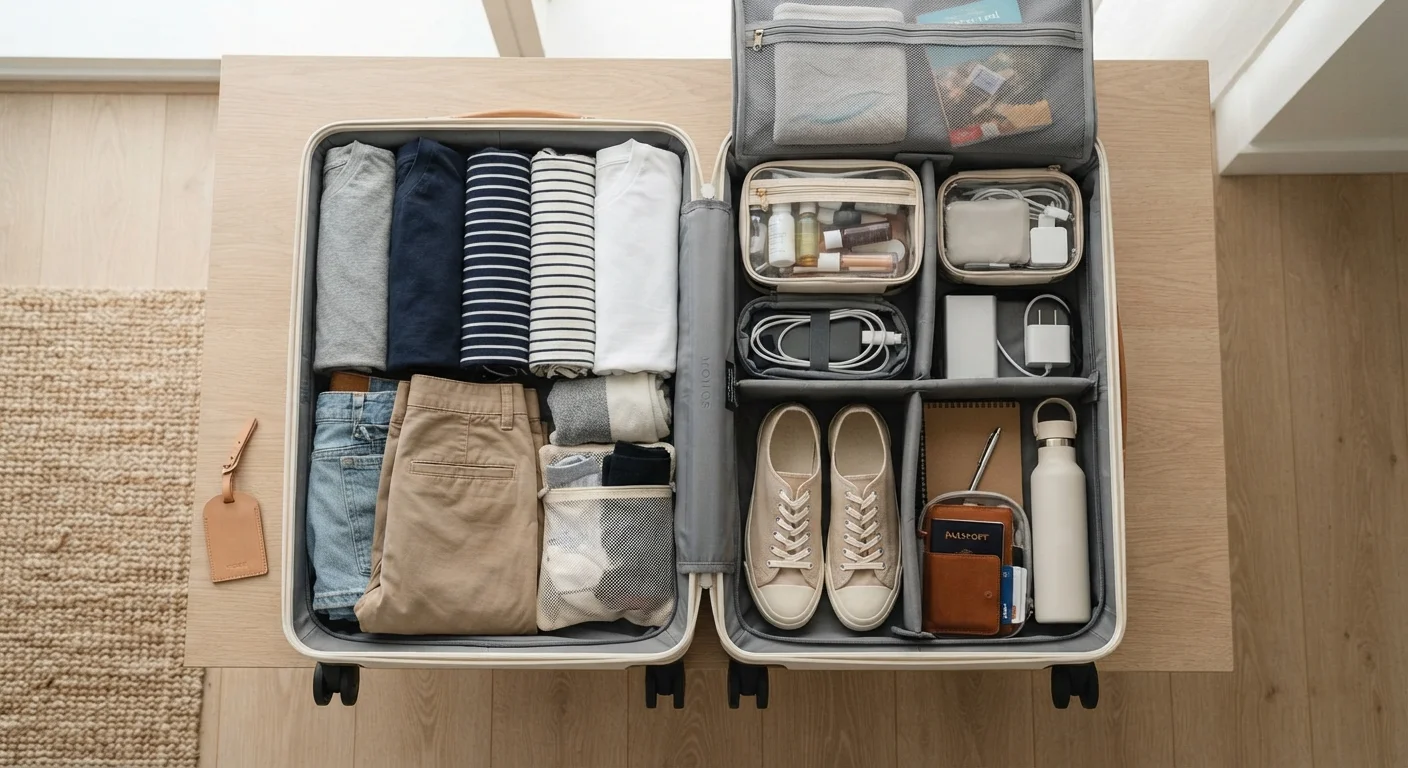
Photo: Online-Searches.net | Explore Insightful Blogs editorial
Key Takeaways
- A carry-on can realistically cover trips of one week or longer with the right approach.
- Choosing versatile, mix-and-match clothing is the single biggest factor in packing light.
- Rolling clothes and using packing cubes maximizes space without adding bulk.
- Toiletries and liquids are usually the easiest category to trim and still feel prepared.
- Airline carry-on size rules vary — always verify limits before you pack.
Why Carry-On Travel Is Worth the Effort
Checked bags cost money, eat time, and occasionally disappear. Travelers who commit to carry-on-only consistently report less travel stress — no baggage claim lines, no waiting at the carousel, and no risk of a bag arriving in a different city than they did. Once you build the habit, it's genuinely hard to go back.
This isn't about roughing it. It's about making deliberate choices. The habits that drive overpacking are well documented — and almost all of them are breakable with a slightly different approach to how you prepare. The steps below walk you through exactly that process.
What you will need
What You'll Need Before You Start Packing
Getting the gear right before you begin makes every other step easier. You don't need expensive luggage, but your bag's dimensions genuinely matter — domestic and international carriers often differ on what qualifies as a carry-on, so check the airline's published rules before you commit to a bag.
Carry-On Bag
Your primary container — size must comply with airline limits, typically around 22" x 14" x 9" for most U.S. carriers (always verify).
Personal Item Bag
A backpack or tote that fits under the seat and extends your packing capacity significantly.
Packing Cubes
Compress and categorize clothing so the bag stays organized and space is used efficiently.
TSA-Compliant Toiletry Bag
A clear quart-sized bag for liquids to speed up security and keep liquids contained.
Luggage Scale
Confirms your bag meets weight limits before you reach the airport, avoiding gate-check surprises.
Step-by-Step: How to Pack a Carry-On for Any Trip
Follow these steps in order. Skipping ahead — especially the editing phase — is the most common reason travelers end up checking a bag at the gate anyway.
Start With Your Itinerary, Not Your Closet
Write down every distinct activity type on your trip — casual sightseeing, a dinner out, a hike, a beach day. Count the number of nights. This gives you a framework before a single item is chosen. Packing without this step is guessing.
Build a Capsule Wardrobe Around One Color Palette
Choose a neutral base — navy, grey, olive, or black — and select clothing that mixes and matches across the whole trip. A week of outfits can come from four or five pieces when each item works with everything else. Aim for roughly one bottom per three days and one top per day and a half, adjusted for your trip type.
Apply the 'Wear Once Before You Pack It' Rule
If you haven't worn an item in the past two weeks at home, the odds that you'll reach for it on a trip are low. This single filter eliminates most of the speculative packing — the 'just in case' jacket, the rarely worn dress shoes, the outfit you packed for a dinner that may or may not happen.
Slash and Consolidate Your Toiletries
Transfer products into reusable travel-size containers. Apply the TSA 3-1-1 rule for carry-on liquids: each container must be 3.4 oz (100ml) or less, all containers fit in one clear quart-sized bag, and one bag per passenger. Research whether your accommodation provides basics like shampoo and conditioner — many hotels and hostels do, which can eliminate two containers entirely.
Pack Using the Roll-and-Layer Method
Roll softer items like t-shirts and underwear tightly and place them in packing cubes or along the sides of your bag. Fold and stack stiffer items — trousers, blazers — flat in the center. Shoes go in the corners near the wheels with socks stuffed inside them. Heavier items sit closest to the back panel (the side that rests against your body when rolling).
Do a Final Ruthless Edit
Once everything is packed, take out three things. This sounds arbitrary, but it works. Most travelers who complete this step find at least three genuine redundancies — a second pair of jeans, a backup pair of shoes, an extra charger cable — that add weight without adding real value. If the bag zips without strain after the edit, you're in good shape.
Once you've packed, do a final walk-through using a pre-trip checklist to make sure documents, bookings, and other essentials are accounted for beyond what's in your bag.
Carrying Less Is a Skill You Build Over Time
Your first carry-on-only trip may feel tight. Your third will feel liberating. Each trip teaches you what you actually reached for versus what stayed folded at the bottom the entire time — and that feedback loop is more useful than any packing list.
Pairing light packing with other smart travel habits compounds the benefit. The low-effort routines experienced travelers rely on — from how they book to how they move through airports — turn individual strategies into a system. And if budget is also a factor, spending intentionally rather than cutting indiscriminately is the principle that makes trips affordable without feeling stripped down.
What to Buy There Instead of Packing It
The content provided on our blog site traverses numerous categories, offering readers valuable and practical information. Readers can use the editorial team’s research and data to gain more insights into their topics of interest. However, they are requested not to treat the articles as conclusive. The website team cannot be held responsible for differences in data or inaccuracies found across other platforms. Please also note that the site might also miss out on various schemes and offers available that the readers may find more beneficial than the ones we cover.