
The Layover Dilemma: Long Connection vs. Short Connection

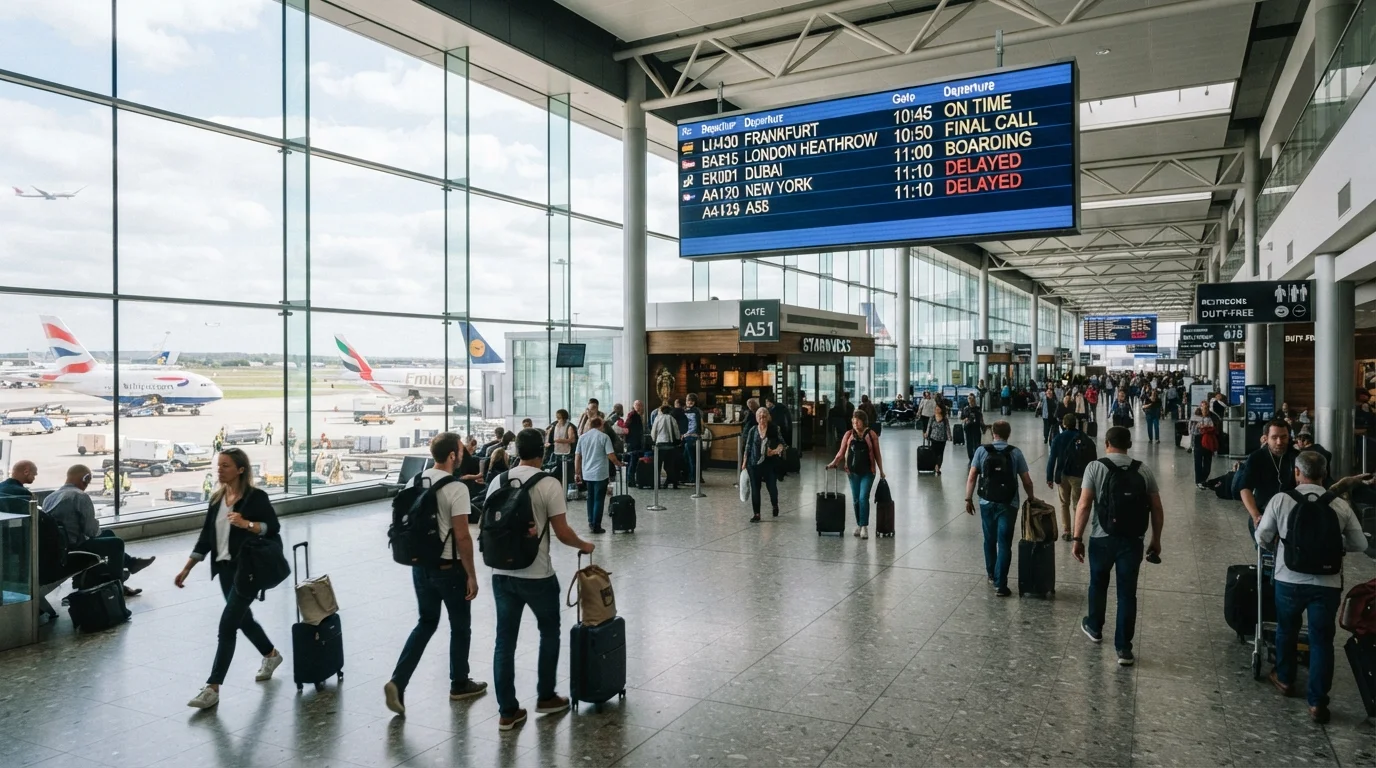
Photo: Online-Searches.net | Explore Insightful Blogs editorial
Key Takeaways
- Short connections under 60 minutes are risky at most major airports, especially for international flights.
- Long layovers reduce missed-connection stress but add total travel time and fatigue.
- Airlines on a single itinerary are responsible for rebooking you if a short connection fails — separate tickets are not.
- Airport size, terminal layout, and customs requirements dramatically affect how much time you actually need.
- A layover of 90–150 minutes often hits a practical sweet spot for domestic flights at mid-size hubs.
- Your checked bags, travel party size, and physical mobility should all influence your layover choice.
Why Your Layover Length Is a Real Decision
Most travelers treat layovers as an afterthought — something the algorithm picks when they sort by price. But the gap between your flights is one of the most consequential choices in any itinerary. Get it wrong and you're sprinting through terminals, missing flights, or sitting in an airport for half a day wondering what went wrong.
The core tradeoff is simple: short connections save total travel time but introduce real risk of missing your next flight. Long layovers reduce that risk but extend your journey and can leave you exhausted before you even arrive. Neither is universally better. The right choice depends on your situation — your airport, your bags, your travel party, and your risk tolerance.
For a deeper look at how layover strategy fits into the bigger picture, see our guide to building a well-structured travel itinerary.
| Criterion | Short Connection (Under 90 min) | Long Layover (3+ Hours) |
|---|---|---|
| Total travel time | Shorter overall journey | Longer day of travel |
| Missed flight risk | Higher — no buffer for delays | Low — delays rarely cause misses |
| Airline rebooking protection | Yes, if on one itinerary | Yes, but rarely needed |
| Checked bag handling | Risky — bags may not transfer | Reliable transfer time |
| International connection viability | Often impractical | Recommended minimum |
| Traveler fatigue | Less waiting, but high stress | More waiting, but calmer pace |
| Best for | Solo, carry-on, single ticket | Groups, bags, separate tickets |
The Hidden Variables That Change Everything
The clock on your connection doesn't start when your first plane lands — it starts when you actually get off. Factor in taxi time to the gate, deplaning, terminal distance, and security or customs, and a 75-minute layover can shrink to 30 real minutes fast.
Airport size and layout
At a compact regional airport, 45 minutes is often plenty. At a sprawling hub with multiple terminals requiring a train or bus transfer, 90 minutes can feel tight. Always look up your specific departure and arrival gates if possible — or at least the terminals — before you book.
International vs. domestic connections
Connecting internationally almost always requires clearing customs, collecting checked bags, re-checking them, and going through security again. This can consume 60–90 minutes on a good day. The U.S. Customs and Border Protection process alone varies widely by airport and season. For international connections, most experienced travelers recommend a minimum of 2.5–3 hours.
Checked bags
Checked luggage on a single airline itinerary is typically transferred automatically — but delays happen. On separate ticket bookings, you are responsible for collecting and re-checking bags, which means a short connection isn't just stressful, it's impractical.
Minimum Connection Times Are a Floor, Not a Target
These overlooked logistics are exactly the kind of detail covered in our roundup of trip-derailing details experienced travelers always double-check.
Risk Management: What Happens When Things Go Wrong
Flights are delayed. It's not a question of if — it's when. The question is how exposed you are when it happens.
If both flights are on a single itinerary from one airline or alliance, a missed connection due to a delay is the airline's responsibility. They'll typically rebook you on the next available flight at no cost. Your bags should follow automatically. This protection is the strongest argument for booking tight connections only when they're on one ticket.
If you booked separate tickets — say, a budget carrier into a hub and a legacy carrier out — you have no protection. If the first flight is late, the second airline owes you nothing. A long layover becomes essential insurance in this scenario.
Thinking through scenarios like this is part of what separates a stressful trip from a smooth one. Our piece on the tradeoffs of locking in plans vs. staying flexible covers a similar risk-management mindset for broader trip planning.
Making the Call: A Practical Framework
Use these checkpoints before finalizing your connection time:
- Is it one ticket or two? One ticket: short connections are more defensible. Two tickets: build in a long buffer or accept the risk consciously.
- Domestic or international? International connections warrant at least 2.5–3 hours. Domestic connections at familiar mid-size airports can work around 90 minutes.
- Do you have checked bags? If yes, add at least 30 extra minutes to your minimum threshold.
- Who's traveling? Solo and mobile: shorter works. Group, kids, or accessibility needs: go longer.
- How reliable is the first flight's route? Routes with frequent delays (weather-prone cities, busy commuter corridors) deserve more buffer.
A layover of 90–150 minutes hits a reasonable sweet spot for most domestic connections on a single itinerary at a mid-size hub. That's long enough to absorb a modest delay and short enough not to add significant fatigue to your journey.
Travel habits that consistently reduce stress — like arriving at the gate early and staying alert to gate changes — are worth building into your routine. Our collection of small habits that make every trip easier has practical ideas worth adopting.
~20%
U.S. flights arriving late annually
According to Bureau of Transportation Statistics data, roughly one in five U.S. flights arrives behind schedule in a typical year, underlining why connection buffers matter.
2.5–3 hrs
Recommended minimum for international connections
Most seasoned travel advisors and airline guidance suggest at least 2.5 to 3 hours for connections requiring customs clearance and bag re-check.
90 min
Common domestic sweet-spot layover
For single-itinerary domestic connections at mid-size hubs, 90 minutes is widely cited as a practical balance between efficiency and safety margin.
The content provided on our blog site traverses numerous categories, offering readers valuable and practical information. Readers can use the editorial team’s research and data to gain more insights into their topics of interest. However, they are requested not to treat the articles as conclusive. The website team cannot be held responsible for differences in data or inaccuracies found across other platforms. Please also note that the site might also miss out on various schemes and offers available that the readers may find more beneficial than the ones we cover.