
The Real Tradeoffs of Booking Everything in Advance vs. Staying Flexible

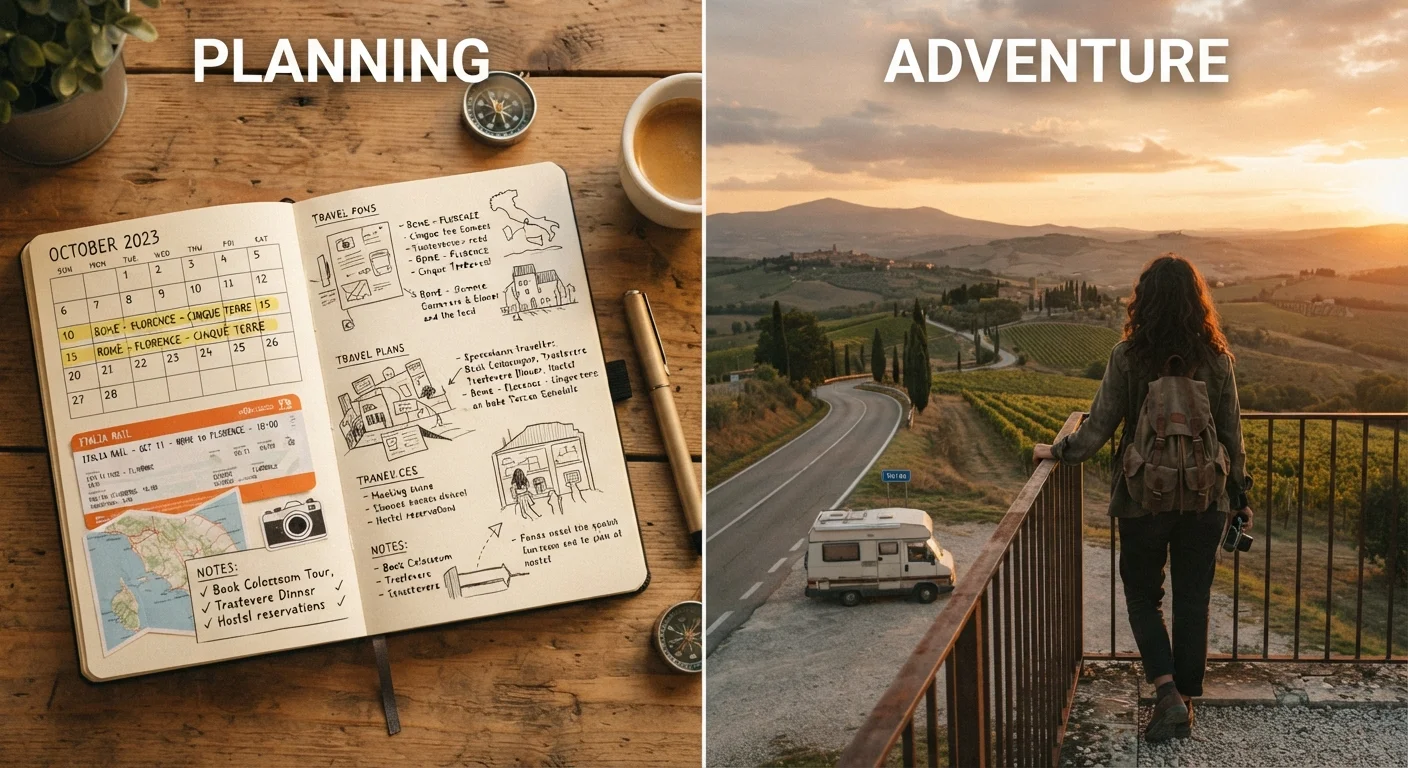
Photo: Online-Searches.net | Explore Insightful Blogs editorial
Key Takeaways
- Booking ahead locks in prices and availability but limits your ability to adapt on the go.
- Staying flexible works best for solo travelers, shorter trips, and less peak-demand destinations.
- A hybrid approach — anchoring key logistics while leaving days open — suits most travelers.
- Your travel style, group size, and destination type should drive the decision, not habit alone.
- Some bookings (flights, major tours) reward early planning far more than others (casual dining, day walks).
Guaranteed availability at high-demand destinations
Popular hotels, guided tours, and timed-entry attractions routinely sell out weeks or months ahead. Booking early removes the anxiety of arriving to find nothing available.
Lower airfare when purchased well in advance
Airfare pricing is dynamic, and flights to popular routes often cost significantly more as departure approaches. Early booking typically captures better base fares, though this varies by route and season.
Easier group coordination and shared expectations
When traveling with family or friends, pre-confirmed plans reduce decision fatigue and prevent on-the-ground disagreements about where to go or stay each day.
Peace of mind before and during travel
Knowing logistics are settled lets many travelers fully enjoy the lead-up and the trip itself, rather than scrambling for accommodations upon arrival.
Budget predictability and spending control
Locking in costs ahead of time makes it easier to build an accurate trip budget and avoid surprise expenses driven by limited last-minute options.
Inflexibility when plans inevitably shift
Weather changes, illness, unexpected discoveries, or simple fatigue can make a fully booked itinerary feel like a burden rather than a guide. Non-refundable reservations add financial pressure to push through rather than adapt.
Risk of over-scheduling and missing serendipity
Some of travel's best moments — a local market, a conversation that leads somewhere unexpected, an afternoon that unfolds naturally — only happen when there's room in the day for them.
Potential for wasted spend on unused bookings
Non-refundable hotels, prepaid tours, and tickets for experiences that don't match your actual energy or mood can represent real money lost, especially on longer trips.
Less immersion in local pace and culture
A tightly scheduled traveler often moves through a destination rather than settling into it. Staying flexible allows for slower, more textured engagement with a place.
Higher logistical stress when disruptions hit
A cascading itinerary means one disruption — a delayed flight, a closed attraction — affects everything that follows, leaving little room to course-correct without losing money or missing experiences.
Why This Decision Matters More Than You Think
Most travel stress can be traced back to a single planning philosophy clash: one person wants every hour mapped out, another wants to see where the day takes them. But this isn't just a personality quirk — the choice between booking ahead and staying flexible has genuine financial, logistical, and experiential consequences.
The good news is that it doesn't have to be all-or-nothing. Understanding what each approach actually costs and delivers lets you make a deliberate call rather than defaulting to whichever style feels most comfortable. For a broader look at the timing decisions behind specific bookings, see the Travel Planning Timeline — it breaks down which reservations are time-sensitive and which can safely wait.
Guaranteed availability at high-demand destinations
Popular hotels, guided tours, and timed-entry attractions routinely sell out weeks or months ahead. Booking early removes the anxiety of arriving to find nothing available.
Lower airfare when purchased well in advance
Airfare pricing is dynamic, and flights to popular routes often cost significantly more as departure approaches. Early booking typically captures better base fares, though this varies by route and season.
Easier group coordination and shared expectations
When traveling with family or friends, pre-confirmed plans reduce decision fatigue and prevent on-the-ground disagreements about where to go or stay each day.
Peace of mind before and during travel
Knowing logistics are settled lets many travelers fully enjoy the lead-up and the trip itself, rather than scrambling for accommodations upon arrival.
Budget predictability and spending control
Locking in costs ahead of time makes it easier to build an accurate trip budget and avoid surprise expenses driven by limited last-minute options.
The Case Against Locking Everything In
Over-planning has its own costs, and they're not always obvious until you're standing at a doorway to an unexpected festival you can't attend because you scheduled a museum that afternoon.
Inflexibility when plans inevitably shift
Weather changes, illness, unexpected discoveries, or simple fatigue can make a fully booked itinerary feel like a burden rather than a guide. Non-refundable reservations add financial pressure to push through rather than adapt.
Risk of over-scheduling and missing serendipity
Some of travel's best moments — a local market, a conversation that leads somewhere unexpected, an afternoon that unfolds naturally — only happen when there's room in the day for them.
Potential for wasted spend on unused bookings
Non-refundable hotels, prepaid tours, and tickets for experiences that don't match your actual energy or mood can represent real money lost, especially on longer trips.
Less immersion in local pace and culture
A tightly scheduled traveler often moves through a destination rather than settling into it. Staying flexible allows for slower, more textured engagement with a place.
Higher logistical stress when disruptions hit
A cascading itinerary means one disruption — a delayed flight, a closed attraction — affects everything that follows, leaving little room to course-correct without losing money or missing experiences.
Rigid itineraries also tend to amplify the stress of disruptions. A delayed train doesn't just affect one activity — it cascades. Travelers who've pre-paid for non-refundable experiences back-to-back have very little cushion when reality doesn't cooperate. This is one of the patterns explored in Overlooked Details That Derail Otherwise Well-Planned Trips, which looks at how rigid logistics contribute to trip-derailing surprises.
Where Each Approach Actually Performs Best
The destination and travel style shape which approach wins. Peak-season travel to high-demand destinations — think popular national parks in summer or European cities during major festivals — genuinely rewards early booking. Accommodation can sell out months ahead, and popular tours or entry-timed attractions may have no same-day availability at all.
By contrast, shoulder-season or off-peak travel to less-trafficked destinations tends to be more forgiving. Rooms open up, restaurants aren't booked weeks out, and the freedom to linger in an unexpected town carries little penalty.
3–6 months
Typical advance window for peak-season lodging
Travel industry guidance generally suggests booking popular accommodations three to six months ahead for peak travel periods, though this varies widely by destination and demand.
~54%
Travelers who report over-planning as a trip stressor
Survey data from travel research firms has consistently found that a significant share of travelers feel their itineraries were too rigid in hindsight, contributing to vacation stress.
Group size matters too. Coordinating a family vacation or a group of friends around spontaneous decisions is exponentially harder than navigating solo. Solo vs. Group Travel explores exactly this dynamic — the larger the group, the more pre-planning actually increases everyone's enjoyment rather than limiting it. Families in particular benefit from structure; see Planning a Trip With Kids for realistic guidance on what to lock in when traveling with children.
Building a Smarter Hybrid Strategy
The practical answer for most travelers is selective commitment: book the things that are hardest to replace last-minute and leave the rest open. Flights, the first night's accommodation, and any timed-entry or limited-capacity experiences are worth securing early. Meals, secondary day trips, and open afternoons are often better left unscheduled.
A Useful Rule of Thumb for Most Trips
Budget plays into this calculation too. Advance booking typically unlocks lower airfare and non-refundable room rates, but it can also create false economies — paying for things you ultimately don't use or can't change. Stretching a Travel Budget Without Sacrificing the Experience offers a useful framework for deciding where intentional spending pays off and where flexibility actually saves money.
Seasonality is another key variable. Peak Season vs. Off-Season Travel digs into how timing shapes the entire planning calculus — crowds, pricing, and atmosphere all shift in ways that directly affect how much advance booking you actually need.
The content provided on our blog site traverses numerous categories, offering readers valuable and practical information. Readers can use the editorial team’s research and data to gain more insights into their topics of interest. However, they are requested not to treat the articles as conclusive. The website team cannot be held responsible for differences in data or inaccuracies found across other platforms. Please also note that the site might also miss out on various schemes and offers available that the readers may find more beneficial than the ones we cover.