
Peak Season vs. Off-Season Travel: The Real Tradeoffs

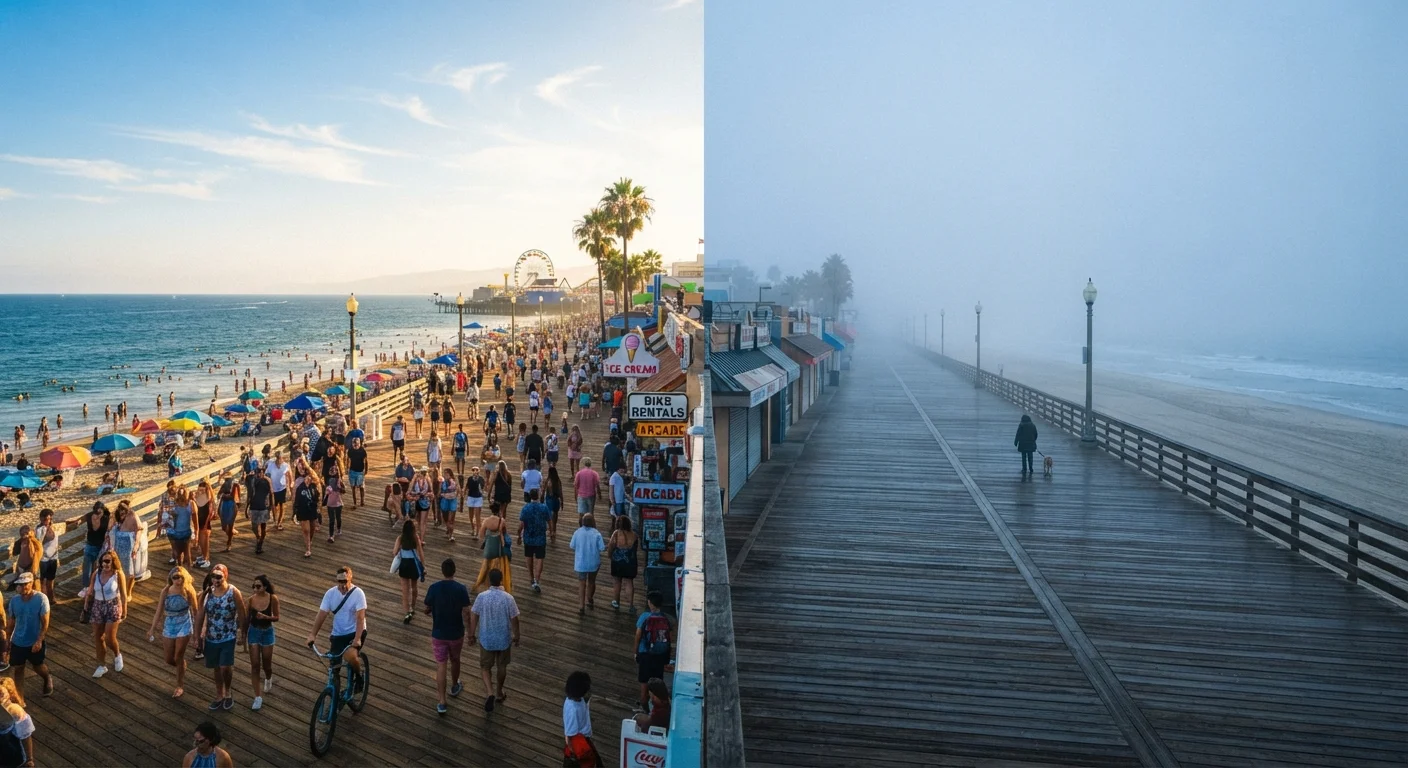
Photo: Online-Searches.net | Explore Insightful Blogs editorial
Key Takeaways
- Peak season delivers reliable weather, full attractions, and a vibrant atmosphere — but at a cost in crowds and pricing.
- Off-season travel typically means fewer crowds and lower costs, but some amenities and attractions may be closed or reduced.
- The best season to travel depends on your priorities: weather certainty, budget, solitude, or local authenticity.
- Shoulder season — the weeks just before or after peak — often balances favorable conditions with lighter crowds.
- Always verify attraction hours, local events, and entry requirements for your target dates before booking.
Reliable weather and longer daylight hours
Peak season typically coincides with the most stable and favorable weather for a destination, reducing the risk of trip-disrupting conditions.
All attractions, tours, and services fully operational
Museums, guided tours, ferries, and seasonal businesses are fully staffed and running on extended schedules during peak periods.
Vibrant atmosphere and local events
Festivals, outdoor concerts, and a lively street scene create energy that many travelers specifically seek out as part of the destination experience.
Easier logistics for families with school calendars
Peak season aligns with school breaks, making it the practical default for families who can't travel during term time.
Significantly higher accommodation and activity costs
Pricing for hotels, vacation rentals, and popular tours often climbs steeply during peak season, with limited availability at any price point.
Overcrowding at key attractions and public spaces
Popular viewpoints, hiking trails, and historic districts can become uncomfortably crowded, reducing the quality of the experience.
Advance reservations required for almost everything
Restaurants, tours, and even parking spots often require booking weeks or months ahead, eliminating much of the spontaneity of travel.
Destination feels less authentic at full tourist capacity
When a town shifts into high-volume tourist mode, the local rhythms and character that make it distinctive can be harder to find.
What 'Peak Season' Really Means — and Why It Varies
Peak season is simply the window when demand for a destination is highest. But that window isn't fixed — it shifts based on climate, school calendars, local festivals, and traveler demographics. Summer is peak for many beach and mountain destinations across the U.S., while ski resorts flip their calendar toward winter. Some urban destinations peak in spring for cherry blossoms or in fall for foliage. Understanding why a destination peaks — not just when — helps you decide whether that peak aligns with your actual travel goals.
For context on how these timing decisions ripple into your overall planning, the Trip Planning hub covers the full picture of organizing a stress-free trip from start to finish.
The Real Advantages of Traveling in Peak Season
Peak season exists for a reason: the conditions are often genuinely great. Weather is more predictable, nearly everything is open, and the destination is operating at full capacity. Guided tours run daily, museums keep extended hours, and waterfront restaurants are fully staffed. For first-time visitors or families working around school schedules, this reliability is hard to overstate.
Reliable weather and longer daylight hours
Peak season typically coincides with the most stable and favorable weather for a destination, reducing the risk of trip-disrupting conditions.
All attractions, tours, and services fully operational
Museums, guided tours, ferries, and seasonal businesses are fully staffed and running on extended schedules during peak periods.
Vibrant atmosphere and local events
Festivals, outdoor concerts, and a lively street scene create energy that many travelers specifically seek out as part of the destination experience.
Easier logistics for families with school calendars
Peak season aligns with school breaks, making it the practical default for families who can't travel during term time.
Peak season also tends to generate a sense of shared energy that many travelers specifically seek out — street festivals, outdoor concerts, and lively public spaces. That atmosphere is part of the product. And practically speaking, transportation infrastructure (ferries, shuttle services, guided excursions) is at its most robust when demand supports it.
Where Peak Season Creates Real Friction
The downsides are just as real. Accommodation rates climb steeply during peak windows, and popular lodging fills up months in advance. National parks, iconic viewpoints, and old-town districts can feel genuinely overcrowded — impacting both enjoyment and, in some cases, safety. Restaurants have long waits, parking becomes a daily negotiation, and the spontaneity many travelers crave evaporates when everything requires a reservation.
Significantly higher accommodation and activity costs
Pricing for hotels, vacation rentals, and popular tours often climbs steeply during peak season, with limited availability at any price point.
Overcrowding at key attractions and public spaces
Popular viewpoints, hiking trails, and historic districts can become uncomfortably crowded, reducing the quality of the experience.
Advance reservations required for almost everything
Restaurants, tours, and even parking spots often require booking weeks or months ahead, eliminating much of the spontaneity of travel.
Destination feels less authentic at full tourist capacity
When a town shifts into high-volume tourist mode, the local rhythms and character that make it distinctive can be harder to find.
There's also a subtler cost: the version of a destination you experience during peak season is often its most performative self, optimized for volume rather than depth. Local character can get diluted when a town's primary mode shifts to processing tourists.
The Case for Off-Season Travel
Off-season trips reward patience and flexibility. Fewer visitors mean genuine access to places that feel crowded in high season — quieter trails, unhurried museum visits, and restaurant conversations that aren't rushed. For a concrete look at how off-season dynamics play out in practice, see our article on Coastal Maine in the off-season — it illustrates what actually shifts and what stays the same when crowds thin out.
What 'Closed' Actually Means Off-Season
Budget-wise, off-season travel can be meaningfully more affordable, though prices vary widely by destination and year. The key trade-off is uncertainty: weather may be less cooperative, and some attractions, tours, or seasonal businesses may be closed entirely. Doing more research before booking is simply part of the deal.
Shoulder Season: The Middle Path Worth Considering
If peak and off-season feel like extremes, shoulder season — the transitional weeks on either side of peak — deserves serious attention. Conditions are often nearly as good as peak, but crowds and pricing haven't fully escalated (or have begun to ease). A coastal town in late May or early September, for example, may offer open restaurants, swimmable water, and walkable streets without the summer crush.
Shoulder season works especially well for travelers who want predictability without the full price premium. It pairs well with the flexible booking mindset covered in The Real Tradeoffs of Booking Everything in Advance vs. Staying Flexible — because shoulder season often rewards travelers who can move quickly when good options appear.
3–6 weeks
Typical shoulder season window around peak
Travel industry planners generally define shoulder season as the three to six weeks immediately before and after a destination's peak period, when conditions remain favorable but demand has not fully spiked.
Up to 30%
Potential accommodation cost variation by season
Accommodation pricing at many leisure destinations can vary significantly between peak and off-season, with differences often ranging from 20 to 30 percent or more depending on location and property type.
How to Decide Which Timing Actually Fits Your Trip
Start by clarifying your non-negotiables. If you're traveling with school-age kids, peak season may be unavoidable. If solitude and immersion matter more than comfort guarantees, off-season may be worth the trade-offs. Consider also what type of trip you're planning — a nature-focused retreat and an urban city break respond to seasonality very differently. Our guide on City Break vs. Nature Retreat can help you think that through.
Finally, remember that timing decisions interact with every other planning variable — where you're going, how you're booking, and whether you're traveling solo or with a group. See Solo Travel vs. Group Travel for how group dynamics shift these tradeoffs further. There's no single right answer, but there is usually a better fit for your specific trip.
The content provided on our blog site traverses numerous categories, offering readers valuable and practical information. Readers can use the editorial team’s research and data to gain more insights into their topics of interest. However, they are requested not to treat the articles as conclusive. The website team cannot be held responsible for differences in data or inaccuracies found across other platforms. Please also note that the site might also miss out on various schemes and offers available that the readers may find more beneficial than the ones we cover.