
City Break vs. Nature Retreat: How to Match a Destination to Your Travel Style

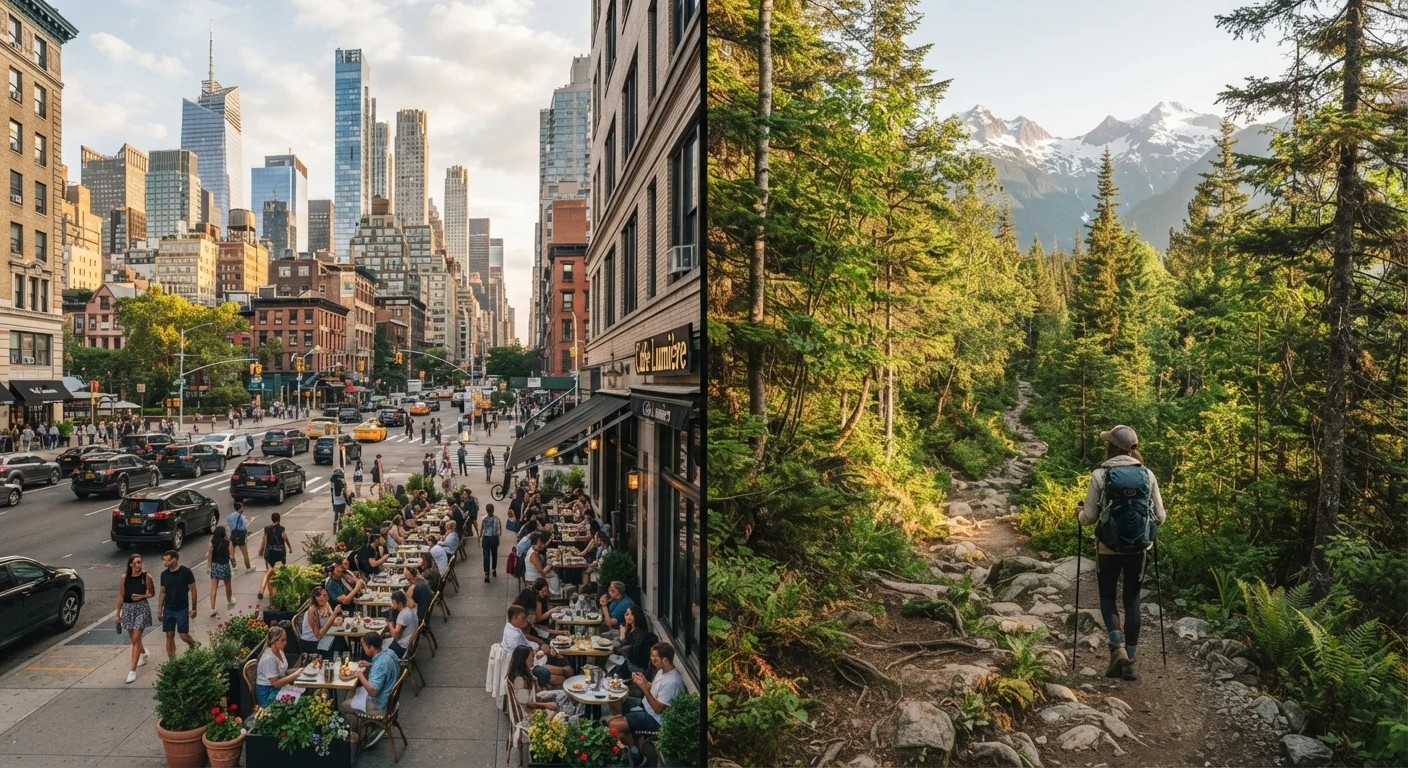
Photo: Online-Searches.net | Explore Insightful Blogs editorial
Key Takeaways
- City breaks reward travelers who want cultural immersion, food scenes, and structured sightseeing.
- Nature retreats are best for decompression, physical activity, and escaping screens and crowds.
- Your pace preference — spontaneous and social vs. slow and restorative — is the clearest guide.
- Budget, logistics, and travel companions all shift significantly depending on destination type.
- Many trips can blend both styles if you build the itinerary deliberately.
What You're Really Choosing Between
Picking a destination isn't just about geography — it's about choosing an experience rhythm. A city break drops you into density: museums, restaurants, transit systems, street life, and the hum of a place that never fully stops. A nature retreat asks you to slow down, move your body, and swap notifications for scenery.
Neither is inherently more worthwhile. But travelers who choose without thinking through their actual needs often return feeling like something was slightly off — too hectic, or not stimulating enough. The comparison below lays out the key differences across the criteria that matter most when planning. See our trip planning hub for broader frameworks on organizing your next getaway.
| City Break | Nature Retreat | |
|---|---|---|
| Pace | Fast, activity-dense | Slow, open-ended |
| Primary appeal | Culture, food, architecture | Restoration, scenery, activity |
| Logistics complexity | Lower — transit-friendly | Higher — gear, weather, access |
| Typical cost range | Moderate to high (urban prices) | Variable; often lower domestically |
| Best trip length | 2–5 days | 4–10 days |
| Physical demand | Low to moderate | Moderate to high |
| Connectivity | Reliable throughout | Often limited or absent |
| Solo vs. group fit | Excellent for both | Better with shared outdoor interests |
When a City Break Makes More Sense
Urban destinations earn their appeal through convenience and density. You can cover a tremendous amount of ground — a world-class art museum in the morning, a neighborhood food market at lunch, a historic district in the afternoon — all without a car. That compactness is a real advantage for shorter trips, where maximizing variety matters.
City breaks also tend to be more forgiving for first-time international travelers. Infrastructure is established, English is often widely spoken in tourist zones, and navigating a metro system builds confidence quickly. If you're weighing which European city suits a first overseas trip, factors like public transit quality and walkability often tip the decision.
Socially, cities accommodate mixed-interest groups more easily. One person wants street art tours while another wants fine dining — a city can hold both agendas without forcing compromise. That flexibility is harder to replicate in a remote cabin or trail-based park setting.
Consider a Hybrid Itinerary
When a Nature Retreat Is the Right Call
Nature retreats serve a purpose cities simply cannot: genuine decompression. Research consistently points to time spent in natural environments as beneficial for mental restoration, though the degree varies by individual. If you finish a work quarter feeling hollowed out, a weekend in a city — however exciting — may not deliver what you actually need.
Outdoor-focused trips also reward travelers who want physical engagement as part of the experience. Hiking, kayaking, cycling through farmland, or simply spending unstructured time near water offers a different kind of satisfaction than sightseeing. The logistics are admittedly more involved — gear considerations, weather dependencies, and fewer on-the-ground support systems — but that's part of the tradeoff.
Budget can also favor nature retreats in some cases, particularly domestic ones. A national park road trip or a stay at a lakeside cabin often costs significantly less than hotel nights in a major international city, especially when you factor in meals. Spending intentionally looks different outdoors: gear and groceries replace restaurant tabs and museum admissions.
The Factors That Actually Decide It
Your current energy level: Are you overstimulated and craving quiet, or restless and hungry for new input? City breaks add stimulation; nature retreats subtract it. Be honest about where you are right now, not where you wish you were.
Trip length: A two-night weekend lends itself to a city, where you can move fast and still feel satisfied. A week or more opens the door to slower-paced natural settings that reveal themselves over time.
Who you're traveling with: Solo travelers often thrive in cities, where spontaneity is easy and social opportunities arise naturally. Groups with varied interests may actually find more consensus outdoors, around a shared campfire or a trailhead. Our look at solo vs. group travel dynamics explores how companion count shapes nearly every planning decision.
Flexibility preference: Nature retreats often reward loose itineraries — weather shifts, trail conditions change, and the best moments aren't scheduled. Cities support both rigid and flexible plans equally well. If you're still figuring out how much to lock in ahead of time, destination type should factor into that decision.
Season and timing: A nature retreat during peak foliage season is spectacular; the same destination mid-winter without the right gear can be miserable. Cities are generally more season-agnostic, though peak vs. off-season timing still affects crowds and cost wherever you go.
The content provided on our blog site traverses numerous categories, offering readers valuable and practical information. Readers can use the editorial team’s research and data to gain more insights into their topics of interest. However, they are requested not to treat the articles as conclusive. The website team cannot be held responsible for differences in data or inaccuracies found across other platforms. Please also note that the site might also miss out on various schemes and offers available that the readers may find more beneficial than the ones we cover.