
DIY vs. Professional Mechanic: Knowing Which Jobs Belong in Which Hands

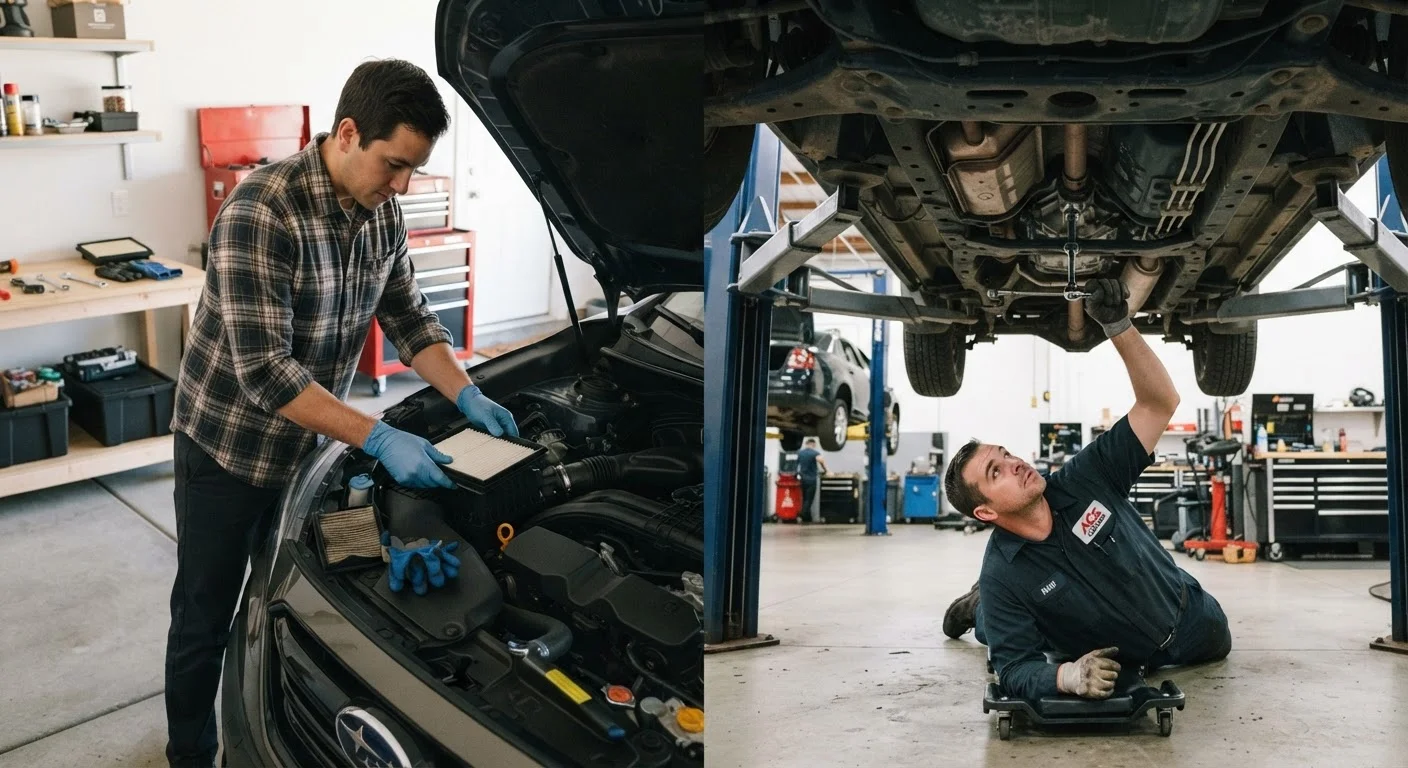
Photo: Online-Searches.net | Explore Insightful Blogs editorial
Key Takeaways
- Simple maintenance tasks like air filter swaps and wiper replacements are manageable for most home mechanics with basic tools.
- Brake system repairs, suspension work, and anything involving airbags should always go to a qualified mechanic.
- Mistakes on safety-critical systems can cost far more than professional labor — financially and physically.
- Your owner's manual is the first place to look when assessing whether a task is within your skill level.
- When in doubt, a pre-repair inspection by a shop can clarify scope and cost before you commit either way.
Why the DIY vs. Pro Decision Matters
Car ownership comes with an ongoing stream of maintenance decisions. Do it yourself and you save on labor costs. Hand it to a professional and you trade money for expertise, tools, and accountability. Neither choice is universally right — the job itself determines the answer.
For everyday drivers, the challenge is knowing where the line is. Attempting the wrong repair without the right skills or equipment doesn't just risk a botched job — it can compromise your safety and the safety of everyone else on the road. At the same time, outsourcing every oil change or bulb replacement to a shop adds up quickly and isn't always necessary.
Getting a grounding in basic maintenance is the first step toward making confident decisions. And consulting your owner's manual before attempting any task can quickly clarify whether it's realistic for a home mechanic.
Jobs Most Home Mechanics Can Handle
Several routine maintenance tasks require minimal tools, carry low stakes if done imperfectly the first time, and are designed to be user-serviceable. These are reasonable starting points for confident DIY work:
- Engine air filter replacement: Typically involves releasing a few clips and swapping a panel-style filter — no special tools needed.
- Windshield wiper blades: Packages include straightforward instructions, and the process takes minutes.
- Cabin air filter: Often accessed behind the glove box; your owner's manual will confirm the location and replacement interval.
- Checking and topping off fluids: Engine oil, coolant reservoir, washer fluid, and power steering fluid levels can all be verified visually with the hood open.
- Battery terminal cleaning: Disconnecting terminals and removing corrosion with a wire brush is manageable, provided you follow proper safety steps (gloves, disconnect negative first).
- Replacing bulbs: On many vehicles, exterior bulbs — particularly turn signals and some brake lights — can be swapped from behind the housing without tools.
These tasks share a common trait: if something is done slightly incorrectly, the consequence is a repeat attempt, not a safety failure.
Start With Your Owner's Manual
Jobs That Belong With a Qualified Mechanic
Other repairs sit in a different category entirely. These involve systems where an error can directly cause an accident, create additional expensive damage, or require specialized diagnostic equipment that most home garages simply don't have.
- Brake system work: Rotor resurfacing, caliper replacement, and brake line repairs require precise torque specifications and post-repair testing. Incorrectly serviced brakes are a leading cause of preventable accidents.
- Suspension and steering components: Ball joints, tie rods, and control arms affect how your vehicle tracks and handles. Improper installation creates unpredictable steering — a serious safety risk at highway speeds.
- Airbag system (SRS) components: These systems contain explosive charges and should never be disassembled by anyone without factory-level training and tools.
- Transmission service beyond fluid changes: Internal transmission work involves complex tolerances and specialized rebuild experience.
- Timing belt or chain replacement: An incorrectly installed timing component can destroy an engine within seconds of startup.
- Complex electrical diagnosis: Modern vehicles use multiple interlinked control modules. Tracing an intermittent fault often requires manufacturer-level scan tools.
Never Compromise on Safety-Critical Systems
If you're uncertain whether a job crosses this line, a diagnostic inspection at a trusted shop can clarify the scope before you commit to either path.
How to Evaluate Any Job Before You Start
Rather than memorizing a list, apply a consistent framework when a new task comes up:
- Check your owner's manual first. It lists service intervals and often describes what's involved. Tasks flagged as requiring dealer service are flagged for a reason.
- Ask what happens if it goes wrong. A misrouted air intake hose causes an engine warning light. A misinstalled brake caliper causes brake failure. These are not equivalent risks.
- Assess the tools required. A torque wrench and jack stands are reasonable home investments. A factory-level scan tool or spring compressor used improperly is a different matter.
- Be honest about your experience level. Completing your first-ever brake job on a vehicle you depend on daily is a different risk profile than practicing on a vehicle with a backup option.
This same evaluative mindset applies beyond vehicles — the DIY-or-pro question in home repair follows a nearly identical logic: low-consequence tasks are fair game; safety-critical ones are not.
| DIY | Professional Mechanic | |
|---|---|---|
| Typical cost | Parts cost only | Parts plus labor charges |
| Tool requirements | Basic hand tools | Specialized/diagnostic equipment |
| Suitable tasks | Filters, fluids, wipers, bulbs | Brakes, suspension, electrical, timing |
| Safety risk if done incorrectly | Low to moderate | High on critical systems |
| Accountability | Self-reliant | Shop warranty on parts and labor |
| Time investment | Variable; learning curve applies | Predictable turnaround |
Getting the Most From a Professional Mechanic
Choosing to use a professional doesn't mean handing over your keys and hoping for the best. Being an informed customer leads to better outcomes and fewer surprises on the bill.
- Ask for a written estimate before authorizing work. A reputable shop provides one without hesitation.
- Request that worn or replaced parts be returned to you. This confirms the work was actually performed.
- Understand the difference between a recommendation and an urgent repair. Not every item flagged in an inspection needs immediate attention.
- Keep your own maintenance log. Tracking what's been done — and when — helps you ask informed questions and avoid duplicate services.
Knowing how to find and work with a qualified mechanic is its own skill. The same principles that apply to vetting a contractor for home work — licensing, transparency about costs, and written agreements — apply equally when choosing a shop for significant vehicle repairs.
The content provided on our blog site traverses numerous categories, offering readers valuable and practical information. Readers can use the editorial team’s research and data to gain more insights into their topics of interest. However, they are requested not to treat the articles as conclusive. The website team cannot be held responsible for differences in data or inaccuracies found across other platforms. Please also note that the site might also miss out on various schemes and offers available that the readers may find more beneficial than the ones we cover.