
Maintenance Myths That Cost Drivers Unnecessary Money

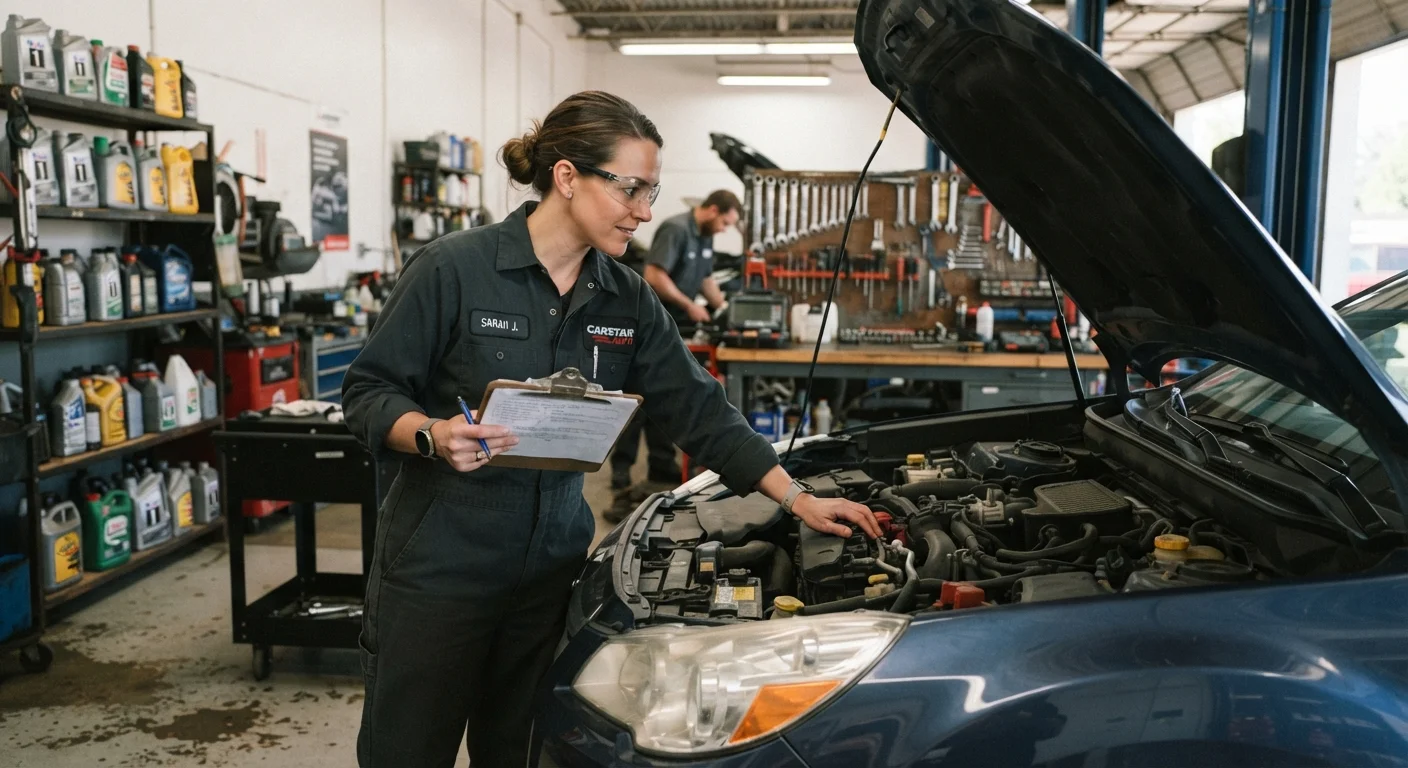
Photo: Online-Searches.net | Explore Insightful Blogs editorial
Key Takeaways
- Modern fuel-injected engines do not need to idle and warm up before driving in cold weather.
- The 3,000-mile oil change rule is outdated — most vehicles can go significantly longer between changes.
- Premium fuel provides no benefit in cars designed for regular unleaded gasoline.
- Tire pressure should be set to the vehicle manufacturer's specification, not the number on the tire sidewall.
- Skipping a service interval is rarely harmless — deferred maintenance compounds into bigger repair bills.
Why Maintenance Myths Stick Around
Car care advice travels fast — from a neighbor, a quick web search, or a service advisor trying to upsell. Some of it is sound. A lot of it is outdated or simply wrong. The trouble is that myths rarely feel like myths; they feel like common sense passed down through generations of drivers.
The cost isn't just wasted money at the service counter. Acting on faulty maintenance beliefs can shorten your vehicle's life, void warranty coverage, or mask a real problem that quietly grows worse. Understanding what the evidence actually says is one of the most practical things a driver can do — and it pairs well with the consistent habits that keep high-mileage cars running.
Below, we address the most common misconceptions head-on.
Myth
You need to let your engine idle for several minutes before driving in winter to warm it up properly.
Fact
Modern fuel-injected engines warm up faster and more efficiently under light driving load than they do sitting idle.
This advice made sense for older carbureted engines, which needed time to stabilize fuel mixture at cold temperatures. Today's engines use electronic fuel injection and computer-managed systems that adjust automatically from the moment you start the car. Extended idling in cold weather actually increases fuel consumption, allows carbon deposits to build up in the cylinders, and delays the point at which your catalytic converter reaches its optimal operating temperature. A gentle drive — keeping engine speeds low for the first few minutes — warms all systems more effectively than a stationary idle. Check the seasonal maintenance steps that actually matter in cold weather for what you should be doing instead.
Myth
You should change your engine oil every 3,000 miles, no exceptions.
Fact
Most modern vehicles with conventional oil can go 5,000–7,500 miles between changes; many synthetic oil intervals reach 10,000–15,000 miles.
The 3,000-mile guideline was popularized by the quick-lube industry and made sense for older engine designs and oil formulations. Current engine tolerances are tighter, oil quality is substantially better, and manufacturer-specified intervals reflect real-world testing — not marketing. Changing oil more frequently than your manual recommends is not harmful to the engine, but it is wasteful and unnecessary. If you've switched to synthetic oil, the gap is even wider. For a grounded look at the difference between oil types and what the intervals mean for your car, see what everyday drivers should know about motor oil.
Myth
Using premium fuel will make any car run better and get better mileage.
Fact
Premium fuel only benefits engines designed or required to use it. In a car built for regular unleaded, premium provides no performance or efficiency advantage.
Premium gasoline has a higher octane rating, which resists engine knock (premature detonation) under high compression. Engines specifically engineered for high-compression combustion — and labeled as requiring or recommending premium — do benefit. However, if your owner's manual says regular 87-octane is the specified fuel, putting in premium does nothing useful. Modern engines with knock sensors can adjust timing to run on regular fuel safely. Routinely paying more at the pump for premium in a regular-fuel vehicle is money with no mechanical return.
Myth
Inflate your tires to the pressure printed on the sidewall of the tire.
Fact
The number on the tire sidewall is the maximum pressure the tire can safely hold — not the correct operating pressure for your vehicle.
The right inflation pressure for your tires is found on a sticker inside the driver's door jamb or in your owner's manual. That figure accounts for your vehicle's weight distribution, suspension geometry, and handling characteristics — not just the tire's structural limits. Over-inflating tires to the sidewall maximum reduces the contact patch with the road, degrades ride quality, and causes uneven wear down the center of the tread. Under-inflation is equally problematic, increasing heat buildup and reducing fuel economy. For a full picture of how tire pressure fits into broader tire care, the ground-up guide to tire maintenance covers pressure, rotation, and tread depth together.
Myth
You must get your oil changed and maintenance done at the dealership to keep your warranty valid.
Fact
Under U.S. federal law, manufacturers cannot void a warranty simply because maintenance was performed elsewhere, as long as the work meets their specifications.
The Magnuson-Moss Warranty Act generally prohibits manufacturers from conditioning a warranty on using only their authorized service centers or branded parts — unless they provide those services or parts at no charge. Routine oil changes and maintenance completed by an independent shop using appropriate fluids and parts, and documented with receipts, are legally sufficient. That said, document everything: keep your service records organized and note the products used. Warranty disputes are far easier to resolve when you have a clear paper trail. This doesn't mean dealerships offer no value — factory-trained technicians and proprietary diagnostic tools matter for complex repairs — but routine services don't require paying dealership rates to protect your coverage.
Myth
Topping off the gas tank after the pump clicks off maximizes your fill and saves trips to the station.
Fact
Topping off can damage your vehicle's evaporative emissions system and may force liquid fuel into components designed to handle only vapor.
Modern fuel systems include a charcoal canister — part of the evaporative emission control (EVAP) system — that captures fuel vapors and feeds them back into the engine. When you continue pumping after the automatic shutoff, liquid gasoline can flood this canister, saturating the charcoal and degrading the system over time. A compromised EVAP system will trigger a check engine light and typically requires a repair that costs far more than any notional savings from a slightly fuller tank. Stop at the first click and move on.
What These Myths Have in Common
Most maintenance myths share a root cause: they were once true, or at least reasonable, and the underlying technology changed without the advice catching up. Carbureted engines really did benefit from a long warm-up. Oil formulations really did break down faster. The advice wasn't invented from nothing — it just stopped being relevant.
Outdated Advice Can Cause Real Damage
The most reliable maintenance guide is your owner's manual. Manufacturer intervals are tested to the specific tolerances of your engine, transmission, and drivetrain. When in doubt, that document — not a rule of thumb — should govern your decisions. You can also check the real costs of skipping routine maintenance to understand what deferred service actually adds up to over time.
For new vehicle owners especially, early habits set the tone. The oversights common in the first six months of ownership often include following inherited myths rather than consulting the manual. Separating fact from folklore early saves money and headaches later.
The content provided on our blog site traverses numerous categories, offering readers valuable and practical information. Readers can use the editorial team’s research and data to gain more insights into their topics of interest. However, they are requested not to treat the articles as conclusive. The website team cannot be held responsible for differences in data or inaccuracies found across other platforms. Please also note that the site might also miss out on various schemes and offers available that the readers may find more beneficial than the ones we cover.