
Reading a Nutrition Label Without Getting Lost in the Fine Print

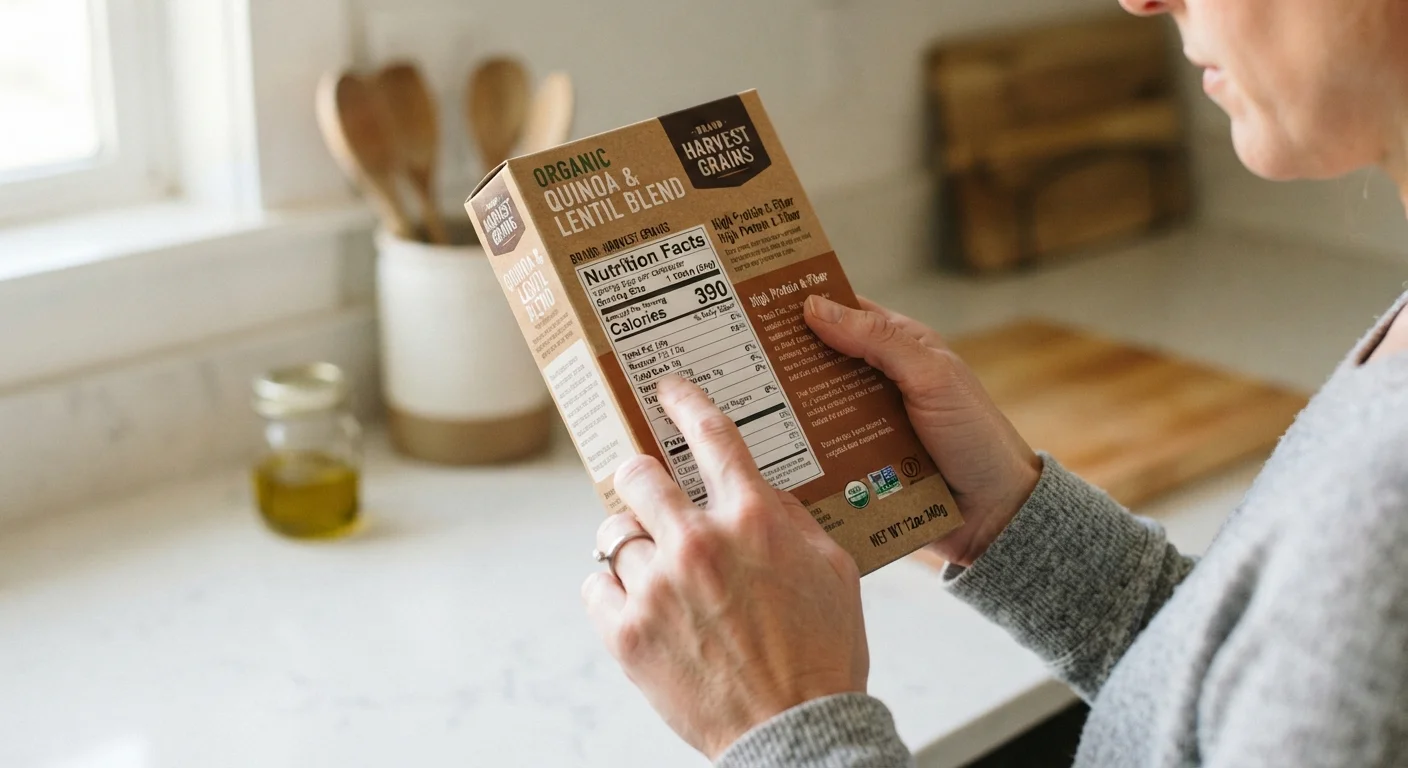
Photo: Online-Searches.net | Explore Insightful Blogs editorial
Key Takeaways
- Serving size is the anchor for every other number on the label — always check it first.
- The % Daily Value column tells you whether a nutrient is high or low in a single serving.
- Added sugars, sodium, and saturated fat are the three nutrients most Americans benefit from monitoring.
- The ingredient list is separate from the Nutrition Facts panel and reveals what's actually in the food.
- No single food or number determines a healthy diet — context and overall pattern matter most.
Why Nutrition Labels Feel Harder Than They Should
A Nutrition Facts panel packs a lot of information into a small space — calories, fats, carbohydrates, vitamins, percentages, and ingredient lists all compete for attention at once. Most people either fixate on one number (calories, typically) or ignore the label entirely because it feels overwhelming. Neither approach gives you the full picture.
The good news: you don't need to understand every line to make smarter choices. The label follows a predictable structure, and once you know the logic behind it, the numbers start making sense quickly. If you're newer to thinking about nutrition broadly, the foundations of healthy eating are a useful starting point before diving into label details.
This Is Education, Not Medical Advice
What You'll Need Before You Start
No special equipment is required — just a packaged food with a standard U.S. Nutrition Facts panel. The format was updated by the FDA and phased in fully by 2020, so most products you find today use the current layout, which prominently displays calories in large print and separates "added sugars" from total sugars.
What you will need
U.S. Nutrition Facts Panel
The standardized FDA-required label on packaged foods that lists serving size, calories, macronutrients, and key micronutrients.
Ingredient List (on the same package)
Lists every ingredient by weight, from most to least — a separate but equally important companion to the Nutrition Facts panel.
FDA's Daily Value Reference Guide
The federal reference tool that defines what 100% Daily Value means for each nutrient, used to interpret % DV on labels.
How to Read a Nutrition Label Step by Step
Work through the label in the order below. Each step builds on the last, so resist the urge to jump straight to calories or grams of fat before checking the serving information.
Check the Serving Size First
Every number on the label — calories, fat, sodium, everything — applies to one serving as defined on that label, not necessarily to the whole package. Find the serving size at the very top of the panel and note the servings per container. If a product lists a serving as ¾ cup but you typically eat 1½ cups, every number on the label needs to be doubled before it reflects what you're actually consuming.
Look at Calories in the Context of the Serving
Calories measure the energy a food provides per serving. They matter, but they don't tell you much about nutritional quality on their own — 200 calories from almonds and 200 calories from a cookie deliver very different nutrients. Use the calorie count as one data point alongside the rest of the label, not as the sole indicator of whether a food is a good choice.
Scan the % Daily Value Column
The % Daily Value (% DV) column on the right side of the label tells you how much of a nutrient one serving contributes toward a general daily reference amount, based on a 2,000-calorie diet. This column makes comparison between products fast: you don't need to remember target grams of sodium or fiber — the percentage does the work for you. If you're unfamiliar with what individual nutrients do, our nutrition glossary defines the terms you'll encounter most.
Identify Nutrients to Limit
Three nutrients are consistently flagged in U.S. dietary guidance as ones many Americans tend to overconsume: saturated fat, sodium, and added sugars. For each of these, a lower % DV generally indicates a better fit within a balanced diet. Added sugars now appear as a separate line item under total carbohydrates on the current label format, making them easier to spot than in previous versions.
Look for Nutrients to Prioritize
On the lower portion of the label, you'll find nutrients that most Americans tend to get too little of: dietary fiber, potassium, calcium, and vitamin D. A higher % DV for these is generally a positive signal. Fiber in particular supports digestive health and satiety — our guide on the role of fiber in everyday health explains what it does and where to find it in everyday foods.
Read the Ingredient List Separately
After reviewing the Nutrition Facts panel, turn to the ingredient list. Ingredients are listed from most to least by weight. A short ingredient list with recognizable items generally indicates less processing, though this isn't a universal rule. Pay particular attention to the first three to five ingredients — these make up the majority of what you're eating. This step is especially useful when comparing two products that have similar nutrition numbers on their labels.
Beyond the Numbers: The Ingredient List
The Nutrition Facts panel and the ingredient list are two different tools — and both matter. Ingredients are listed in descending order by weight, so the first few ingredients make up the bulk of the product. A bread that lists "enriched wheat flour" before "whole wheat flour" contains more refined grain than whole grain, regardless of what the front-of-package claims. Our article on whole grains versus refined grains explains why this distinction affects how your body processes the food.
Added sugars are another area where the ingredient list reveals what the numbers obscure. Sugar appears under dozens of names — dextrose, maltose, cane syrup, fruit juice concentrate — and a product can list several of them separately, keeping each one lower on the list while the total added sugar content remains high. For a full breakdown, see our guide on spotting added sugars on ingredient lists.
Use the 5% and 20% Rule as a Quick Guide
Putting It All Together in Real Life
Reading a label well is a skill that gets faster with practice. The goal isn't to calculate every gram you eat — it's to build enough familiarity that the label informs your choices rather than confusing them. A food that's high in sodium but also high in fiber and protein may still fit well into a balanced day, depending on everything else you eat. Context is what matters.
If you want to understand how individual nutrients function in your body — not just how to find them on a label — macronutrients explained covers carbohydrates, protein, and fat in plain language. And if you're thinking about whether a particular dietary approach suits your life, finding the right dietary approach for your actual life can help you evaluate your options without the hype.
This article is for general informational and educational purposes only and does not constitute medical or dietary advice. Consult a qualified healthcare professional or registered dietitian for guidance specific to your health needs.
The content provided on our blog site traverses numerous categories, offering readers valuable and practical information. Readers can use the editorial team’s research and data to gain more insights into their topics of interest. However, they are requested not to treat the articles as conclusive. The website team cannot be held responsible for differences in data or inaccuracies found across other platforms. Please also note that the site might also miss out on various schemes and offers available that the readers may find more beneficial than the ones we cover.