
Whole Grains vs. Refined Grains: What Changes When You Process Wheat

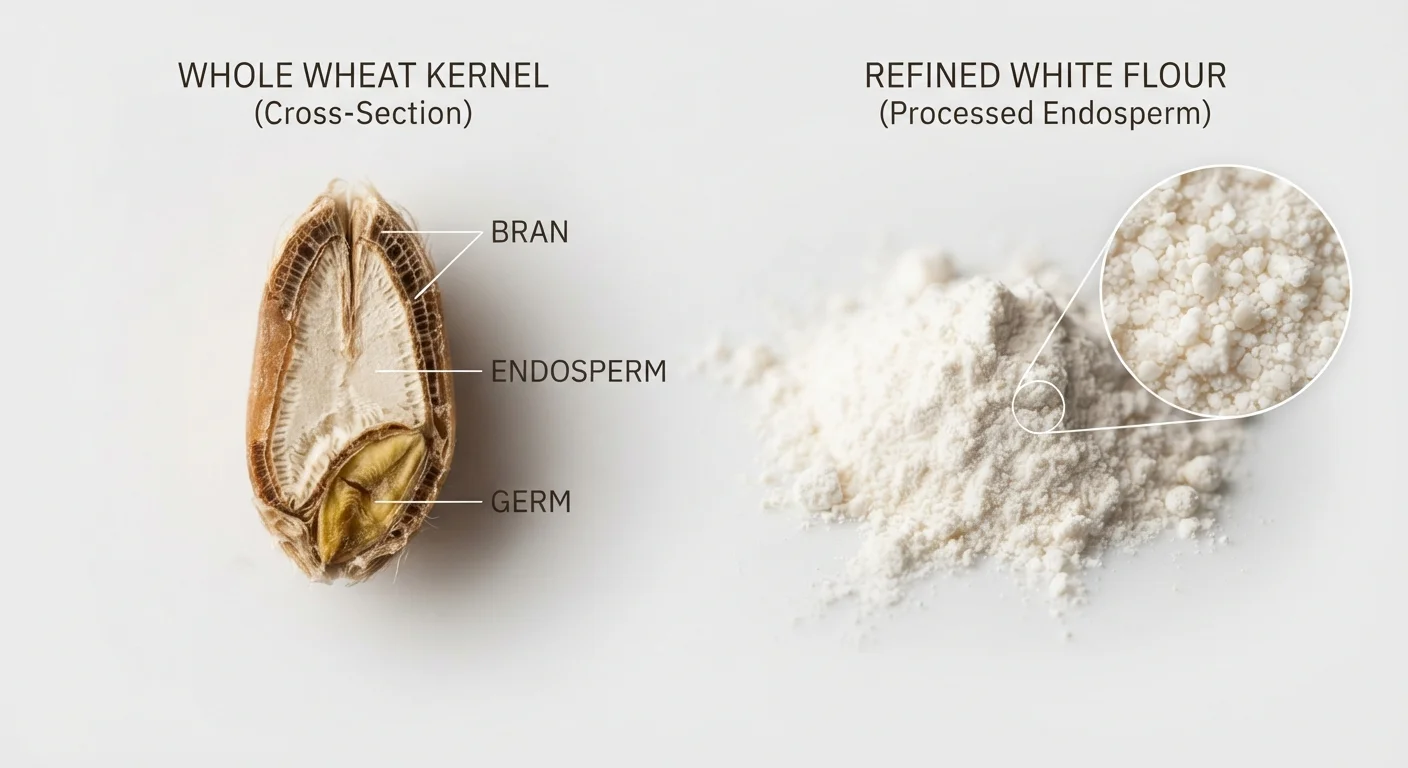
Photo: Online-Searches.net | Explore Insightful Blogs editorial
Key Takeaways
- Refining removes the bran and germ, stripping out most fiber, B vitamins, and minerals.
- Whole grains are associated with lower risks of heart disease, type 2 diabetes, and digestive issues.
- Most refined grain products in the U.S. are enriched, but enrichment restores only select nutrients.
- Switching even half your grain servings to whole grains can meaningfully shift your nutritional intake.
- Label reading matters — 'wheat bread' or 'multigrain' does not automatically mean whole grain.
What Refining Actually Does to a Grain
A grain kernel has three parts: the bran (outer layer), the germ (nutrient-rich core), and the endosperm (starchy middle). Whole grains keep all three intact. Refining milling strips away the bran and germ, leaving only the endosperm — which is mostly starch with relatively little fiber, fat, or micronutrients.
What goes with the bran and germ is significant: dietary fiber, iron, magnesium, zinc, B vitamins including thiamine, niacin, and folate, and a range of phytonutrients (plant compounds with potential health benefits). The endosperm that remains is calorie-dense and easy to process into fine, smooth-textured flours — which is why refined grains dominate mass-produced breads, pastas, crackers, and cereals.
To partially offset those losses, most refined grain products sold in the United States undergo enrichment — a process that adds back iron and four B vitamins (thiamine, riboflavin, niacin, and folic acid). Enrichment is meaningful and has helped reduce neural tube defects and nutrient deficiencies at a population level. However, it does not restore fiber, magnesium, zinc, or the many phytochemicals removed during milling. As the research on whole vs. processed foods shows, restoring isolated nutrients rarely replicates the effect of the intact food.
How the Difference Shows Up in Your Body
The most immediate difference is how quickly each type of grain is digested. Refined grains break down rapidly in the digestive tract, causing a faster rise in blood glucose. Whole grains, because of their intact fiber and structure, are digested more slowly, producing a more gradual glucose response. Over time, this difference may matter for insulin sensitivity and appetite regulation, though individual responses vary considerably.
<10%
Americans meeting whole grain recommendations
According to USDA dietary intake data, fewer than 1 in 10 Americans consistently meet the recommended amount of whole grain servings per day.
~25%
Lower cardiovascular disease risk linked to whole grains
Multiple large cohort studies have found roughly a 20–30% lower risk of heart disease among those with the highest whole grain intake compared to the lowest.
Up to 75%
Fiber lost during wheat refining
The milling process that produces white flour removes the bran and germ, eliminating the majority of the original kernel's dietary fiber content.
Fiber is the other major variable. The Dietary Guidelines for Americans recommend adults consume around 22–34 grams of fiber per day, depending on age and sex — yet average American intake falls well short of that. Whole grains are one of the most accessible sources of fiber in a typical diet. A slice of 100% whole wheat bread provides roughly 2 grams of fiber; its white-bread equivalent provides less than 1 gram. Across three or more grain servings a day, that gap compounds.
Longer-term, large observational studies — including analyses published by the Harvard T.H. Chan School of Public Health — have found associations between higher whole grain consumption and lower risks of cardiovascular disease, type 2 diabetes, and certain digestive conditions. It's worth noting that observational research shows association, not causation, and that overall dietary patterns matter more than any single food group.
Reading Labels: Spotting the Real Thing
Marketing language on grain products can be misleading. Terms like multigrain, stone-ground, wheat bread, or made with whole grain do not guarantee a product is primarily whole grain. The reliable signal is the ingredient list: the first ingredient should say "whole wheat," "whole oats," "whole grain corn," or another whole grain — not simply "wheat flour" or "enriched flour," which indicate a refined product.
| Criterion | Whole Grains | Refined Grains |
|---|---|---|
| Grain parts retained | Bran, germ, and endosperm | Endosperm only |
| Fiber content | High | Low |
| Vitamins & minerals | Naturally occurring, full profile | Mostly removed; select nutrients added back |
| Blood glucose response | Slower, more gradual | Faster spike typical |
| Shelf life | Shorter (germ oils can go rancid) | Longer |
| Texture in baking | Denser, heartier | Lighter, finer crumb |
| Label to look for | "Whole wheat" or "whole grain" first | "Enriched flour" or "wheat flour" first |
For a deeper look at decoding what nutrition labels actually tell you, see reading a nutrition label without getting lost in the fine print. It's also worth noting that some products marketed as healthy — including certain whole-grain-branded items — carry added sugars, sodium, or oils that shift their overall nutritional profile. Our overview of foods often labeled healthy covers this territory in detail.
This article is for general informational and educational purposes only and does not constitute medical or dietary advice. Consult a qualified healthcare professional or registered dietitian before making significant changes to your diet, especially if you have a health condition.
The content provided on our blog site traverses numerous categories, offering readers valuable and practical information. Readers can use the editorial team’s research and data to gain more insights into their topics of interest. However, they are requested not to treat the articles as conclusive. The website team cannot be held responsible for differences in data or inaccuracies found across other platforms. Please also note that the site might also miss out on various schemes and offers available that the readers may find more beneficial than the ones we cover.