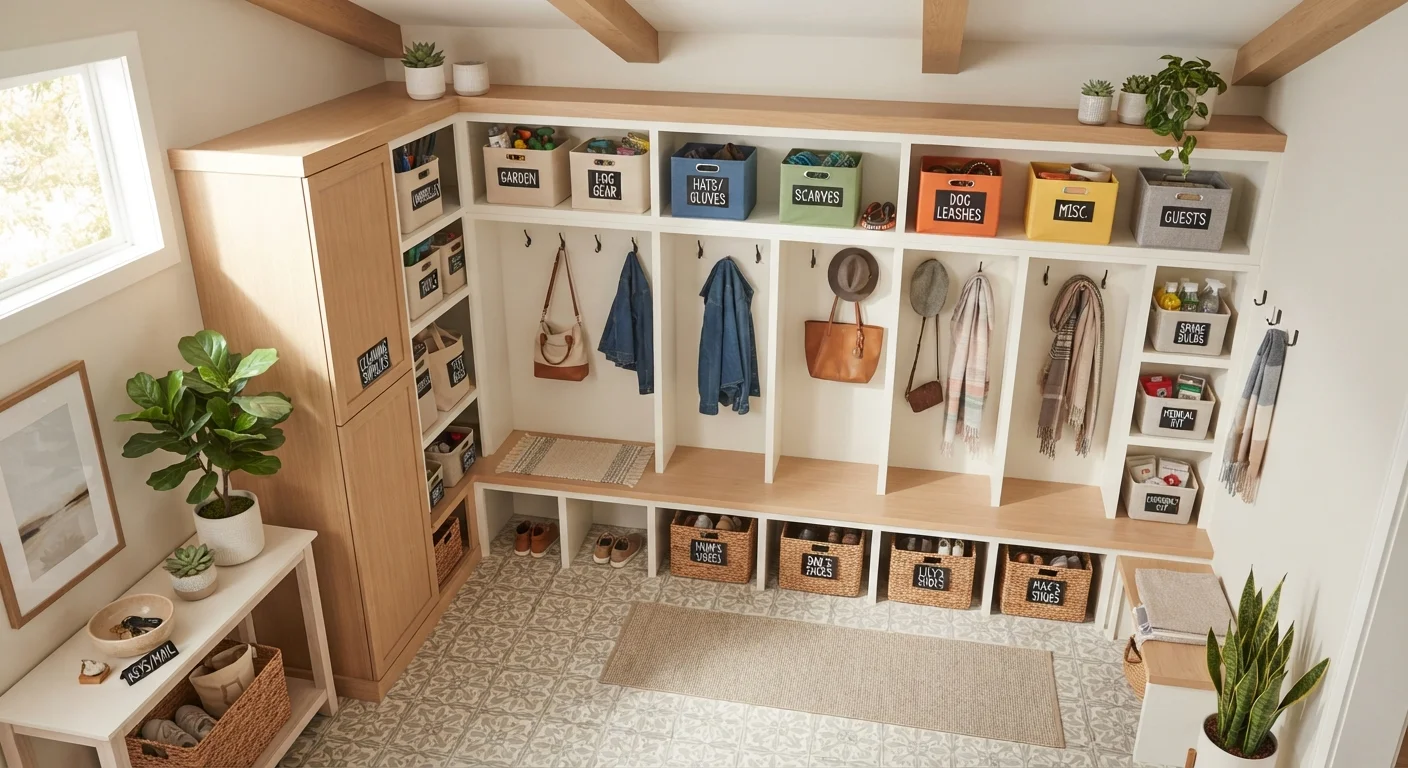
The Weekend Whole-Home Declutter: A Step-by-Step Plan


Photo: Online-Searches.net | Explore Insightful Blogs editorial
Key Takeaways
- Sequence rooms from easiest to hardest so you build confidence before tackling sentimental spaces.
- A four-box sorting system — keep, donate, trash, relocate — removes decision paralysis in every room.
- Finishing one room completely before moving on prevents mid-project chaos from spreading.
- Scheduling a donation drop-off on Sunday afternoon locks in your gains before the week restarts.
- Brief daily habits after the weekend are what prevent clutter from quietly rebuilding.
Why a Weekend Plan Works Better Than Ongoing Tidying
Gradual tidying — putting one thing away here, clearing a shelf there — rarely creates lasting order because it never addresses the total volume of items in a home. A concentrated two-day effort changes the baseline. You're not reorganizing clutter; you're reducing it, which makes every subsequent maintenance task smaller and faster.
This plan uses a location-based approach: one room at a time, fully completed before moving on. If you're weighing whether that method fits your household, the category-based vs. location-based decluttering comparison walks through the trade-offs in detail. For a broader look at how this weekend fits into a long-term system, the complete home organization resource covers every stage from first declutter to maintenance.
Four-Box Sorting System
Provides a physical destination for every item so decisions stay fast and final during each room pass.
Heavy-Duty Trash Bags
Handles large volumes of discarded items without tearing mid-room, keeping the process moving.
Timer
Keeps you on schedule per room and prevents over-analyzing individual items.
Sticky Notes or Labels
Marks relocated items with their intended destination so nothing gets lost between rooms.
Cleaning Cloths and All-Purpose Cleaner
Allows you to wipe shelves and surfaces immediately after clearing them, finishing each space completely.
The Decision Framework That Keeps You Moving
The biggest reason whole-home declutters stall is decision fatigue. Picking up an item and genuinely weighing its future requires mental energy, and that energy depletes fast. The four-box system works because it limits your options to four and forces a choice in under ten seconds.
What you will need
Apply the same standard across every room: Keep only what you use regularly or genuinely love. Donate anything functional that someone else could use. Trash anything broken, expired, or unsanitary. Relocate anything that belongs in a different part of the house. The relocate box is addressed at the end of each room, not mid-session.
Don't Skip the Relocate Box
For sentimental items that resist this framework, see the important note below before you start.
Sentimental Items Need Their Own Session
Following the Step-by-Step Plan
With your sequence mapped and your sorting station set up, you're ready to work through the house systematically. The steps below walk you through the full two-day process from planning through final habit-setting.
Plan your room sequence on Friday evening
Before the weekend starts, walk through your home and list every space: entry, living room, dining room, kitchen, bathrooms, bedrooms, home office, and storage areas like closets, the garage, or a basement. Rank them from lowest to highest emotional weight and physical volume. A bathroom or entryway is a natural starting point; a master closet or basement is typically the final challenge.
Assign rough time blocks: smaller rooms get 45–60 minutes, large or complex spaces like the kitchen or a full basement may need 2–3 hours. Write your sequence down. This list becomes your project map for the entire weekend.
Set up your sorting station
Designate a central area — often a hallway or garage — as your sorting hub. Place your four labeled boxes there before you begin any room. Trash bags stay with you and travel room to room. The sorting station prevents every room from filling with piles and gives you a clear sense of total volume as the day progresses.
Work each room with a clear sequence
Enter the first room and start your timer. Work surfaces left to right, top to bottom: high shelves first, then countertops, then floor-level storage. Pick up each item once and place it in a box immediately using the four-box rule. The only decision is: keep, donate, trash, or relocate. If an item requires more than ten seconds of thought and isn't sentimental, it almost always belongs in the donate box.
Once every item is sorted, move your relocate items to their correct rooms, wipe the cleared surfaces, and close the door. That room is done.
Handle the kitchen as its own half-day project
The kitchen typically holds the highest density of mixed-use items: appliances used twice a year, duplicate utensils, expired pantry goods, and mismatched containers. Allocate a full morning or afternoon block for it alone. Clear countertops entirely first, then work cabinet by cabinet. Expired food goes directly to trash; duplicate tools and unused appliances go to the donate box. Aim to keep only what fits comfortably when the cabinet door closes without forcing.
Tackle bedrooms and closets on day two
Clothing and bedroom storage tend to accumulate the most sentimental weight, so saving them for day two — when you have momentum — helps. Use the same top-to-bottom, left-to-right approach. For clothing, a useful standard is: if you haven't worn it in the past 12 months and can't name a specific upcoming occasion for it, it's a donate candidate. Closet floors and under-bed storage should be fully emptied and evaluated, not just reorganized around existing clutter.
Do the donation drop-off before Sunday ends
Load your donate boxes into your vehicle on Sunday afternoon and make the drop-off before the weekend is over. This single action is the most important habit-locking step in the entire plan. Items left at home for even a few days have a way of being reclaimed, second-guessed, or simply added back to the clutter. If your nearest donation center is closed, arrange a curbside pickup for Monday. Don't let the boxes back inside the house.
Set one maintenance habit per high-traffic area
Before the weekend closes, identify the two or three spaces that accumulated clutter fastest — usually the entryway, kitchen counters, and a bedroom chair or floor area. For each, define one simple rule: a basket by the door for incoming mail, a nightly two-minute counter reset in the kitchen, a weekly Sunday closet scan. Small, specific habits outperform large seasonal purges over the long term. For a structured approach to ongoing organization, see the seasonal home organization guide for quarterly task planning.
Set a Donation Drop-Off Before You Start
The content provided on our blog site traverses numerous categories, offering readers valuable and practical information. Readers can use the editorial team’s research and data to gain more insights into their topics of interest. However, they are requested not to treat the articles as conclusive. The website team cannot be held responsible for differences in data or inaccuracies found across other platforms. Please also note that the site might also miss out on various schemes and offers available that the readers may find more beneficial than the ones we cover.