Category-Based vs. Location-Based Decluttering: Which Approach Fits Your Home?

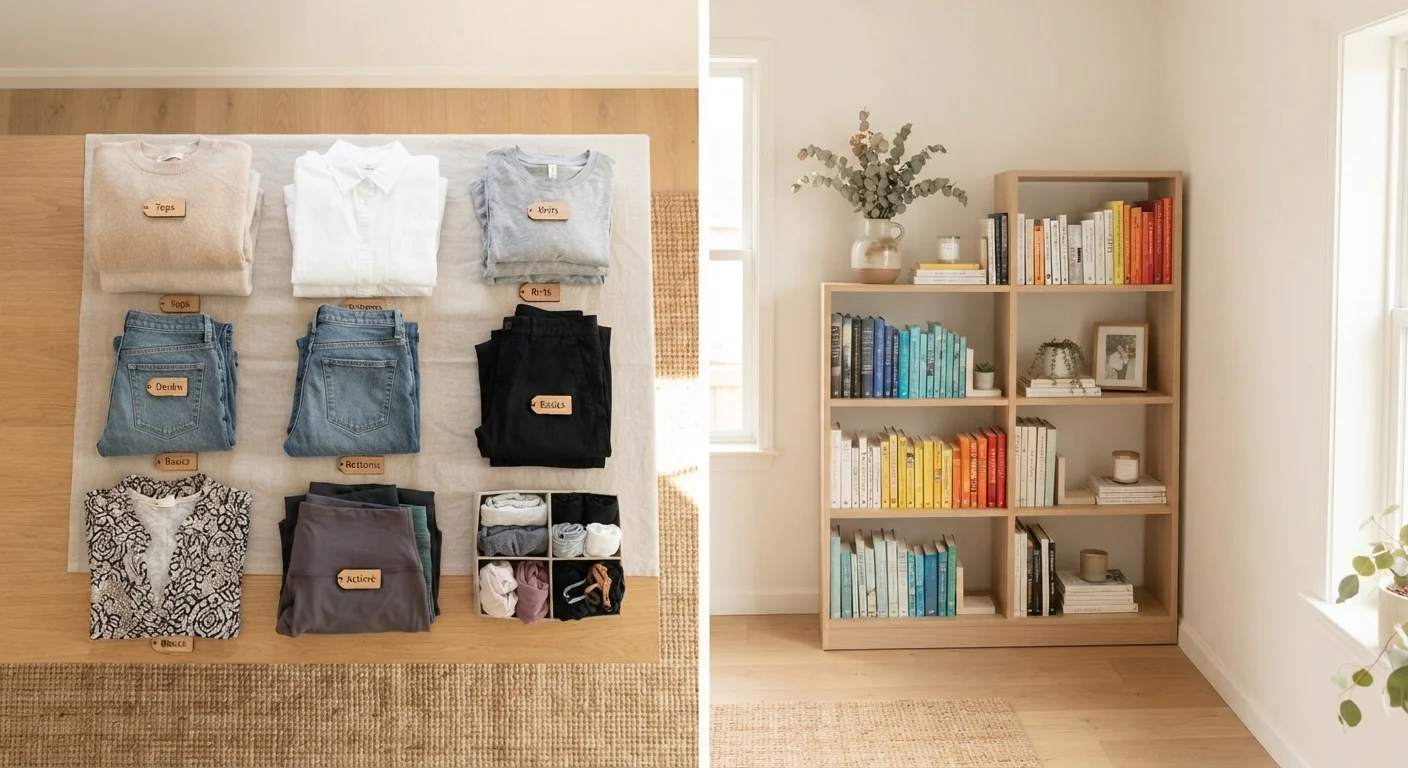
Photo: Online-Searches.net | Explore Insightful Blogs editorial
Key Takeaways
- Category-based decluttering pulls like items from every room together, helping you see your total inventory before making decisions.
- Location-based decluttering contains the process to one room or zone at a time, minimizing disruption and suiting tighter schedules.
- Category-based works best when item types are heavily duplicated across the house, such as clothing, books, or tools.
- Location-based suits renters, families with shared spaces, or anyone who needs a room functional again quickly.
- Hybrid approaches — starting with one category in one room — are valid and often more sustainable than either method alone.
- Neither method works without a consistent decision framework: keep, donate, discard, or relocate.
What Each Method Actually Involves
Before comparing them side by side, it helps to understand what each method asks of you in practice — not just in theory.
Category-based decluttering means gathering every item of a single type from every room in your home before evaluating anything. You pull all clothing from closets, drawers, under beds, and seasonal bins into one pile, then work through the pile making decisions. You repeat this process for each category — books, kitchenware, paperwork, and so on. The core discipline is that you don't put anything away until the full category is assessed. This can be demanding: a large household's clothing pile alone can fill a bed and feel temporarily overwhelming.
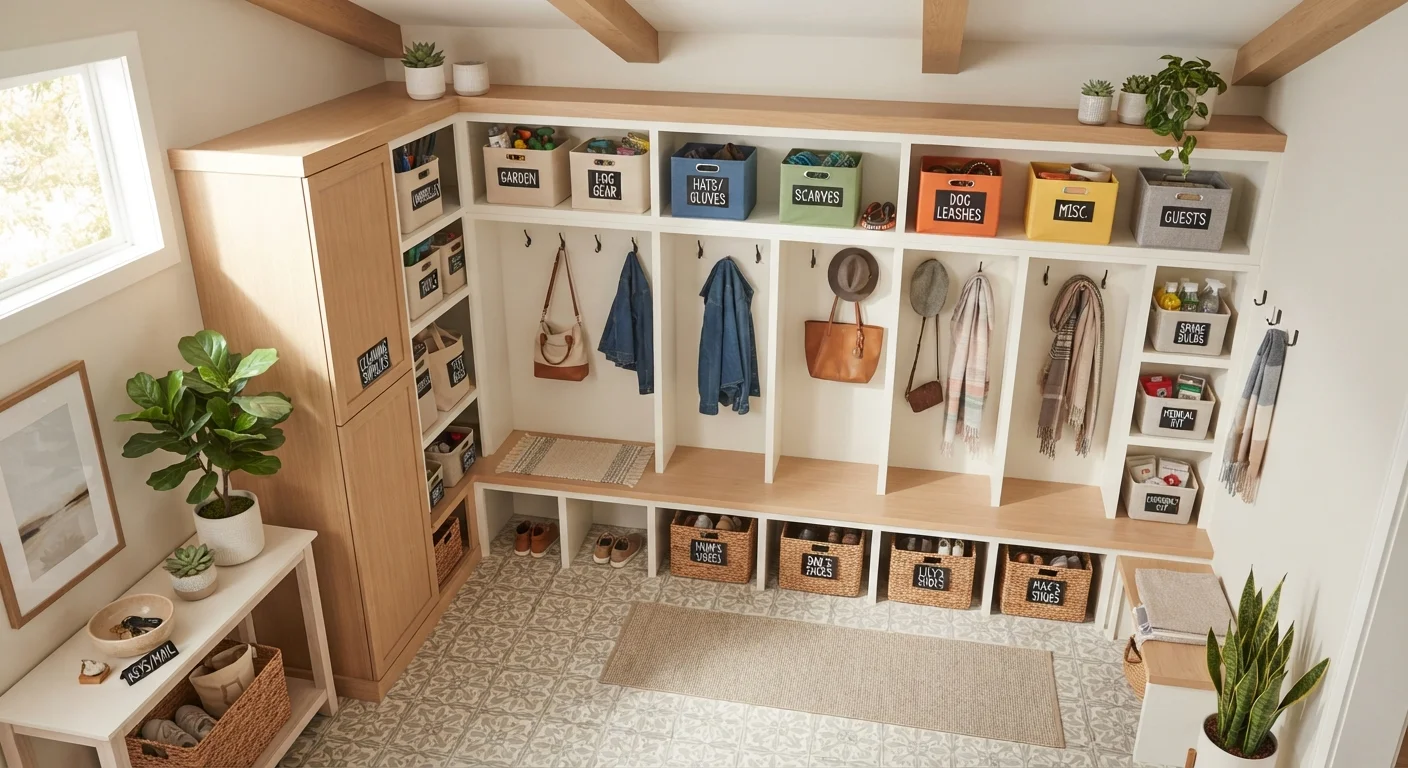
Location-based decluttering means working through one defined space — a room, a closet, a kitchen cabinet — from start to finish before moving on. You clear every item from that zone, make keep/donate/discard decisions on the spot, then organize only what belongs in that space before moving to the next. For a full framework on this approach, see our room-by-room organization guide. The advantage is containment: the rest of your home stays functional while you work.
| Criterion | Category-Based | Location-Based |
|---|---|---|
| Work style | One item type across all rooms | All items in one room or zone |
| Best time commitment | Long, uninterrupted blocks | Short bursts or full sessions |
| Home disruption level | High — temporary whole-home chaos | Low — one area at a time |
| Duplicate detection | Excellent — full inventory visible | Limited — room-specific view only |
| Beginner-friendliness | Moderate — requires commitment | High — easy to start small |
| Suitable for shared homes | Challenging — needs buy-in | Good — minimizes conflict |
| Visible progress | Delayed until category is done | Immediate after each space |
Where Each Method Gains — and Loses — Ground
Category-based decluttering excels when redundancy is the real problem. If you discover four can openers when you pull all kitchen tools together, the solution is obvious in a way it isn't when you stumble across one at a time in separate drawers. The method also creates a powerful psychological shift — seeing the sheer volume of a category makes it harder to rationalize keeping duplicates or items you've forgotten you owned.
The downside is logistical. Pulling every book in the house into one room is disruptive, time-consuming, and physically demanding. If you can't complete a category in one session, you're left with piles mid-process — frustrating for anyone sharing the space. This method also depends on high motivation and uninterrupted blocks of time that many working households simply don't have.
Location-based decluttering fits naturally into weekends, evenings, or short bursts of energy. Finishing even a single drawer or shelf creates a tangible win that builds momentum. It also maps well to how most people naturally think about their homes: by room, not by category. The limitation is that it can allow item duplication to persist — you might clear your bedroom closet and never realize your hall closet holds three more of the same thing. Our guide on common organization myths explores how partial-room systems can give an illusion of order without solving the root problem.
A Hybrid Approach Is a Valid Strategy
Choosing the Method That Matches Your Reality
The best decluttering method is the one you'll actually complete — not the one that sounds most rigorous. A few practical questions can help you choose.
- How much time can you dedicate in one stretch? Category-based projects often need four or more uninterrupted hours per category. Location-based work can fit into 30-minute windows.
- How spread out are your belongings? If every category exists in three rooms, category-based sorting will reveal far more than tackling rooms one at a time.
- Do you share the space? Families with children or roommates usually find location-based decluttering less disruptive to daily routines.
- Are you emotionally attached to many items? Category-based comparison (seeing 40 books versus 200) can make decisions easier. But if emotional overwhelm is a concern, a smaller, room-by-room scope may be more manageable.
If you're working toward a weekend-scale project, our weekend whole-home declutter plan offers a sequenced approach that blends elements of both methods. Before diving into any room, it's also worth using a pre-organization room checklist to assess storage, traffic flow, and clutter sources first.
Finally, keep the calendar in mind. Some categories — seasonal decor, outdoor gear, cold-weather clothing — align naturally with specific times of year. Our seasonal organization guide can help you layer decluttering efforts into a year-round rhythm rather than treating it as a one-time event.
The content provided on our blog site traverses numerous categories, offering readers valuable and practical information. Readers can use the editorial team’s research and data to gain more insights into their topics of interest. However, they are requested not to treat the articles as conclusive. The website team cannot be held responsible for differences in data or inaccuracies found across other platforms. Please also note that the site might also miss out on various schemes and offers available that the readers may find more beneficial than the ones we cover.