Home Organization Myths That Keep Your House Cluttered

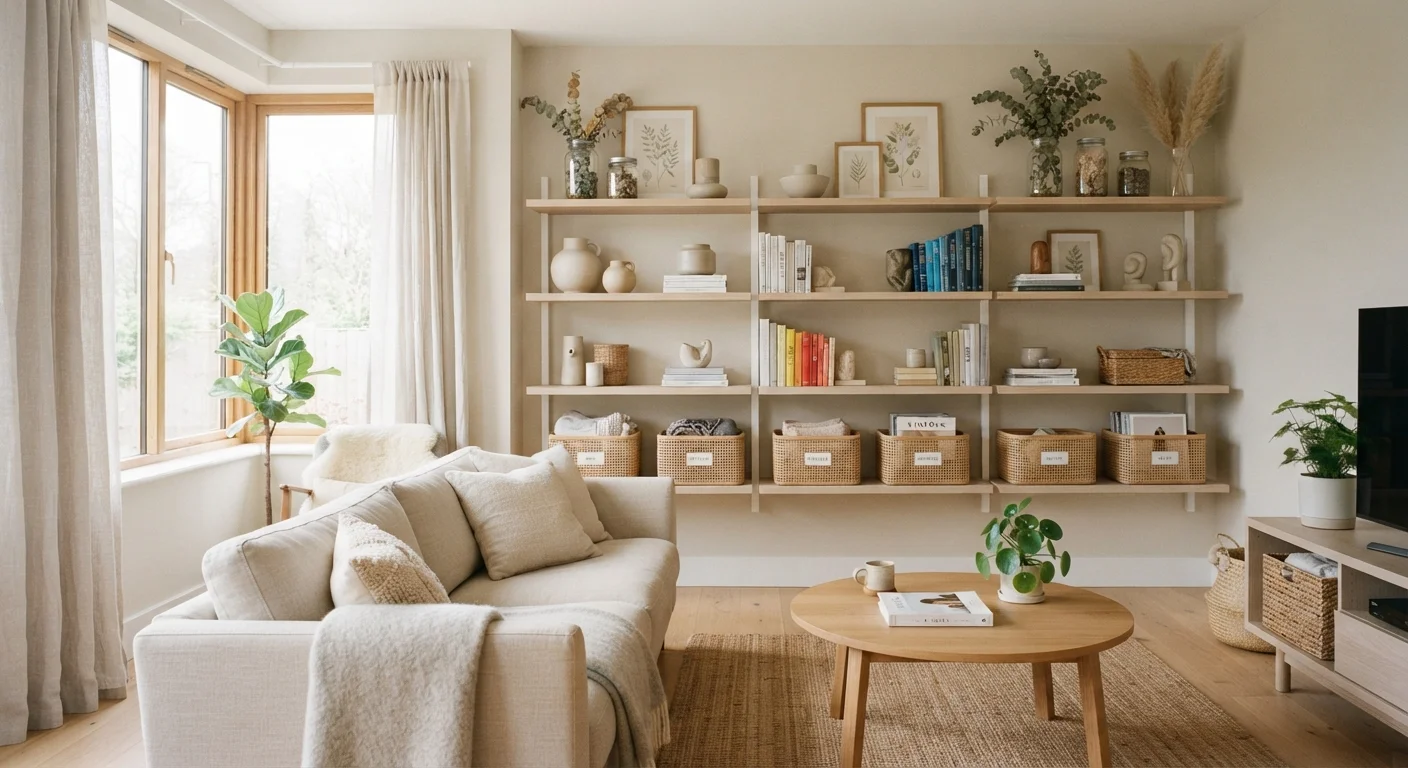
Photo: Online-Searches.net | Explore Insightful Blogs editorial
Key Takeaways
- More storage space rarely solves clutter — reducing what you own usually does.
- You don't need matching containers or a full weekend to get meaningfully organized.
- Sustainable organization depends on simple systems everyone in the household can follow.
- Decluttering is an ongoing habit, not a one-time event.
- Labeling and zones matter more than aesthetics for long-term results.
Why Organization Myths Are So Persistent
Home organization advice is everywhere — social media feeds, television shows, and store aisles full of color-coordinated containers. The problem is that a lot of popular advice is built more around aesthetics than around what actually keeps a home tidy over time. Many homeowners invest time and money into systems that look great in photos but collapse within weeks.
Understanding which beliefs are myths — and why they spread — is the first step toward building something that genuinely sticks. If you're starting from scratch, our guide to decluttering your home from scratch covers the foundational steps. But first, let's clear up what's holding most people back.
Myth
You just need more storage — another shelf, a bigger closet, or more bins will finally solve the problem.
Fact
More storage typically accommodates more stuff rather than reducing clutter. The root issue is almost always volume, not space.
Adding storage without first reducing what you own tends to push the problem into new containers. Professional organizers consistently observe that homes with ample storage can still be overwhelmed by clutter because acquisition habits haven't changed. Before buying a single bin, go through what you have and remove items that are broken, duplicated, or simply no longer used. Storage solutions become genuinely useful only after that step.
Myth
Organization requires matching containers and a cohesive aesthetic to work properly.
Fact
Matching bins look appealing but have no bearing on whether a system is functional or sustainable day to day.
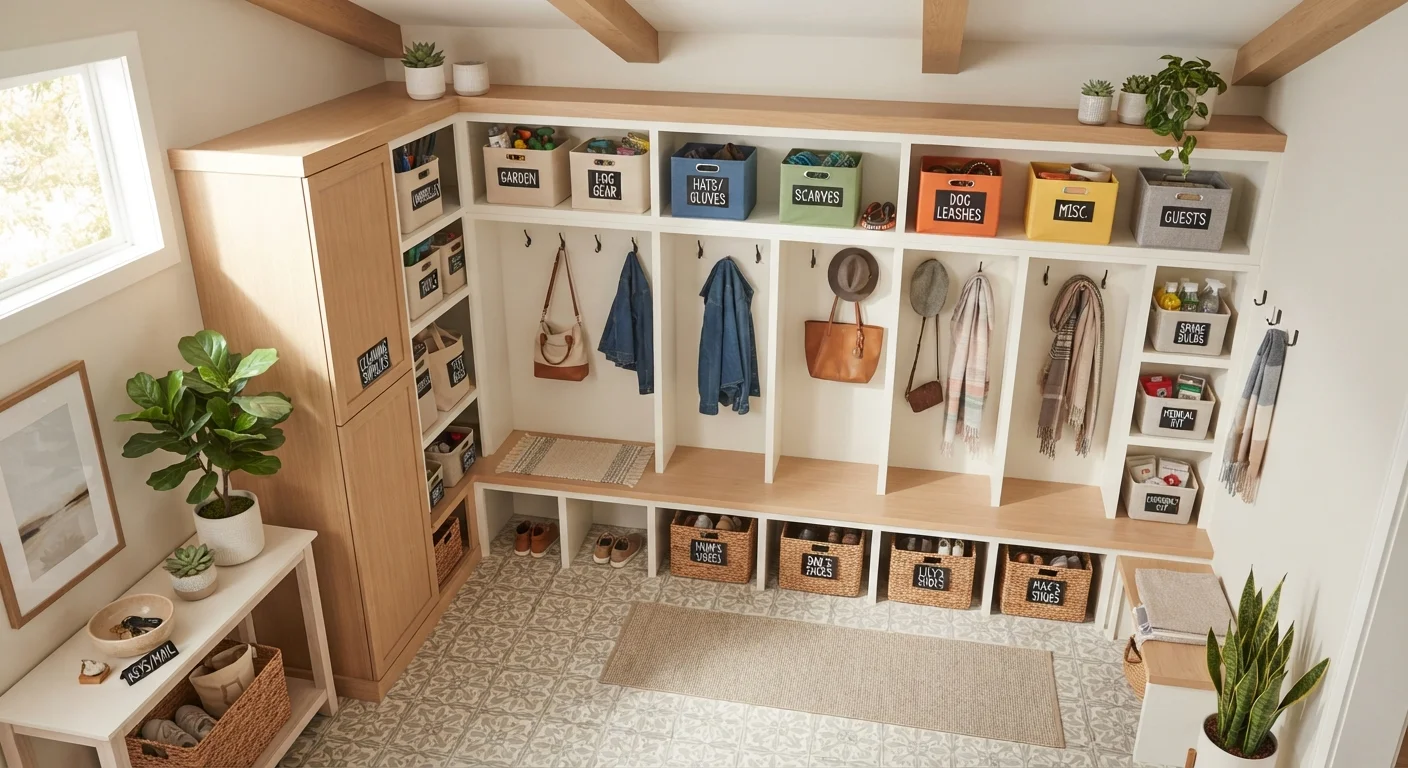
Visual uniformity is a design preference, not an organizational requirement. A mismatched collection of boxes that are correctly sized, clearly labeled, and consistently used will outperform a beautiful set of identical bins that people find impractical. Spending heavily on coordinated containers before you know what categories and sizes you actually need often leads to waste — you end up with bins that don't fit your shelves or your stuff. Function should drive container choice, not the other way around. See how zones and labels form the real foundation of any system.
Myth
You need a full weekend — or a full day off — to get organized.
Fact
Small, consistent sessions of 15–30 minutes are often more effective and far more sustainable than marathon overhauls.
Large-scale organization projects frequently stall midway, leaving a home in greater disarray than when you started. Breaking the work into focused, category-specific sessions — one drawer, one shelf, one cabinet at a time — generates visible progress without the decision fatigue that derails all-day efforts. It also makes it easier to maintain momentum over days or weeks. If you want a structured approach to pacing, comparing category-based and location-based decluttering can help you choose a method that fits your schedule.
Myth
Once you organize a space, it stays organized — you only have to do it once.
Fact
Organization requires regular maintenance because daily life continuously introduces new items, habits, and needs.
Homes are dynamic environments. Mail arrives, purchases accumulate, and routines shift. A well-organized space can drift back toward clutter within weeks without simple maintenance habits in place — a brief daily reset, a monthly check of high-traffic zones, or a seasonal pass through storage areas. Thinking of organization as a one-time project rather than an ongoing practice is one of the most common reasons people feel like they've "failed" at staying tidy. For a broader look at what sustained organization actually involves, see the long-term case for a tidy home.
Myth
Sentimental items should be kept because getting rid of them means losing the memory.
Fact
The memory lives in you, not in the object. Keeping too many sentimental items can crowd out the things you actually use and love.
This is one of the most emotionally charged myths in home organization, and it deserves a thoughtful response rather than a dismissive one. Meaningful objects genuinely matter. The issue arises when "sentimental" becomes a catch-all category that expands indefinitely. A useful approach: select a defined, limited space — a memory box, a single shelf — for sentimental items, and curate within that boundary. Photographing items before letting them go is another way many people preserve the memory without retaining the physical object. The goal isn't ruthlessness — it's intentionality.
Building Systems That Actually Last
Once you've let go of the myths, the path forward gets much clearer. Effective organization isn't about achieving a showroom look — it's about reducing friction in your daily life. The real building blocks are straightforward: designate zones for categories of items, use containers that fit your actual storage footprint, and label things so that putting them away is as easy as getting them out. Our article on zones, bins, and labels breaks down exactly how these principles work together.
80%
Of clutter comes from disorganization, not lack of space
Professional organizers commonly cite the principle that the vast majority of household clutter results from unclear systems and habits, not insufficient storage capacity.
~40%
Of housework time spent looking for misplaced items
Research on household time use suggests a significant portion of daily domestic effort goes toward locating things that lack a consistent, designated home.
Clutter also has a tendency to creep back into specific hotspots. If your kitchen counters are a recurring problem, kitchen clutter patterns and fixes offers targeted solutions. And for anyone working with limited square footage, small-space organization strategies can help you work with what you have rather than wishing for more room.
Finally, even the best personal system struggles without household buy-in. Getting everyone on the same page — partners, kids, and roommates — is what turns a one-person effort into a lasting shared habit. Organization isn't a destination; it's a set of decisions you and your household make repeatedly, and the simpler those decisions are, the more likely they'll stick.
Don't Organize Before You Declutter
The content provided on our blog site traverses numerous categories, offering readers valuable and practical information. Readers can use the editorial team’s research and data to gain more insights into their topics of interest. However, they are requested not to treat the articles as conclusive. The website team cannot be held responsible for differences in data or inaccuracies found across other platforms. Please also note that the site might also miss out on various schemes and offers available that the readers may find more beneficial than the ones we cover.