
Zones, Bins, and Labels: The Core Building Blocks of Any Organized Home

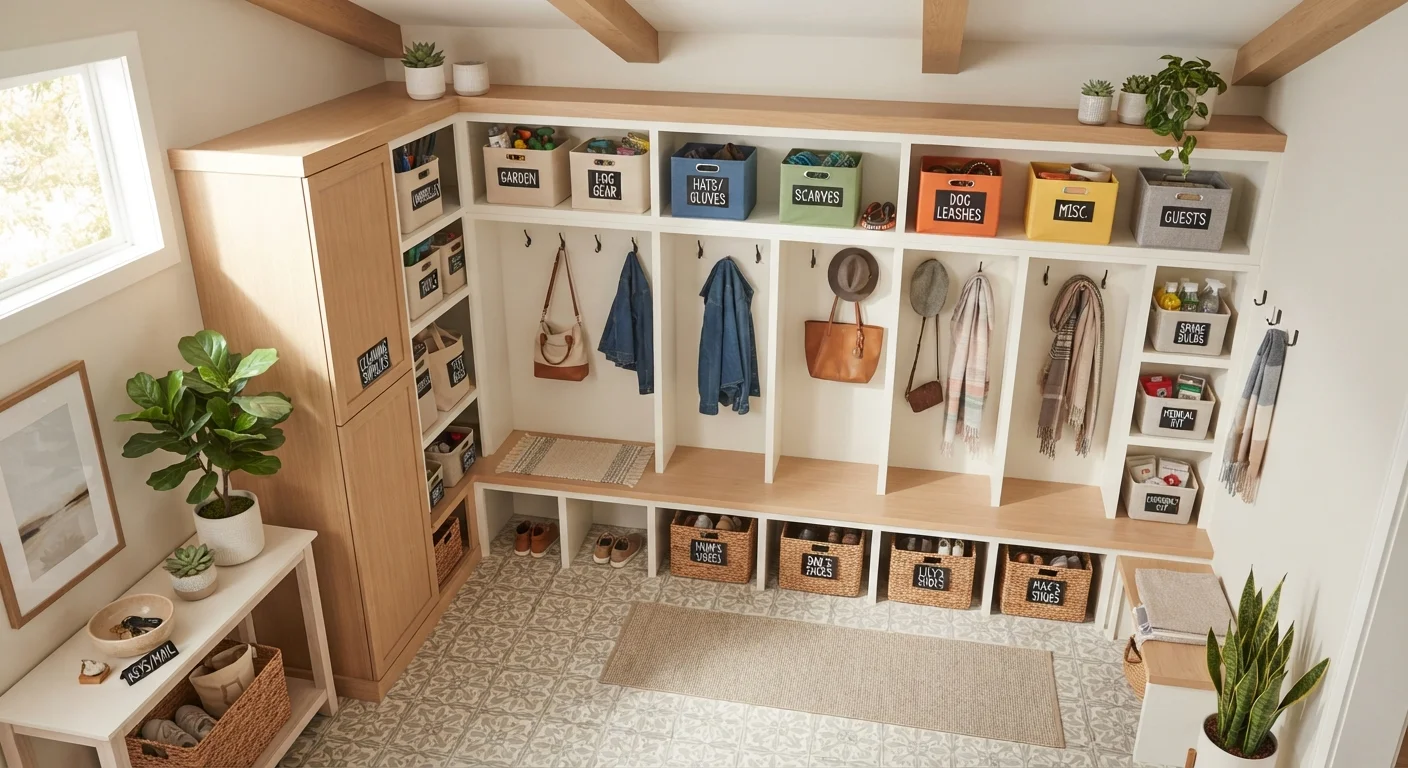
Photo: Online-Searches.net | Explore Insightful Blogs editorial
Key Takeaways
- Zones define where categories of items live, making retrieval and return automatic.
- Containers give physical boundaries to each zone, preventing category creep.
- Labels eliminate guesswork and help every household member maintain the system.
- The system works best after decluttering — organizing excess items doesn't solve the root problem.
- Mismatched or imperfect containers still work; consistency in the system matters more than aesthetics.
- Even small spaces benefit from all three principles applied at a reduced scale.
Why Most Organization Attempts Don't Stick
Most people have tried tidying up their home, only to find it reverting to clutter within weeks. The reason is usually the same: tidying moves things around, but organizing gives every item a permanent home with a clear logic behind it.
Without structure, decisions pile up. Where does the tape go? Is this a junk drawer or a supplies drawer? When those micro-decisions aren't resolved in advance, items land wherever there's space — and chaos follows. The zones-bins-labels framework eliminates that ambiguity before it starts.
If you're starting from scratch, decluttering your home from scratch is the right first move. Once you've reduced what you own to what you genuinely use, these three principles give you the structure to keep it that way.
25%
Of Americans describe their homes as disorganized
According to a survey by the National Association of Professional Organizers, roughly one in four Americans considers their home disorganized and say it causes daily stress.
~55 min
Time lost daily searching for misplaced items
Research cited by organizational behavior studies suggests the average American spends nearly an hour each day looking for things they cannot immediately locate.
80%
Of clutter is items never or rarely used
Professional organizers commonly observe that the vast majority of household clutter consists of items that haven't been used in over a year.
Zones: Defining Where Things Live
A zone is a dedicated area of your home — or a section within a room — where a specific category of items is always stored. Zones are defined by activity or item type, not by aesthetic preference.
In a kitchen, common zones might include: food prep (cutting boards, knives, peelers), cooking (pots, pans, spatulas near the stove), baking supplies, snacks, and cleaning tools under the sink. Each zone answers the question: What do I do here, and what do I need to do it?
The most effective zones are placed near the point of use. Baking supplies belong near the counter where you bake, not across the kitchen. This proximity makes the system feel effortless — you're not fighting the zone, you're working with it.
For a broader framework that applies zones room by room, see our room-by-room organization guide.
Bins and Containers: Giving Each Zone a Physical Boundary
Once you know where a category lives, a container defines exactly how much space it gets. This is one of the most underappreciated functions of bins: they set a natural limit on accumulation. When the snack bin is full, it's full — that's a prompt to edit, not to expand.
Containers don't need to be expensive or matching. What matters is that they fit your space, hold the right quantity of items, and are easy to access. Open-top bins work well for frequently reached items. Lidded boxes suit seasonal or archival storage. Drawer dividers work for small categories like batteries or rubber bands.
Measure Before You Shop for Containers
Before purchasing containers, measure your shelves and drawers. The most common organization mistake is buying bins before knowing what will go in them or whether they'll actually fit. Map your zones first, estimate volumes, then shop — or repurpose what you already own.
You may be surprised to find that many common organization beliefs — like needing perfectly matching storage — are worth questioning entirely.
Labels: The Communication Layer That Makes It Last
Labels are what transform a personal system into a household system. Without them, only the person who set up the organization knows where things belong — and even they'll forget over time.
Effective labels are specific enough to be unambiguous but broad enough to accommodate the full category. "Office Supplies" is vague; "Tape, Scissors & Stapler" tells anyone exactly what belongs. For children's spaces or shared areas, picture labels alongside text reduce friction further.
Label placement matters too. Labels should face outward and be readable at a glance — on the front of bins, on drawer edges, or on shelf ledges. The moment someone has to move a container to read its label, the system slows down and people stop using it.
The full picture — how zones, bins, and labels work together across every room in your home — is covered in our complete home organization resource.
Putting the Three Principles Together
The power of zones, bins, and labels comes from using all three in combination. A zone without a container bleeds into neighboring areas. A container without a label gets ignored or misused. A label on a non-specific zone creates confusion rather than clarity.
Start with one trouble spot — a junk drawer, a linen closet, a coat area by the door. Define the zone (what category lives here?), choose a container that fits the space and the quantity, and add a clear label. Live with it for two weeks before moving on. Small wins build the habit and the confidence to tackle larger spaces.
“A place for everything and everything in its place isn't just a saying — it's a design principle. When the system is obvious, people follow it without thinking.”
— Home & Garden Editorial Team, Home Organization Writers and Researchers
The goal isn't a perfectly staged home — it's a home where everything has a place, and returning things to that place is the path of least resistance. That's the real measure of a system that works.
Frequently Asked Questions
The content provided on our blog site traverses numerous categories, offering readers valuable and practical information. Readers can use the editorial team’s research and data to gain more insights into their topics of interest. However, they are requested not to treat the articles as conclusive. The website team cannot be held responsible for differences in data or inaccuracies found across other platforms. Please also note that the site might also miss out on various schemes and offers available that the readers may find more beneficial than the ones we cover.