
Understanding Lawn Aeration: What It Does and When It's Worth Doing

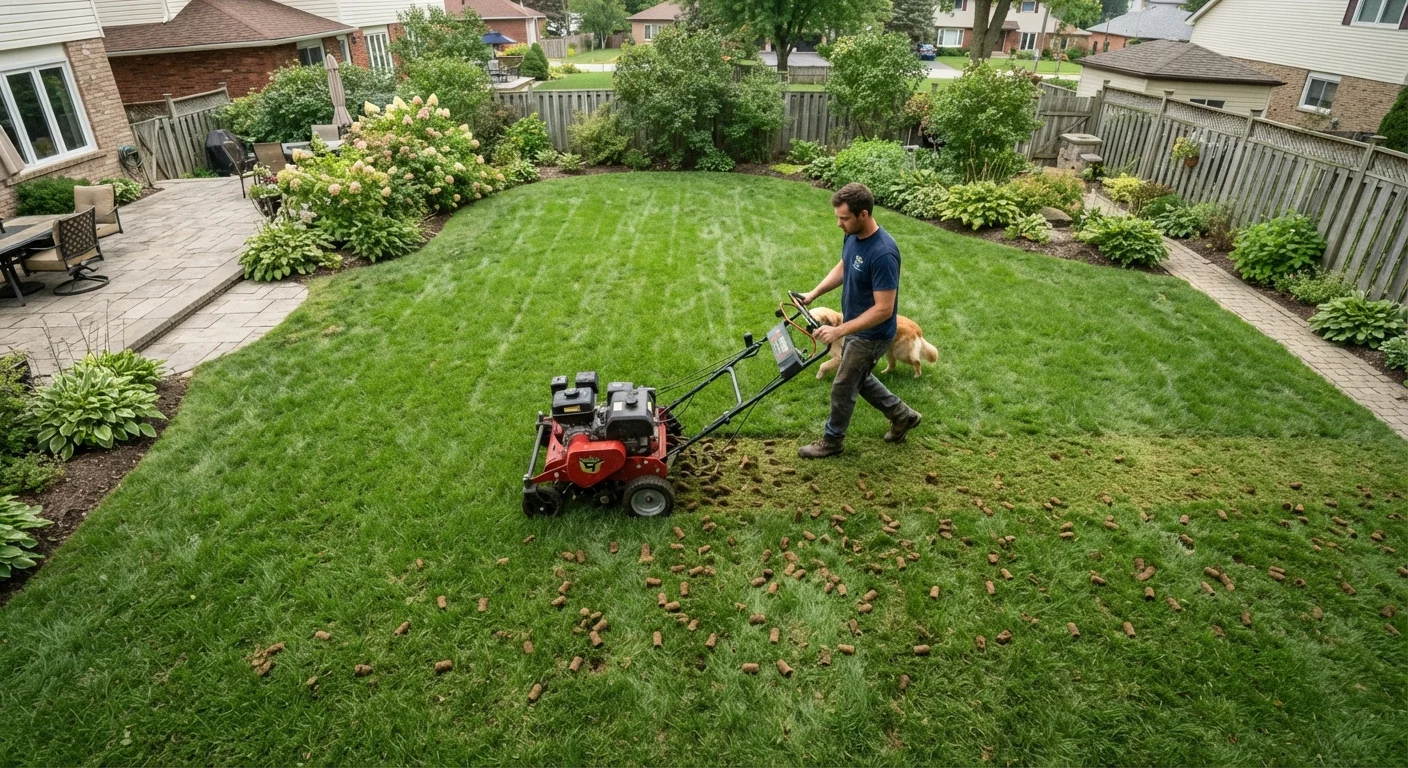
Photo: Online-Searches.net | Explore Insightful Blogs editorial
Key Takeaways
- Compacted soil restricts root growth, water infiltration, and nutrient uptake — aeration addresses all three.
- Core aeration (removing soil plugs) is generally more effective than spike aeration for compacted lawns.
- Cool-season grasses benefit most from fall aeration; warm-season grasses respond better to late spring or early summer.
- Not every lawn needs annual aeration — heavy clay soils and high-traffic areas benefit more than sandy, low-traffic lawns.
- Pairing aeration with overseeding or fertilizing amplifies the results of both practices.
Why Soil Compaction Is the Real Problem
Aeration makes the most sense once you understand what it's actually solving. Grass roots need three things from the soil: oxygen, water, and nutrients. When soil becomes compacted — its particles pressed tightly together — all three become restricted. Roots stay shallow, water runs off instead of soaking in, and fertilizer sits near the surface rather than reaching where it's needed.
Compaction happens gradually. Every pass of a lawn mower, every game of backyard football, every heavy rain contributes. Clay-heavy soils compact more readily than sandy ones. The problem tends to build invisibly until the lawn starts showing symptoms: thinning grass, persistent dry patches even after watering, or water puddling on the surface after light rain.
Thatch — the layer of dead grass stems and roots that accumulates above the soil — compounds the issue. A thatch layer thicker than about half an inch acts like a mat, blocking water and air from reaching the soil at all. Aeration punches through both problems at once.
½ inch
Thatch thickness that signals aeration is needed
Turfgrass specialists generally recommend aeration when thatch exceeds half an inch, as it begins actively blocking water and air movement.
2–3 inches
Depth of soil cores removed by core aerators
Standard hollow-tine core aerators penetrate two to three inches into the soil, reaching the primary root zone of most turf grasses.
1×–2× per year
Recommended aeration frequency for clay-heavy lawns
Lawn care extension programs at universities commonly recommend annual or twice-yearly aeration for high-traffic or clay-soil lawns.
Core vs. Spike Aeration: Which Method Actually Works
The two common aeration methods work very differently, and the distinction matters.
Core aeration uses hollow tines to pull out small cylinders of soil — typically about half an inch in diameter and two to three inches deep. Those open channels allow air, water, and nutrients direct access to the root zone. The removed cores are left on the surface, where they break down and reintegrate into the lawn over a few weeks.
Spike aeration uses solid tines or spikes to poke holes without removing any material. While this sounds similar, it actually compresses soil laterally as the spike enters, which can worsen compaction around each hole. Spike aeration has limited value on genuinely compacted lawns, though it may suit lightly trafficked, sandy soils where compaction is minimal.
For the majority of homeowners dealing with typical suburban lawns — especially those with clay soil — core aeration is the method worth doing. Walk-behind core aerators are widely available at equipment rental shops, and professional lawn services offer the service seasonally.
Mark Sprinkler Heads Before You Aerate
Timing Aeration to Your Grass Type
Aeration works best when the grass is actively growing and can recover quickly. Getting the timing wrong — aerating a dormant lawn, for instance — leaves it vulnerable without the growth response needed to heal the disruption.
Cool-season grasses (including tall fescue, Kentucky bluegrass, and perennial ryegrass) peak in growth during fall and early spring. Early fall — typically late August through October depending on your region — is the ideal window. The grass has time to fill in the channels before winter, and fall aerating pairs naturally with overseeding, which benefits from the same open soil conditions.
Warm-season grasses (bermudagrass, zoysiagrass, St. Augustinegrass, centipedegrass) grow most vigorously in summer. Aerate these from late spring through early summer when soil temperatures are consistently warm and the grass has the energy to recover.
Avoid aerating during drought stress or when the lawn is dormant. Always water the lawn one to two days before aeration so the tines can penetrate effectively without the soil being bone dry or overly saturated.
Pairing aeration with your broader seasonal routine pays off. See our spring lawn prep checklist for how aeration fits alongside other early-season tasks.
What to Do Right After Aerating
Aeration creates a short window of heightened opportunity for the lawn. Take advantage of it rather than letting it pass.
- Overseed immediately if you have thin or bare patches. Seeds dropped into or near the aeration holes have excellent soil contact and germination conditions. Our lawn seeding walkthrough covers seed selection and watering expectations in detail.
- Fertilize within a day or two. With the soil surface open, nutrients move into the root zone far more efficiently than on an un-aerated lawn. Timing fertilizer application close to aeration improves uptake noticeably. For help choosing the right product type, see organic vs. synthetic fertilizer.
- Water consistently in the week following aeration, especially if you've overseeded. Keep the top inch of soil moist without waterlogging. For guidance on how much is enough, common lawn watering myths is worth reading before you set your schedule.
Leave the soil cores on the surface — don't rake them away. They return beneficial microorganisms to the lawn and break down on their own within a few weeks, slightly leveling low spots in the process.
Frequently Asked Questions
The content provided on our blog site traverses numerous categories, offering readers valuable and practical information. Readers can use the editorial team’s research and data to gain more insights into their topics of interest. However, they are requested not to treat the articles as conclusive. The website team cannot be held responsible for differences in data or inaccuracies found across other platforms. Please also note that the site might also miss out on various schemes and offers available that the readers may find more beneficial than the ones we cover.